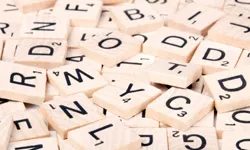
My hands are wet. The pulse beats against the ribs. Staring at the rack of letters feels more like a hostage situation than a game. One perfect play can be enough. Or a seven-letter word can prolong the pain.
You tried to keep a straight face. Across the table, your opponent waits, dictionary in hand, ready to pounce on your every mistake.
If you find yourself obsessing over word lists or remembering vague rules, stop. You’re playing the wrong game. Scrabble is more than just vocabulary. This is a math problem. It’s statistics. This is the probability. To win, you must master the tiles in your hand and the entire board. This means maximizing value, blocking competitors, and sometimes doing nothing.
Here are 10 strategies to help you dominate game night or chase tournament glory.
10: Give up your turn
This is a high-risk, high-reward play. Most people panic when they can’t take action. They end their turn by dump two tiles and getting three points. Don’t be that person.
Look at the board. Really look.
Are there multiple ways to use the current rack? Add the points for each option. If none of this excites you, look at your opponent’s last moves. What are they setting up? Did they leave an open-ended word to get the high score, or will a next play open up new spaces if you wait?
If the answer to the wait is yes, pass.
Letters don’t go to waste when you out a turn. keeps your valuable tiles safe in your rack until the board is clean enough to score big. This is gambling. But sometimes it’s best not to move at all.
9: Make a Swap
There are many consonants and no vowels. It happens. The board is stuck. Your opponent is building an empire on premium squares, and you are working hard to form a “cat”.
Don’t force yourself to do poorly when you get stuck. Use the swap.
Changing a tile costs you a turn, but resets your luck. Think of it as a tactical retreat. You immediately give up points to get a better starting hand in the following rounds. If your current rack has no potential, a swap is often the only way to get back into the game.
However, don’t swap lightly. If there is at least one possible way to play, do it. Only swap if the hand is really useless or if the board is in such bad shape that it’s a pain to hold the hand. Sometimes you have to burn a turn to survive the next one.
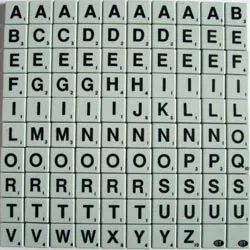

When to switch and why it’s not suicidal
Let’s be honest: changing tiles is like throwing in the towel. You’re missing out. You give up a chance to score. It looks like surrender. But if you’re staring at a bunch of consonants and all you feel is frustration, it’s a big mistake to keep doing it. Change is the tactical nuke, not the exit button. You just need to know when to detonate it.
You can trade any number of tiles as long as you have enough tiles in your bag for a one-for-one. This is the best way to get rid of low value junk and get high potential power. Got five Es? Great. You now have five chances to say “eh”, “hachi” or “shh”. But the five E’s are dead ends. Break the monotony. If you’re really stuck, switching things up can awaken your inner vocabulary engine.
There is a catch, obviously. With great reward comes great risk. If you don’t know what’s left in your bag, you’re playing blind. Don’t do this. But if you keep track of which letters hit the board, you can guess what’s hidden in the bag. Educated guesswork turns gambling into a deliberate activity. Swap when you have a lead. If you guess, fold it.
8: Score Big with Little Words
Math in Scrabble is deceptive。 One plus one does not necessarily equal two. It equals points。 Especially when you play words that intersect. Look at the board. Find the existing words。 Then create new words that intersect them at several points. You score for your new word, but you can also score for the tiny two-letter words that you accidentally create where your letters overlap.
Two-letter words are defensive weapons, too。 Wait for the opponent to reveal double or triple points. Then drop a short word there. You get a high score and prevent them from using this premium square. It’s petty. it works.
You need more than just “go”, “do” and “go”. Words like “qi”, “za”, “qat” and “jo” are game changers. They help you use that awkward Q without paying a penalty.
Defining the Unde
- Qi :alternate spelling of \。
- Za : Recognized as short for “pizza”.
- Qat : Alternate spelling for “khat”, bush.
- Jo : Scottish term of endearment.
Adding an s makes it plural except for “already”. Its plural is .
7: Go First, and Choose Wisely
Mid game and late game strategies are important. But if you want to mentally crush your opponent, start strong. According to the official rules, the player who draws the tile closest to “A” in alphabetical order goes first. You cannot control the draw. You control what you do with it.
Opening the game is very powerful. It doesn’t guarantee a win, but it does sets the tone. You control the board. Decide which premium squares to reveal and which to block. Play a five-letter word in the middle to avoid giving double word points to your opponent. Or maneuver a high-point tile onto a double-letter space. In some cases, playing vertically instead of horizontally can disrupt the opponent’s rhythm. Whatever you do, do it early and with confidence.
6: Play the Hot Spots
Using bonus blocks is the main strategy of the game. Use it in time. Use it often. Don’t wait until the game is over. Look at the board before placing the tiles. Identify hotspots.
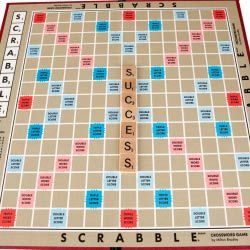
Most official motherboards use a color coding system.
- 3 word points : red
- Double punctuation : pink
- fraction of 3 characters : dark blue
- Dual character part : light blue
I want to hit these. But we also need to protect them. If you reveal a 3-letter grid, your opponent might reveal a valuable word. If you enter a word from two word boxes that ends with two spaces, your opponent can add your word to theirs and triple their score. Be careful with your posture. Don’t make their life easy.
All about Benjamin’s family
Always look for opportunities to add prefixes like “re,” “un,” and “in.” Or suffixes like “es”, “ed”, “ing”, etc. Or a compound word. This is done when the addition exceeds the double or triple word rectangle. Hitting a three-letter square with only three new letters is called a “snapback” in English. In French it is called “Benjamin” after Scrabble master Benjamin Hannouna. This is a big shake. Take it while you can.
The High-Stakes Game of Seven-Letter Bingos
You don’t need to be a master speller to master the board. All you need is a strategy and a special weapon, a seven-letter word. In Scrabble, using all seven tiles at the same time is called Bingo. This is the fastest way to jump and adds a 50 point flat bonus to your word’s value.
Finding the words takes effort. Some players read dictionaries for fun. Others are looking for mysterious things that start with Q, J or Z. You can also search online resources. The Australian Scrabble Players Association maintains an extensive database. Word Buff offers a similar list. These are not just trivia. They are ammunition.
What if the rack is almost perfect? You have 6 letters. One tile is an oddball. Don’t force yourself to play. Use that trash tile. Play short words. Your score is bad and you will probably only get a few points. However, they were forced to draw. You might pull the exact tile needed to complete the 7-letter word. It’s a small sacrifice that pays big dividends later.
Managing the Board State
Knowing when to open and close the board is just as important as knowing what words to play. An open board offers more room for long words, but leaves you vulnerable to your opponent’s powerful moves. Closed boards limit your choices but protect your points. The right choice depends on your rack and your opponent’s tendencies.
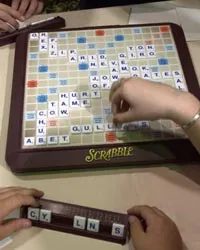

When you’re ready to leave casual Scrabble behind and start dominating the table, the transition is less about luck and more about mastering the shape of the grid. You have to know when to open the table and get big points, and when to clamp down to suffocate your opponent’s options.
According to Hasbro, the creators of the classic word game, an “open” board is one with enough free space for high-scoring plays. It may sound counterintuitive to leave the door open when you want to win, but strategic expansion is essential. Create opportunities for yourself by laying down longer words or landing a seven-letter bingo. But you also give your opponent a map to win.
So when do you take risks? If you have a big lead or a big scoring window, that outweighs the risk. But if your score is trailing? Switch to defense. Close the board. Make it painful for them to find those juicy double-word squares. This is where short, boring words come in handy. Place it parallel to existing tiles, effectively blocking adjacent rows and columns. Boring but effective.
The Math of the End Game
As the game winds down, the strategy shifts from controlling the game board to probability management. Stop thinking only about your next move. you’re thinking about the last. The goal is to rack reduction.
Why is this important? Because end-game scoring rules are brutal. If you run out of tiles before your opponent, the points of your opponent’s remaining tiles are added to the score. If you still have tiles left at the end of the game, you can subtract their value from your total score. One missed “Z” or “Q” can wipe out your lead hard-fought.
To manage this, you need to treat the game like poker. Track the tiles in the bag. Count the remaining letters based on what’s been played. This is a controversial tactic, and some purists call it cheating, similar to counting tiles in blackjack, but it is standard procedure in competitive clubs and tournaments. Not all tiles are in memory. You’re just narrowing down your options so you don’t get stuck at the finish line.
Digital vs. Analog Disadvantages
The texture of the game changes when you play it on screen. Apps and Facebook Scrabble remove the human element of deception. The software automatically rejects invalid words, so you can’t bluff an opponent into challenging a word they’re unsure about. That mental pressure disappears.
unfair advantage is also a cause for concern. Staring at the screen, you never know if your opponent is going to pulling up a word finder on their phone or use a program that suggests matches based on their current rack. The game is no longer focused on the your skill, but on who has better algorithmic support.
Take advantage of valuable letters
If you don’t actively use power tiles, you end up leaving points on the table. The standard set has 10 of them: 2 blanks, 4 Ss, J, Q, X, Z. These are engines for high-scoring plays.
J, Q and X are worth 8 points each. The Z value is 10. They demand attention. Blanks are wildtiles and are necessary to form impossible words, but have a value of zero. Therefore, you should avoid placing them in double or triple letter squares. So you are wasting potential.
S tiles are a different beast. This is a versatile tool that converts singular words into plural words, allowing you to score points for a new perpendicular word in the same turn. Pay attention to your opponent. Careful players can earn double word points by playing words that can easily be pluralized. Let them set the trap, then spring it.
But let’s be honest: Q, X, J and Z are awkward. They do not easily fit into the common vocabulary. If you’re struggling to find drama for them, you’re not alone. The solution is to expand your vocabulary beyond the obvious. Learn words with more consonants. Look for vague terms that will give you options. When you start looking at these letters as opportunities rather than burdens, your game will improve dramatically.
Learn from the best
Finally, we look at professional gaming. Watching players in top tournaments is more than just entertainment. This is a masterclass in efficiency. They’re not just playing with words. They handle board conditions with surgical precision. Notice how they balance risk and return. Notice how they dominate the rack in the final turn.
Games are constantly evolving. What worked ten years ago may not be ideal now. The dictionary has been expanded. A new strategy is born. Stay curious. Keep learning. The government is waiting.
You need a playbook to win. In particular, you must form a Scrabble Dream Team. It’s not about putting up fantasy points. It’s not about drafting fantasy points. It’s all about assembling a roster of experts who can teach you the skills, strategy and mental fortitude needed to dominate the board. You don’t have to share a hotel room to learn from world champions. Read their blogs. Buy their books. Treat their knowledge as your own private coaching staff.
The difference between casual players and competitors is not talent. It’s homework.
Check out the basic tips from the Australian Scrabble Players Association. Study your vocabulary 20 minutes a day, every day for a year. That’s the entry fee. But look at the elite. World Championship contenders spend 12 hours a day completing the same checklists. The disparity is stark.
“Nothing inspires dreams of learning and exploration like winning a 7-word bingo game that ends with the letter Q in a three-word scoring box.”
It’s an obsession. It’s irrational. It’s necessary.
You are chasing a certain adrenaline rush. The board clears. You can see the letters. 7 Words has it all and allows you to count the Scary Queen in three word scoring boxes. This is a dream. Everything else is just preparation for that moment.