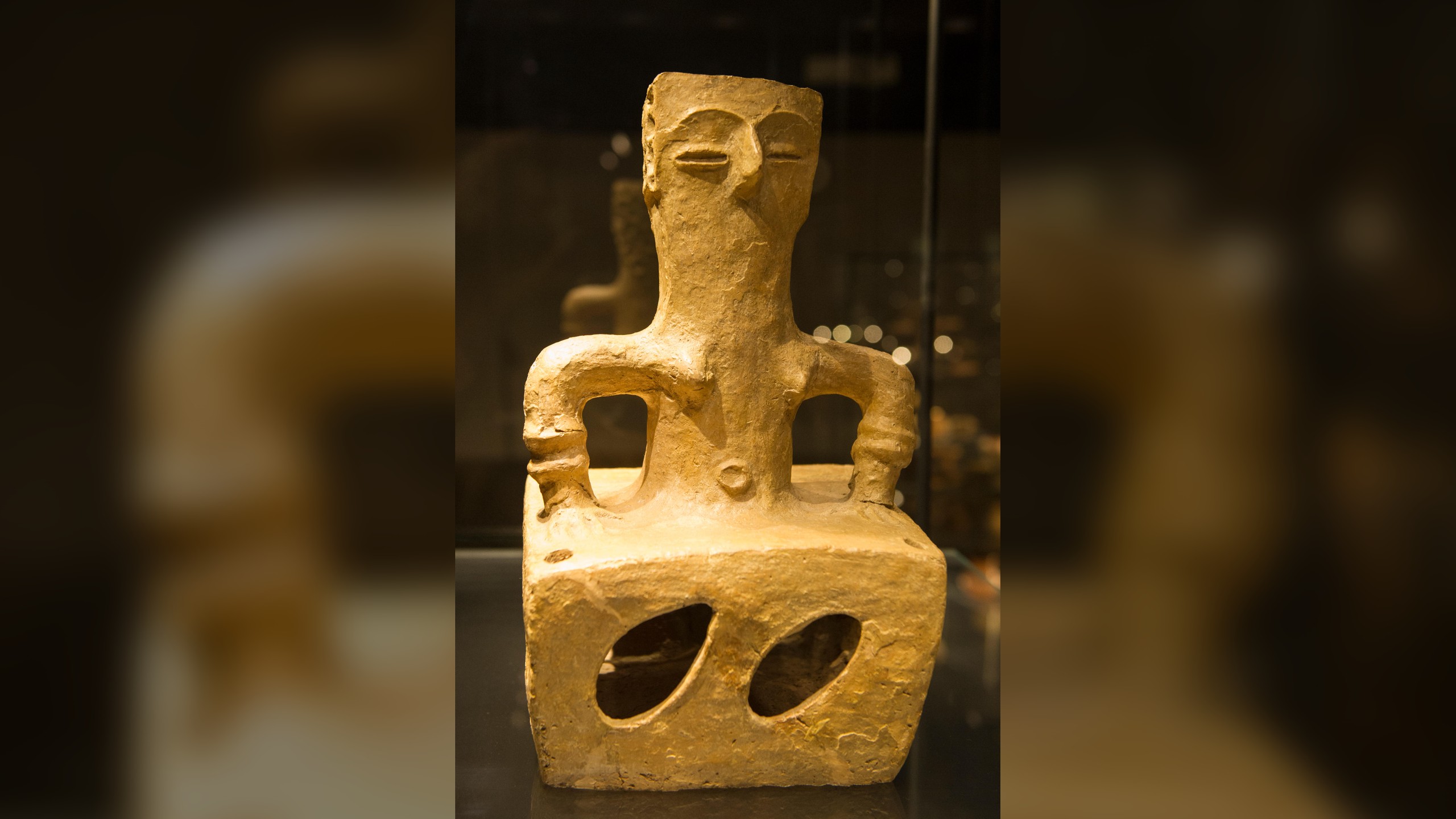
A unique, cube-shaped terracotta figurine unearthed in North Macedonia suggests a direct link between ancient fertility goddesses and the dwellings they were believed to protect. Discovered in 1981 at the Neolithic site of Tumba Madžari, the “Great Mother” dates back approximately 7,800 years—between 5800 and 5200 B.C.—and offers a rare insight into the religious practices of early European settlements.
The Unusual Design of the Goddess
The sculpture stands 15.4 inches (39 centimeters) tall, with a distinctly human upper half featuring detailed facial features, including a prominent nose, arched eyebrows, and linear eyes. Her arms are bent, hands resting flat on the strikingly boxy lower portion of her body. This lower half isn’t merely aesthetic; it exactly mirrors the square shape of the houses in Tumba Madžari.
Archaeologists theorize that this deliberate design choice wasn’t accidental. The figurine appears to rise from the house itself, implying a symbiotic relationship between the goddess and the home. This suggests a belief that the goddess wasn’t just watching over the dwelling, but was intrinsically linked to its safety and prosperity. Traces of brown paint on the forehead hint at decorative details like bangs, adding another layer of realism.
Found Within a Stone Age Home
The Great Mother was discovered inside one of Tumba Madžari’s typical Neolithic homes. These structures were roughly 26 by 26 feet (8 by 8 meters), built with woven wooden posts and covered in clay. The house also contained a hearth, an oven, and dozens of intact ceramic pots, cups, and jugs. The goddess figurine was positioned near the center, suggesting it held a place of importance within daily life.
Notably, the sculpture’s hollow base indicates it may have served as an altar. Evidence suggests that incense, dried herbs, or grain offerings were burned inside, further reinforcing its religious function.
A Fertility Cult and the Role of Women
According to the Archaeological Museum of the Republic of North Macedonia, where the artifact is displayed, the Great Mother’s presence reflects a broader Neolithic reverence for women as life-givers. The “role of woman as child bearer and mother was equated with a fertility cult or the cult of the Great Mother goddess.” This underscores the significance of female deities in early agricultural societies, where fertility was essential for survival.
A Balkan Uniqueness
Similar “Great Mother” figurines have been found across Neolithic Europe and the Near East, yet the unique symbiosis between the goddess and house structure has only been observed in the Balkans. The Tumba Madžari find is, therefore, an exceptional example of localized religious beliefs.
This discovery highlights how deeply intertwined early humans were with their environment and the spiritual forces they believed governed it. The Great Mother is not just a relic; she’s a tangible connection to the minds of people who lived nearly 8,000 years ago.