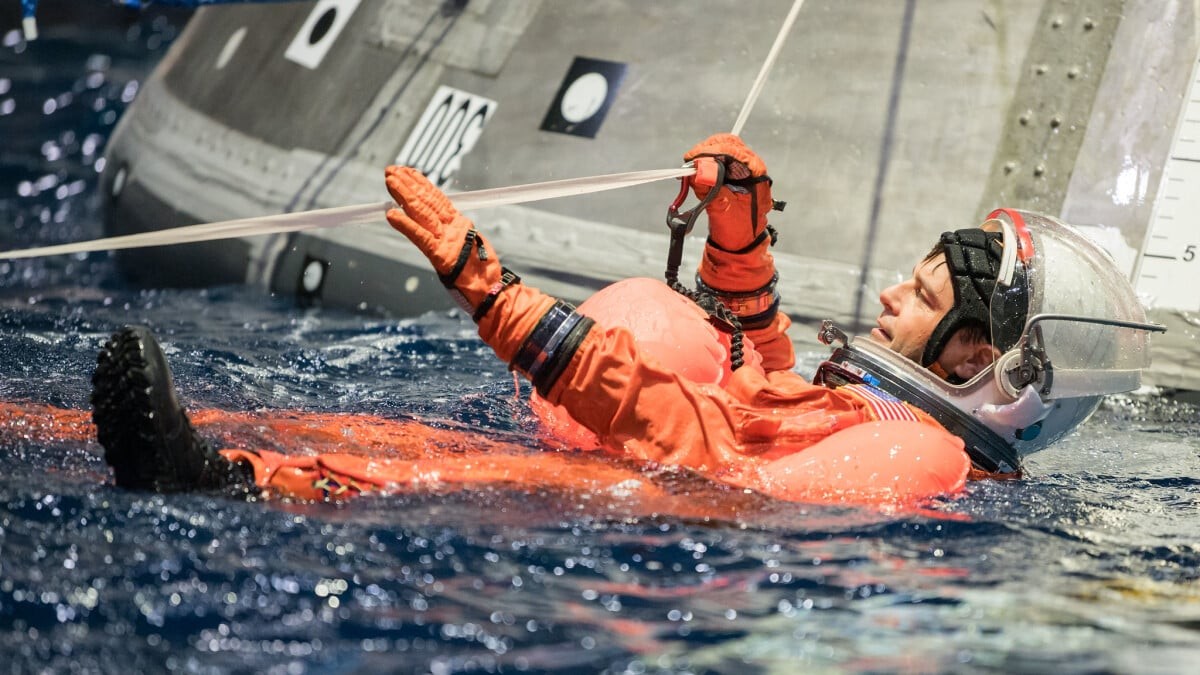
NASA’s Artemis II mission represents a bold step forward in lunar exploration, yet it’s also defined by significant, unavoidable risks. The upcoming 10-day flight – scheduled to launch as early as February 6th – will push four astronauts into uncharted territory, testing the Space Launch System (SLS) rocket and Orion capsule under extreme conditions. This mission isn’t just about reaching the moon; it’s about proving that humans can survive and operate safely in deep space, a prerequisite for future missions to Mars and beyond.
The Scale of the Challenge
The numbers alone highlight the mission’s intensity. The crew – Commander Reid Wiseman, Victor Glover, Christina Koch, and Jeremy Hansen – will venture approximately 4,600 nautical miles beyond the moon, farther than any previous human spaceflight. Upon return, the Orion capsule, nicknamed “Integrity,” will re-enter Earth’s atmosphere at a staggering 25,000 mph (Mach 39), comparable to the velocity of Apollo 10’s return in 1969. These speeds are almost beyond human comprehension, yet they are essential for a rapid return from lunar distances.
Escape Routes and Contingency Plans
NASA has engineered multiple layers of redundancy into Artemis II. During ascent, flight controllers can adjust course if the SLS rocket performs unexpectedly. Within minutes of launch, they can abort the lunar trajectory and loop the capsule around Earth for troubleshooting. Should problems persist, a splashdown off Baja California, Mexico, remains an option, forfeiting the lunar mission but preserving crew safety.
Beyond Earth orbit, Orion’s trajectory leverages gravity to ensure a “free-return” path, meaning it will naturally swing back towards Earth even if later burns fail. Smaller thrusters provide additional correction capabilities.
The Hidden Dangers: Radiation and Communication
The most significant threat outside Earth’s protective magnetic field is radiation. The Artemis II crew will be exposed to higher levels of cosmic and solar radiation than astronauts aboard the International Space Station, where the Van Allen belts provide some shielding. The sun is also nearing the peak of its 11-year activity cycle, increasing the risk of coronal mass ejections, unpredictable bursts of high-energy particles. To mitigate this, Orion is equipped with radiation sensors, and the astronauts will practice building an emergency shelter within the capsule using stowage bags as shielding.
Another critical challenge is communication blackouts. During the closest pass around the moon, Orion will disappear behind the lunar far side for roughly 45 minutes, severing radio contact with Earth. While planned blackouts are expected, unexpected communication losses, as experienced during Artemis I due to aging infrastructure at NASA’s Deep Space Network, remain a concern.
The Heat Shield and the Final Descent
The final phase of the mission – re-entry – remains the riskiest. During Artemis I, charred material flaked off Orion’s heat shield under extreme temperatures, raising concerns about its integrity. NASA insists that the damage wouldn’t have threatened a crew, but modifications have been made to Artemis II’s re-entry plan. The landing site has been shifted closer to San Diego, California, to reduce heat exposure. Despite these changes, the final descent carries unavoidable risk.
“From an overall perspective, that’s just part of cheating gravity,” acknowledges John Honeycutt, NASA’s mission management team lead.
Ultimately, Artemis II is a calculated gamble. The mission is designed to test the limits of human spaceflight technology, with built-in safeguards but no guarantees. The success or failure of this flight will shape not only NASA’s lunar plans but also humanity’s future in deep space.