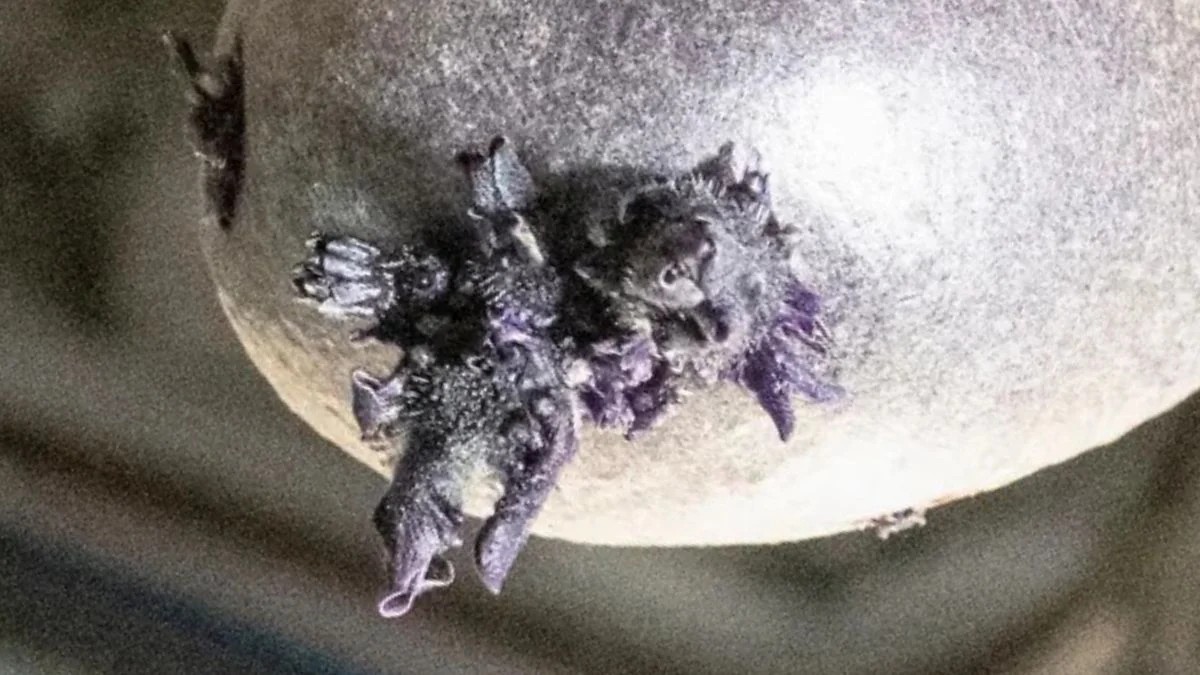
A purple potato sprouting on the International Space Station (ISS) has captured the internet’s attention after astronaut Don Pettit shared images of his unconventional space garden. Initial reactions ranged from alarm – with some users joking about alien lifeforms – to astonishment upon learning the “grotesque” growth was simply a potato developing sprouts.
The Spudnik-1 Project
Pettit, NASA’s oldest active astronaut, has been cultivating plants in space as a personal hobby during his long-duration missions. The purple potato, playfully dubbed “Spudnik-1,” is grown hydroponically, meaning it thrives in nutrient-rich water rather than soil. This method, along with microgravity, causes the potato to develop sprouts (“eyes”) that seek out planting surfaces. The white patch visible in photos is just Velcro used to secure the potato within its terrarium.
A History of Space Gardening
Pettit isn’t the first to experiment with agriculture beyond Earth. Potatoes, in particular, have been a focus for space exploration since the 1990s, as recognized by the book The Martian, due to their high nutritional value relative to their weight. Prior to Spudnik-1, Pettit has grown peanuts, zucchini, broccoli, sunflowers, basil, and tomato seedlings on previous ISS missions – even utilizing earplugs as makeshift planters.
Why Space Gardening Matters
Cultivating plants in space isn’t just a quirky hobby; it addresses critical challenges for long-term missions. Fresh produce provides essential vitamins and reduces reliance on pre-packaged food. However, plants mature slower in microgravity, and the exact causes remain under investigation. Pettit notes that radiation exposure doesn’t seem to affect potato growth, a reassuring finding for future space settlements.
“There’s nothing like the smell of living green in this forest of engineered machinery,” Pettit wrote in a now-removed NASA blog, underscoring the psychological benefits of bringing nature into the harsh environment of space.
The ongoing experiments, including Spudnik-1, demonstrate that sustainable food production in orbit is feasible, though further research is needed to optimize growth conditions. The long-term implications of space gardening extend to enabling self-sufficiency for future lunar and Martian colonies.