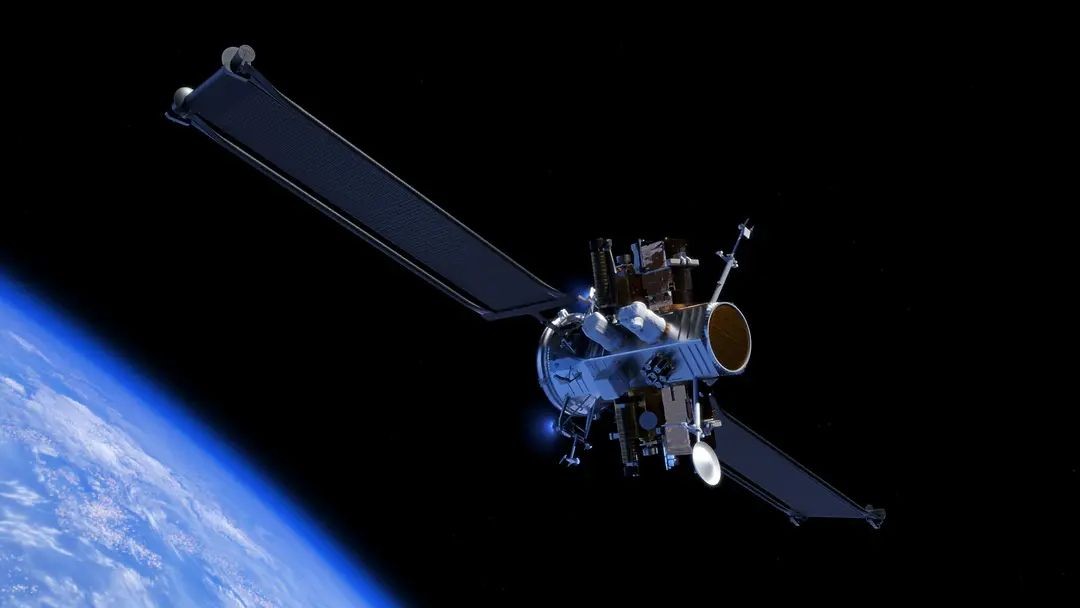
Jeff Bezos’ space company, Blue Origin, is collaborating with NASA to create a planetary defense system capable of intercepting and redirecting asteroids that pose a threat to Earth. The project, called NEO Hunter, leverages Blue Origin’s versatile Blue Ring spacecraft platform to scan for, assess, and potentially alter the trajectories of near-Earth objects (NEOs).
The Threat and the Response
The risk of asteroid impacts, while statistically low, remains a credible threat to Earth. Large asteroids can cause catastrophic damage, as demonstrated by past extinction-level events. To address this, NASA and private companies like Blue Origin are developing technologies to detect and, if necessary, deflect dangerous space rocks.
Blue Ring: A Multi-Purpose Spacecraft
NEO Hunter builds on the Blue Ring platform, a modular satellite bus designed to carry up to 4,000 kilograms (8,800 pounds) of payload. This spacecraft is adaptable for operations in low Earth orbit, deep space, and even Mars missions, making it an ideal base for planetary defense capabilities. Its flexibility allows for various mission profiles, including asteroid monitoring, redirection, and even kinetic impact.
Two-Phase Defense Strategy
NEO Hunter employs a two-phase approach to asteroid defense:
- Characterization Phase: The spacecraft will deploy cubesats to rendezvous with potential threats. These satellites will analyze the asteroid’s composition, mass, and density to determine the most effective deflection strategy. Precise data on an object’s properties is crucial for predicting how it will respond to different intervention methods.
- Deflection Phase: Depending on the asteroid’s size and velocity, NEO Hunter will utilize one of two methods:
- Ion Beam Emission: A focused stream of charged particles can be used to gently nudge the asteroid off course. This method is effective for smaller, slower-moving objects.
- Kinetic Impact: For larger or faster asteroids, NEO Hunter can crash into the object at speeds of up to 36,370 kilometers per hour (22,600 mph). This method, tested by NASA’s DART mission in 2022, delivers a substantial change in trajectory. Before impact, the spacecraft will release a satellite, “Slamcam,” to record the event and confirm success.
The DART Precedent
The success of NASA’s Double Asteroid Redirection Test (DART) in 2022 proved the viability of kinetic impact as an asteroid deflection method. DART successfully altered the orbit of Dimorphos, demonstrating that spacecraft can effectively change the trajectory of space rocks.
Commercialization of Planetary Defense
Blue Origin emphasizes the cost-effectiveness of using commercial platforms like Blue Ring for planetary defense. This approach allows for rapid deployment of advanced technologies without relying solely on government funding. The company’s first payload customer, Scout Space, flew an orbital domain awareness sensor on Blue Ring last year, illustrating the platform’s versatility.
“This is another example of how commercial platforms like Blue Ring can conduct low-cost, high-priority science, exploration and planetary defense missions,” Blue Origin stated.
The development of NEO Hunter represents a significant step toward proactive planetary defense, combining advanced technology with a pragmatic, commercial approach. As space exploration expands, such systems will become increasingly important for ensuring the long-term safety of Earth.