The existence of our universe hinges on a fundamental imbalance: why is there so much matter and so little antimatter? According to the prevailing theory, the Big Bang should have created equal amounts of both, which would have annihilated each other, leaving nothing behind. Yet, here we are. Physicists have long sought to explain this asymmetry, and a new theory suggests a surprising culprit: primordial black holes – hypothetical remnants from the universe’s earliest moments.
The Antimatter Problem
The standard model of particle physics predicts that matter and antimatter should have been produced in equal quantities during the Big Bang. When these particles collide, they annihilate each other, converting into pure energy. This implies that if the universe started with a perfect balance, it should now be devoid of complex structures like galaxies, stars, or even life. The fact that we exist suggests that something must have tipped the scales in favor of matter.
The Black Hole Hypothesis
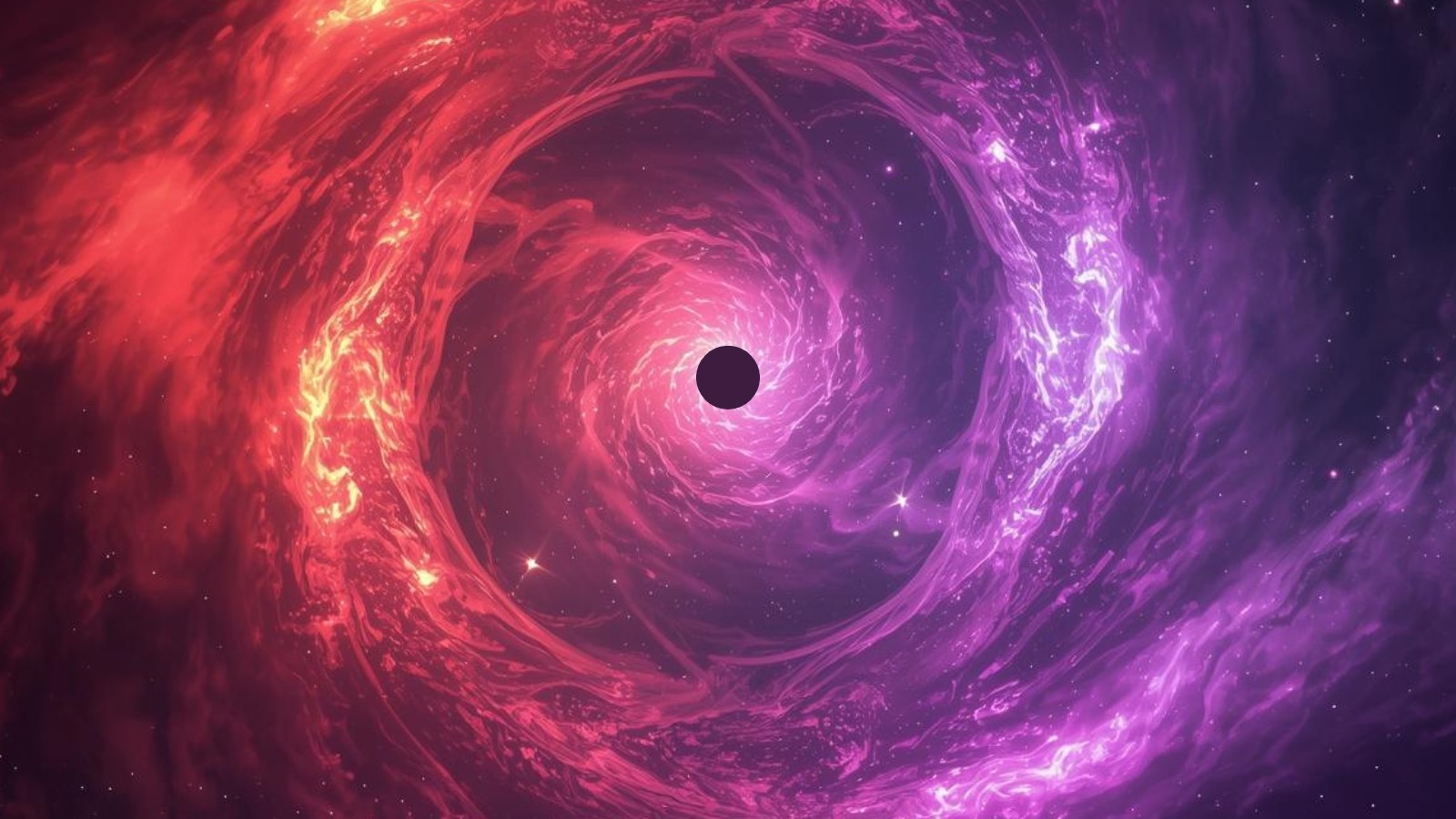
Nikodem Poplawski, a theoretical physicist at the University of New Haven, proposes that tiny primordial black holes, born in the immediate aftermath of the Big Bang, selectively consumed antimatter. These black holes, formed from extreme density fluctuations, could have acted as gravitational “sinks,” preferentially capturing heavier antimatter particles due to their slightly slower speeds.
“The mass asymmetry and the resulting black-hole capture asymmetry produced the matter–antimatter imbalance in the observable universe without violating the conservation of baryon number and invoking new physics beyond the Standard Model,” says Poplawski.
How It Would Work
The theory relies on two key points. First, antimatter particles are slightly more massive than their matter counterparts. Second, the slower a particle moves, the more likely it is to be captured by a black hole’s gravity. This combination would have allowed primordial black holes to draw in antimatter at a higher rate than matter, gradually reducing its presence in the early universe.
Implications for Early Black Hole Growth
This hypothesis also addresses another cosmological puzzle: the unexpectedly rapid growth of supermassive black holes in the early universe. The James Webb Space Telescope has detected these behemoths existing just 500 million years after the Big Bang, far earlier than previously thought possible. Poplawski suggests that by gorging on antimatter, primordial black holes could have reached immense sizes much faster than through conventional accretion.
“Primordial black holes consumed more antimatter than matter, and because antimatter was much heavier than matter, primordial black holes enormously increased their masses,” Poplawski explains.
The Road Ahead
Currently, the existence of primordial black holes remains hypothetical. Detecting them directly is a major challenge, as they would have existed in an era extremely difficult to observe. Future experiments involving gravitational waves or neutrino detection might offer a path toward verification. Additionally, precise measurements of matter-antimatter mass differences at extreme densities could provide supporting evidence.
This theory offers a compelling, albeit speculative, solution to one of cosmology’s deepest mysteries. If confirmed, it would rewrite our understanding of how the universe evolved from a symmetrical beginning to the matter-dominated cosmos we observe today.