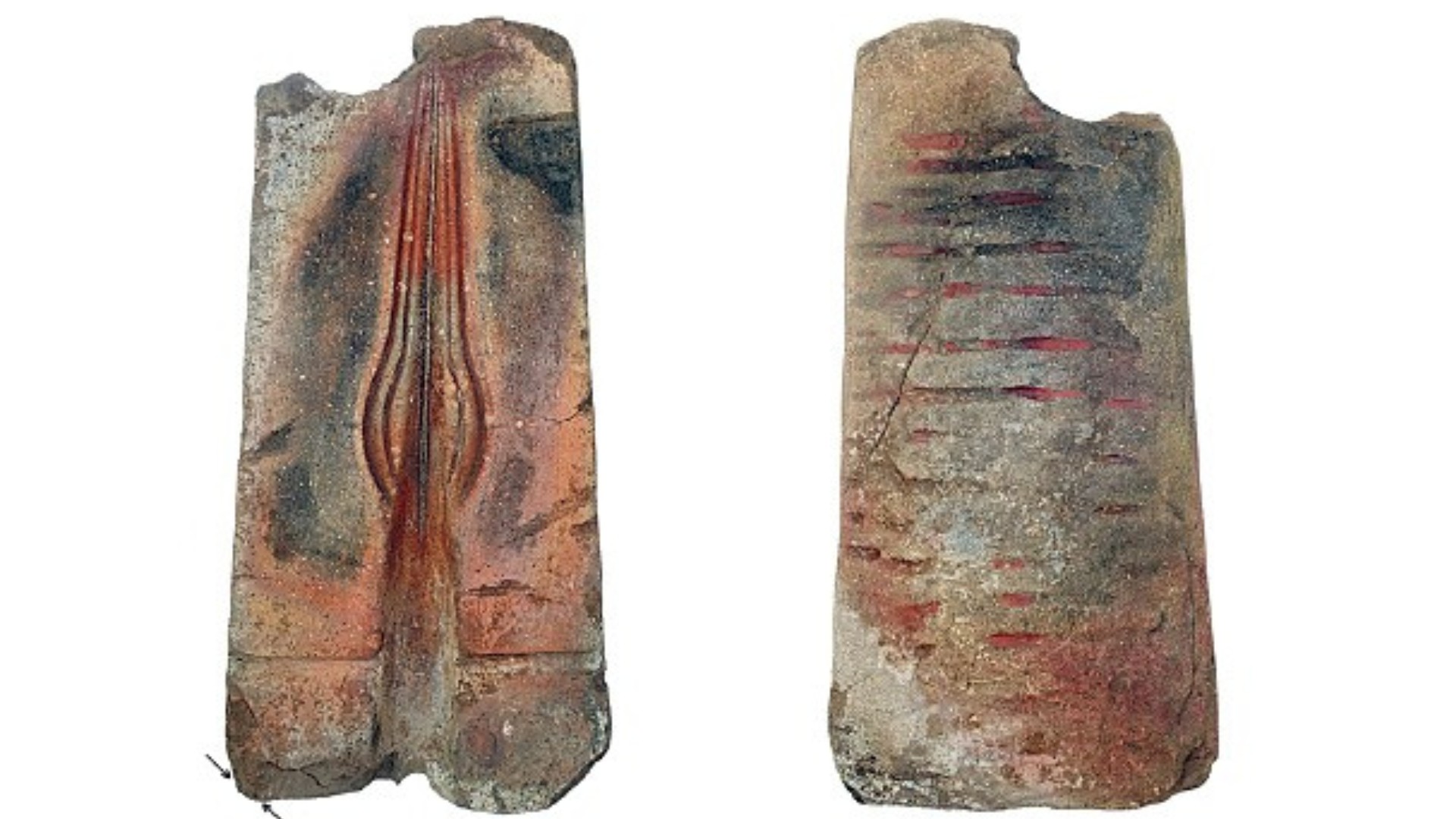
A seemingly unremarkable stone discovered in a Czech garden has turned out to be a remarkably well-preserved mold used for casting bronze spearheads during the Late Bronze Age – around 1350 B.C. The find, detailed in the journal Archeologické Rozhledy, offers a rare glimpse into the mass production of weaponry that fueled conflict and trade in Central Europe over three millennia ago.
A Serendipitous Discovery
Homeowner J. Tomanec first noticed the gray stone protruding from the ground in 2007 while working on the foundation of an old barn. It wasn’t until 2019, when he donated the object to the Moravian Museum, that its true nature was revealed through X-ray fluorescence analysis. The 9-inch-long mold, carved from rhyolite tuff, is half of a two-part casting system, originally held together with copper wire.
The significance of this find lies in its exceptional condition and clarity. Unlike most archaeological fragments, this mold is nearly complete, providing a detailed record of how Bronze Age metalworkers standardized weapon production.
From Hungarian Volcanoes to Czech Fields
Archaeologist Milan Salaš, lead author of the study, notes the mold’s origins trace back to northern Hungary, specifically the volcanic Bükk Mountains. The rhyolite tuff used in its construction is characteristic of this region, suggesting the mold was imported to southern Moravia. This points to established trade routes and a degree of specialization in metalworking during the Urnfield culture.
The Urnfield culture (mid-second millennium B.C.) is notable for its distinctive burial practices, including cremating the dead and interring remains in urns within field cemeteries. This society was clearly technologically advanced, capable of producing standardized weaponry efficiently.
The Mechanics of Ancient Warfare
Molds like this one facilitated the serial production of bronze spearheads, axes, and daggers. The resulting uniformity would have simplified logistics for armies and bolstered the economic power of cultures across the Carpathian Basin. The mold’s wear patterns suggest it was used repeatedly, possibly casting dozens of spearheads before being discarded or repurposed.
The discovery challenges assumptions about primitive weapon-making. It demonstrates a sophisticated understanding of metallurgy and a willingness to invest in standardized production—a hallmark of organized warfare and trade.
A Long Road to Recognition
The path from discovery to publication spanned nearly two decades. The homeowner’s initial find in 2007 wasn’t fully understood until advanced geological analysis, including X-ray diffraction, pinpointed the mold’s Hungarian origin in 2025. This illustrates how long it can take for unique archaeological objects to be properly assessed and integrated into historical narratives.
The presence of the mold in a Czech backyard remains a mystery; it was likely moved there from a nearby Urnfield Period settlement at some point in the past. Regardless, this accidental discovery underscores that even the most mundane locations can hold extraordinary secrets about our ancestors.
This find not only expands our knowledge of Bronze Age technology but also highlights the interconnectedness of ancient societies through trade, warfare, and material culture.