A recent genetic analysis of two men buried within Spain’s prehistoric Dolmen de Menga has uncovered a complex tapestry of ancestry, while simultaneously raising profound questions about the religious identities of those living in medieval Iberia.
The findings, published in the Journal of Archaeological Science: Reports, reveal that these individuals—buried thousands of years after the monument was originally built—possessed genetic markers that bridge Europe, North Africa, and the Middle East.
A Collision of Eras
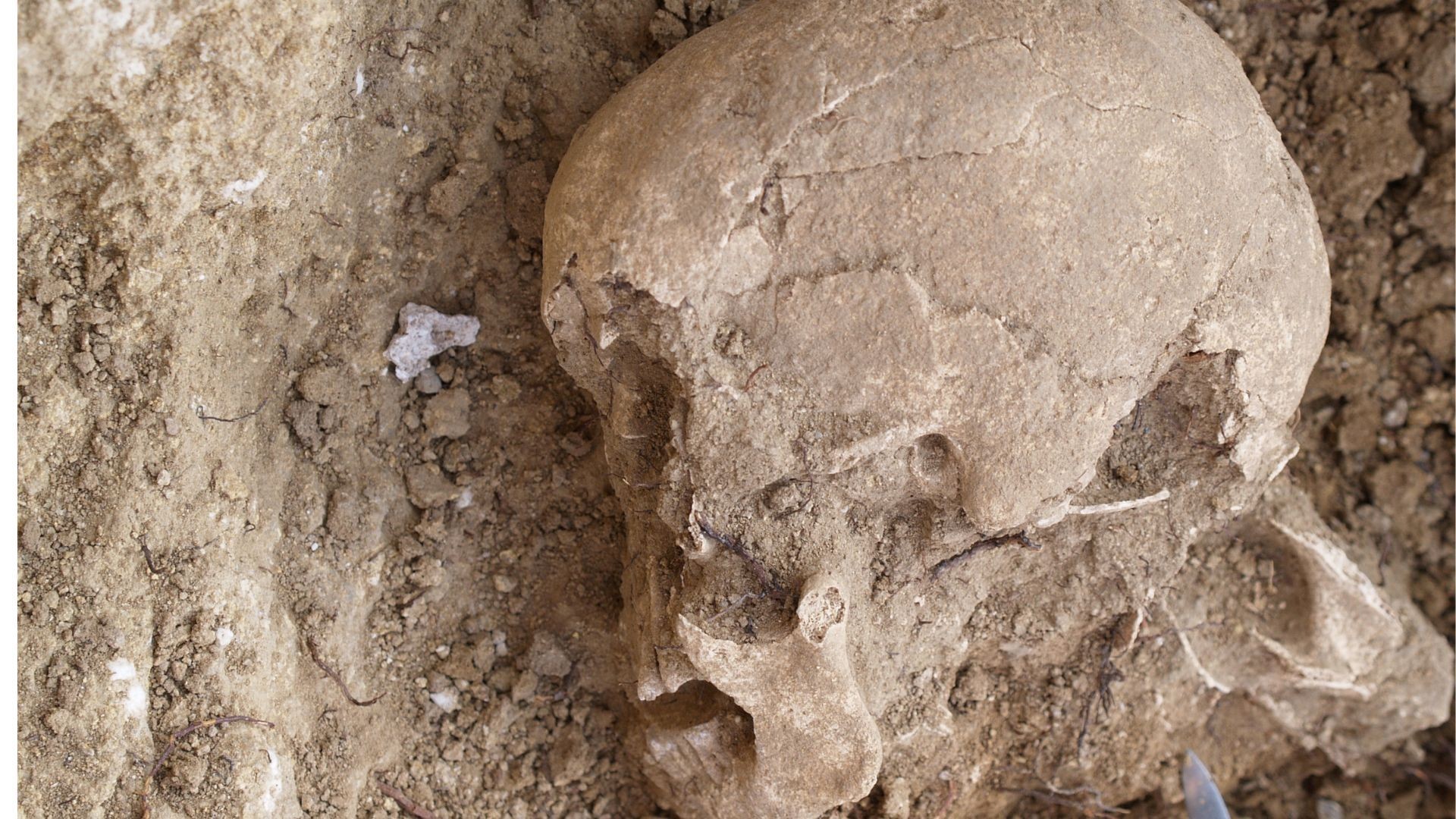
The Dolmen de Menga is a massive megalithic structure dating back to the Neolithic period (the New Stone Age) in the fourth millennium B.C. While the monument has been a known archaeological site since the 19th century, it holds a surprising secret: in 2005, archaeologists discovered two additional burials within its atrium.
These burials were not from the Stone Age, but from the medieval period:
– One dating to the 8th or 9th century A.D.
– One dating to the 10th or 11th century A.D.
This reuse of prehistoric sites is a phenomenon seen in other parts of the Iberian Peninsula, where medieval populations occasionally repurposed ancient landmarks for funerary rites.
Genetic Connections Across the Mediterranean
The DNA analysis focused heavily on the man from the 10th or 11th-century burial. Researchers determined he was over 45 years old and possessed a highly diverse genetic profile:
- Paternal Lineage: His Y-chromosome matches a lineage that has been present in Iberia since the Copper Age (approx. 3200–2200 B.C.).
- Maternal Lineage: His mitochondrial DNA shows a connection to European lineages present since the Early Neolithic, but also links him to modern-day Northwest Africa.
- Modern Links: The man shares specific genetic mutations with two living individuals—one in Morocco and one in Algeria.
This genetic mix is consistent with the historical reality of southern Spain during the era of Al-Andalus, a Muslim kingdom. The researchers noted that North African ancestry was widespread in the region due to centuries of trade and migration facilitated by the Phoenicians, Carthaginians, and the Roman Empire, and later intensified by Islamic political expansion.
The Religious Enigma
Despite the clarity provided by DNA, the spiritual lives of these men remain shrouded in mystery. Both men were buried in simple pits without “grave goods” (items buried with the dead), which complicates efforts to identify their faith.
The orientation of the bodies provides conflicting clues:
1. Alignment with the Monument: The men were laid with their heads on their right sides, pointing southwest, aligned with the symmetry of the ancient dolmen.
2. Alignment with Mecca: Their faces were directed southeast, which is the direction of Mecca, a key requirement for Islamic burial.
“The fact that both individuals were buried at the entrance of a monument which already at their time was extremely old… may be significant, indicating that these two men revered the dolmen,” explained study co-author Leonardo García Sanjuán.
This creates a fascinating tension. While the facial orientation suggests an Islamic practice, the decision to bury them in alignment with a prehistoric pagan monument suggests a hybrid worldview. Researchers suggest these men may have practiced a blend of Islamic and pagan beliefs, or perhaps viewed the ancient dolmen through a symbolic lens—such as a “sacred cave,” a concept with deep roots in Islamic tradition.
Conclusion
The discovery highlights how medieval populations in Al-Andalus maintained complex, multi-layered identities that blended new religious frameworks with deep-seated reverence for the ancient landscapes around them.