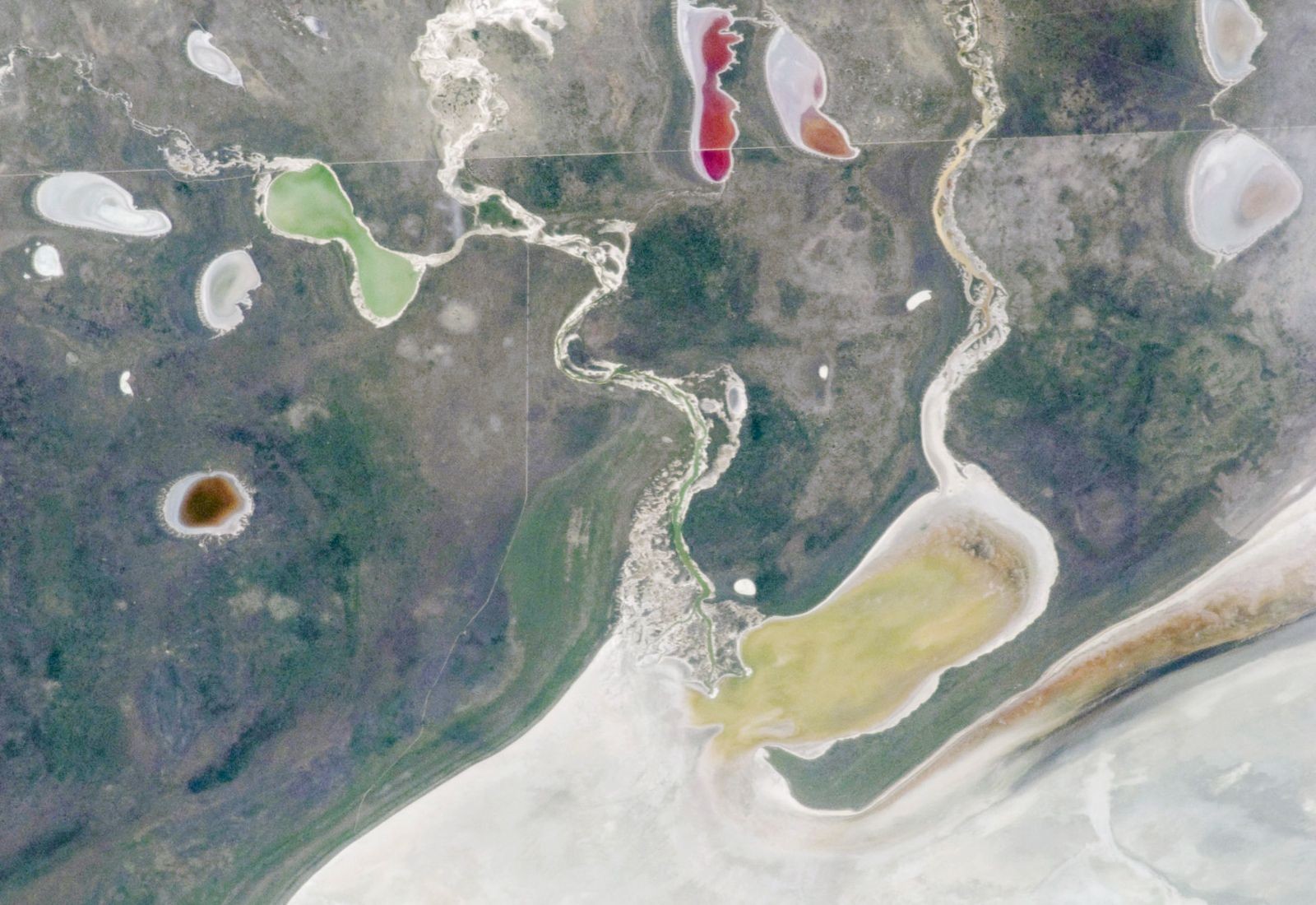
The Etosha Pan, a vast salt flat in northern Namibia, recently displayed a striking phenomenon visible even from orbit: the sudden emergence of vividly colored, temporary lakes. Captured in an astronaut photograph, these ephemeral bodies of water showcase yellows, greens, browns, reds, and pinks – a result of algal blooms in the shallow, recently flooded depressions surrounding the pan. This event highlights the dramatic shifts in this unique landscape and the interplay between extreme dryness and brief, vibrant life.
The “Great White Place” and Its Transient Waters
Etosha Pan, known locally as the “Great White Place,” covers approximately 4,730 square kilometers (1,800 square miles) and is one of Africa’s largest salt flats. The pan itself remains largely dry, but the Ekuma and Oshigambo rivers occasionally flood, filling bowl-shaped depressions along their banks. The recent heavy rains caused about half of these depressions to fill, creating the rainbow-hued spectacle seen in the satellite imagery.
The vivid colors are likely due to different species of algae thriving in the shallow, mineral-rich waters. The green lake, for example, stretches roughly 6.5 kilometers (4 miles) long at its widest point.
This isn’t a common occurrence; the last major flooding event captured from space was in 2006. The pan formed roughly 10 million years ago as a freshwater lake but dried out around 16,000 years ago due to tectonic shifts that diverted its water sources. The resulting mineral deposits now form the characteristic honeycomb-like hexagonal structures across the salt flat.
A Wildlife Haven in a Harsh Landscape
Despite its harsh conditions, the Etosha Pan region supports a surprisingly rich ecosystem. The surrounding grasslands and woodlands are protected as part of Etosha National Park, home to lions, giraffes, zebras, elephants, rhinos, and other wildlife. The salt flats themselves serve as a critical breeding ground for flamingos; sometimes, up to one million birds gather there.
The park employs a 3-meter (10-foot) tall fence to deter animals from wandering outside protected areas, where they would be vulnerable to poaching. This barrier is visible in the astronaut photo, running across the image above the green lake.
Why This Matters
The ephemeral nature of these lakes underscores the vulnerability of this ecosystem to climate fluctuations. The flooding events, while visually stunning, are becoming increasingly erratic due to broader environmental shifts. The Etosha Pan serves as a stark reminder of how even seemingly desolate landscapes can harbor complex and fragile ecosystems.
The pan’s dependence on sporadic rainfall, combined with tectonic activity that altered its water supply millennia ago, makes it a valuable case study for understanding long-term environmental change. This event is not just an aesthetic wonder; it is a direct reflection of the region’s changing conditions, and the importance of conservation efforts in preserving this unique habitat.