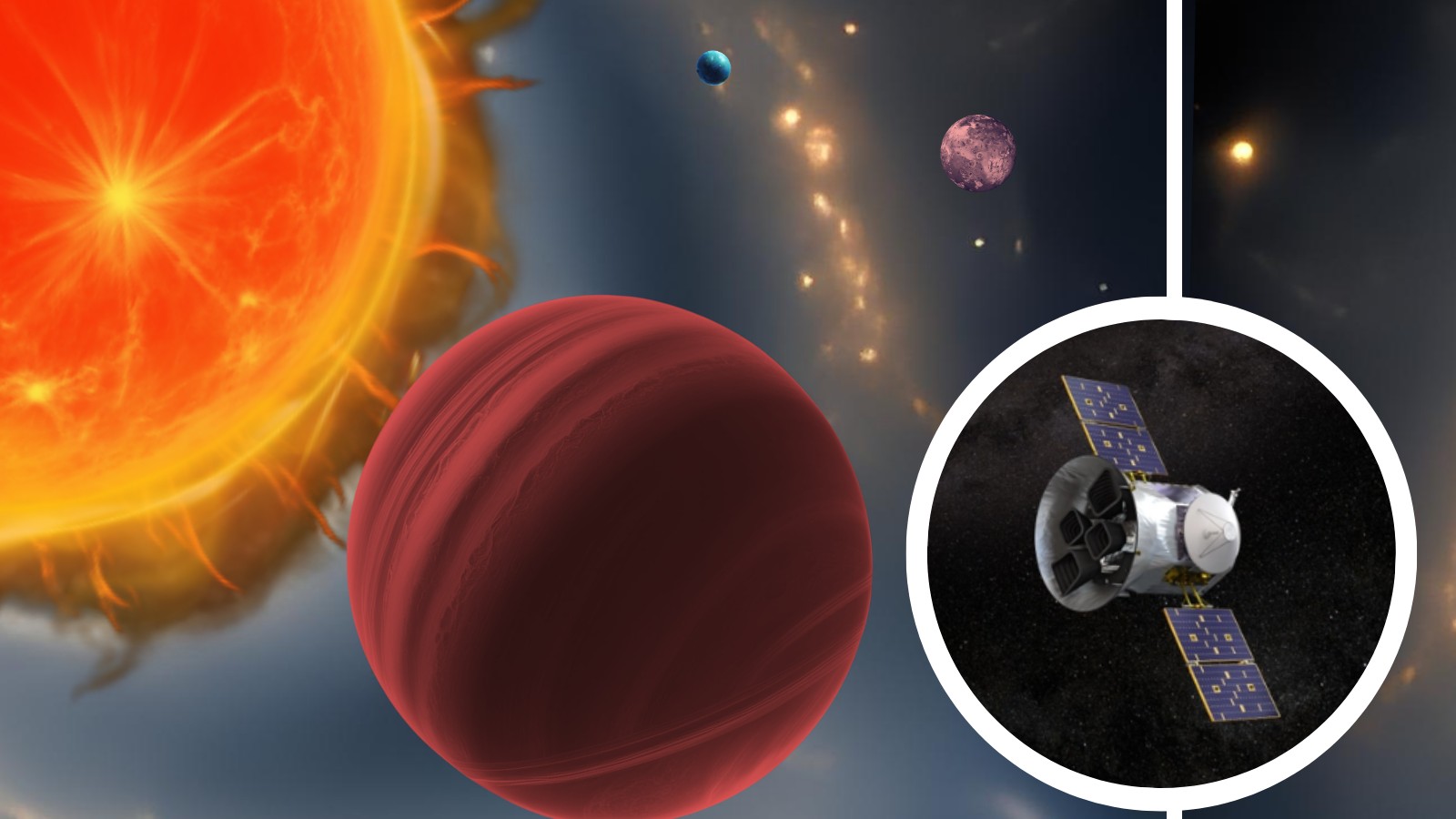
Astronomers have identified more than 100 previously undetected exoplanets – worlds orbiting stars beyond our Sun – by applying artificial intelligence to data collected by NASA’s Transiting Exoplanet Survey Satellite (TESS). This discovery, driven by a new AI program called RAVEN, also points to an additional 2,000 potential exoplanets, approximately half of which were previously unknown.
The Power of AI in Exoplanet Hunting
The TESS mission identifies exoplanets by detecting the slight dimming of a star’s light as a planet passes in front of it, a phenomenon known as a “transit.” RAVEN analyzed over 2.2 million stars observed during TESS’s first four years, focusing on planets with extremely tight orbits – completing an orbit in just 16 Earth days. This ability to pinpoint these fast-orbiting worlds is crucial because it allows scientists to better understand how common they are and where they most frequently occur.
Confirming Candidates: A Major Challenge
Currently, NASA’s exoplanet catalog contains roughly 6,000 confirmed planets, but thousands of candidates remain unverified. The primary hurdle is distinguishing between true planetary transits and other events that mimic them, such as eclipsing binary stars. RAVEN directly addresses this issue by analyzing data with machine learning to identify patterns indicative of genuine planets.
RAVEN’s Edge: A Complete Pipeline
RAVEN stands out because it handles the entire exoplanet-detection process in a single workflow, from initial signal detection to machine learning validation and statistical confirmation. This contrasts with many existing tools that focus on only specific stages of the process.
“RAVEN allows us to analyze enormous datasets consistently and objectively,” says David Armstrong, a researcher at the University of Warwick. “Because the pipeline is well-tested and carefully validated, this is not just a list of potential planets – it is also reliable enough to use as a sample to map the prevalence of distinct types of planets around sun-like stars.”
Mapping Planetary Populations and the “Neptunian Desert”
The analysis confirms that approximately 10% of Sun-like stars host close-in planets, aligning with earlier observations from NASA’s Kepler mission. Crucially, RAVEN has also provided a precise estimate of how rare Neptune-sized planets are in close orbits – a region astronomers call the “Neptunian desert.” The study shows these planets occur around only 0.08% of Sun-like stars, reinforcing the idea that this region is sparsely populated.
This discovery highlights how AI is rapidly changing astronomy, enabling researchers to extract meaningful insights from massive datasets. The ability to systematically and reliably identify exoplanet candidates will accelerate the search for habitable worlds beyond our solar system.