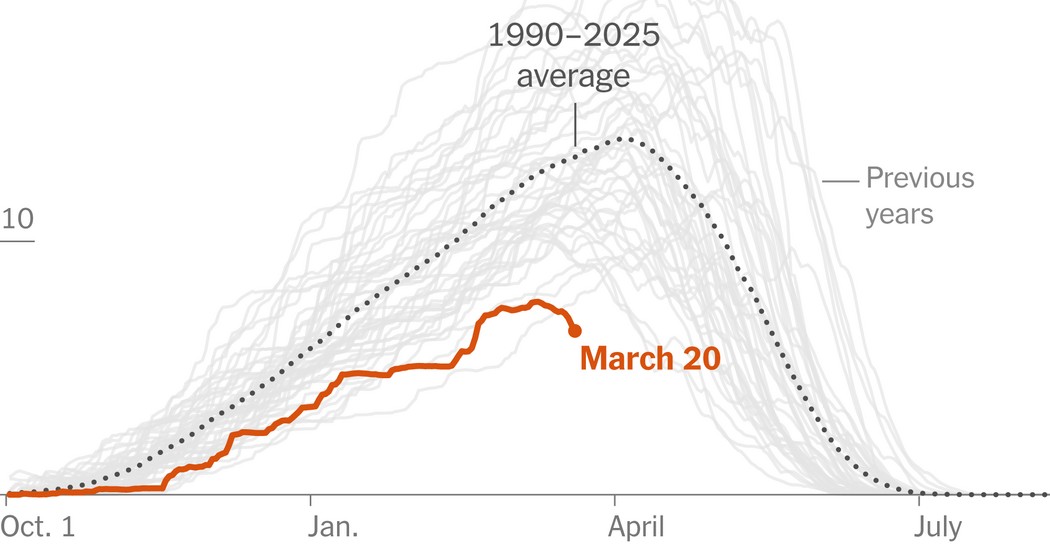
The American West is facing an unprecedented water crisis, driven by record-breaking heat and the lowest snowpack levels ever recorded. This winter has been drastically warmer than normal across six states – Arizona, New Mexico, Colorado, Utah, Wyoming, and Oregon – and the conditions are accelerating snowmelt at an alarming rate. This isn’t just a dry year; it’s a fundamental shift in how the region’s water cycle functions.
Unprecedented Conditions
Snowpack in the Colorado River Basin, a critical source of water for millions, is at record lows. The usual late-winter accumulation never materialized, and a recent heatwave has essentially sealed the fate of much of the remaining snow. Experts describe the situation as dire, with some calling this “the nail in the coffin” for water availability.
The problem isn’t solely a lack of precipitation. Many areas experienced normal rainfall levels, but temperatures were so high that moisture fell as rain instead of snow, even at high elevations. This means the West is losing its natural water storage system – the slow, sustained release from melting snowpack – which accounts for as much as 80% of water supplies in some regions. Instead, water is running off quickly or evaporating before reaching rivers and reservoirs.
Escalating Risks
The heatwave is exacerbating existing drought conditions and dramatically increasing wildfire risk. Nebraska recently experienced its largest wildfire in state history, fueled by dry conditions. The combination of low snowpack and rising temperatures means peak snowmelt flows will occur earlier than ever, leaving communities scrambling to manage water resources.
The Colorado River Basin is particularly vulnerable. Inflows to Lake Powell are projected to be among the lowest on record, potentially jeopardizing hydroelectric power production for seven states. The Bureau of Reclamation is monitoring the situation but offers no immediate solutions. Meanwhile, negotiations among the seven basin states to update water-sharing agreements have stalled.
Climate Change Link
Scientists confirm that this extreme heat would be virtually impossible without human-caused climate change. The current temperatures are so far outside historical norms that they’re expected to occur only once in 500 years under natural conditions. This is no longer a cyclical drought; it’s a climate-driven crisis.
Immediate Impact
Cities like Denver are bracing for Stage One drought restrictions, asking residents to conserve water. The Denver Water Board acknowledges “very high levels of concern” about the current snowpack conditions, which threaten water availability in the long term.
“A lot of it is going to evaporate off before it even has a chance to hit the stream,” warns John Fleck, a water policy expert at the University of New Mexico.
The situation is especially critical because reservoir storage is already depleted, meaning there’s no “cushion” to fall back on. The West faces a crisis unlike any seen in decades.
The combination of record heat, unprecedented snow drought, and failed water negotiations creates a perfect storm for water shortages, increased wildfire risk, and potential power disruptions. The crisis demands immediate action, but the long-term outlook remains bleak.