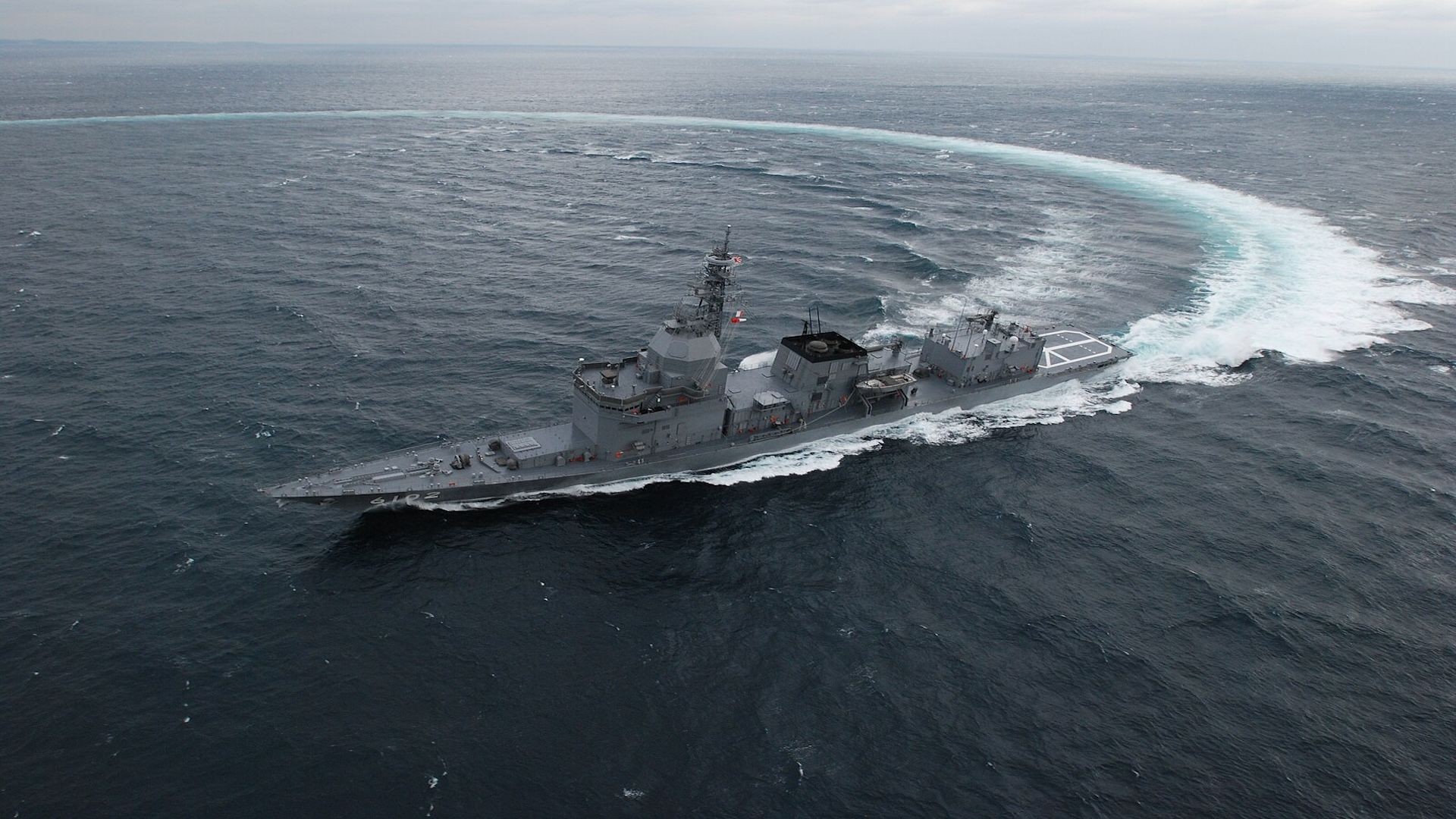
Japan has successfully installed a 100-kilowatt laser weapon system on a warship, marking a significant step forward in directed-energy warfare. The system, designed to neutralize drones, mortar rounds, and other airborne threats, combines ten individual 10-kilowatt lasers into a single, highly focused beam capable of burning through metallic surfaces.
Development and Deployment
The weapon system was developed by Kawasaki Heavy Industries and delivered to Japan’s Acquisition, Technology, and Logistics Agency (ATLA) in February 2023. It was recently installed on the JS Asuka test ship at Japan Marine United’s shipyard in December 2023. This deployment represents the culmination of a development program that began in 2018.
The system’s key advantage lies in its “unlimited magazine depth,” meaning it can engage targets repeatedly as long as sufficient electrical power is available. This contrasts sharply with traditional air-defense systems that rely on finite ammunition supplies. Ground-based tests earlier this year confirmed the weapon’s effectiveness against drones and mortar rounds.
Technical Specifications
The laser is a fiber laser, a technology that amplifies light through a doped optical fiber. This allows for high energy concentration and precise targeting. While highly effective, fiber lasers typically operate at efficiencies between 25% and 35%, requiring substantial electrical power and cooling.
The weapon is housed in two 40-foot (12-meter) domed modules and will undergo sea trials starting after February 27, 2026. These trials will assess the system’s performance under real-world maritime conditions, including wind, moisture, and ship motion.
Strategic Implications
Japan is now one of several nations actively developing directed-energy weapons. The U.S., France, Germany, and the U.K. are confirmed to be pursuing similar technologies, with China also suspected of doing so. Japan’s Ministry of Defense plans to integrate laser weapons into its advanced “Aegis” naval defense platform, with expected service entry after 2032.
The development of laser weaponry marks a fundamental shift in naval warfare, offering potentially limitless engagement capabilities without the constraints of conventional ammunition.
Future Challenges
Despite the progress, operational deployment remains years away. Laser weapons face ongoing challenges related to recharge times, cooling requirements, and maintaining accuracy in harsh conditions. ATLA officials are evaluating whether more powerful lasers could eventually intercept missiles, but this remains a long-term goal. The current focus is on validating the system’s viability in realistic maritime environments.
The adoption of laser weapons signals a growing trend toward directed-energy technology as a key component of modern defense strategies. This shift could reshape naval warfare by providing more efficient, cost-effective, and sustainable defense capabilities.