Key takeaway: New research suggests the gut microbiome played a critical role in the evolution of larger brains in primates, including humans, by influencing brain metabolism and potentially contributing to neurodevelopmental disorders.
The Link Between Gut Bacteria and Brain Size
For decades, scientists have puzzled over why humans possess disproportionately large brains compared to other primates. This demands immense energy, especially glucose, prompting researchers to investigate whether changes in the gut microbiome could have supported this evolutionary leap. A recent study published in the Proceedings of the National Academy of Sciences provides compelling evidence that gut bacteria can directly influence brain function and gene expression.
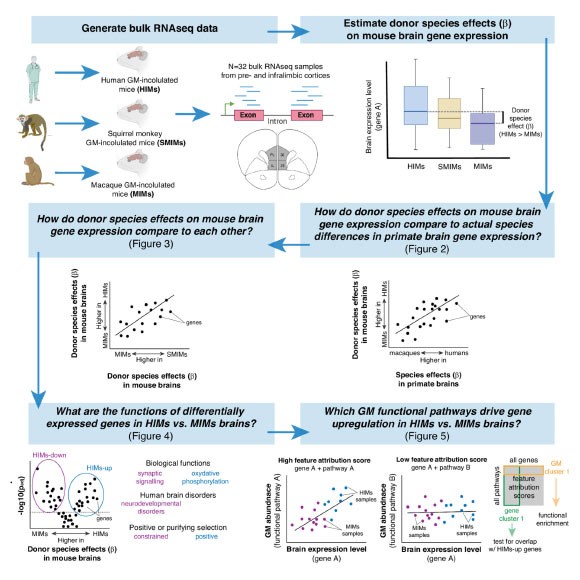
The study used germ-free mice, which lack their own gut microbes, to test the hypothesis. Researchers transplanted gut bacteria from three primate species – humans, squirrel monkeys (large brains), and macaques (small brains) – into the mice. Within weeks, significant differences emerged in brain gene expression. Mice colonized with human or squirrel monkey gut microbes showed increased activity in genes related to energy production and synaptic plasticity, which is the brain’s ability to learn. Conversely, mice with macaque gut microbes displayed less activity in these same processes.
Mimicking Primate Brains in Mice
The most striking finding was that the brain gene expression patterns in mice closely mirrored those observed in the actual primate species. According to Northwestern University researcher Katie Amato, “We were able to make the brains of mice look like the brains of the actual primates the microbes came from.” This suggests a direct causal link between gut microbiome composition and brain development.
This isn’t just about bigger brains. The researchers also found that mice with smaller-brain primate microbes exhibited gene expression patterns associated with neurodevelopmental disorders, including ADHD, schizophrenia, bipolar disorder, and autism. While correlation between gut health and these conditions has been observed before, this study suggests that the microbiome may causally contribute to their development.
Implications for Human Health and Evolution
This research has significant implications for our understanding of human evolution. If the human brain’s energy demands were met, in part, through gut microbial adaptations, it means early humans may have relied on specific microbial communities to support cognitive development. If a human brain doesn’t encounter the “right” microbes in early life, its development could be altered, potentially increasing the risk of neurodevelopmental disorders.
“This study provides more evidence that microbes may causally contribute to these disorders —specifically, the gut microbiome is shaping brain function during development.” – Dr. Katie Amato
The findings underscore the importance of a healthy gut microbiome for optimal brain function and highlight the potential role of early microbial exposure in shaping neurological development. Further research is needed to fully understand the complex interplay between gut microbes, brain metabolism, and neurodevelopmental conditions, but this study marks a significant step towards unraveling the evolutionary roots of human intelligence.
The study builds upon previous findings that showed the microbes of larger-brained primates, when introduced in host mice, produced more metabolic energy in the microbiome of the host — a prerequisite for larger brains, which are energetically costly to develop and function.