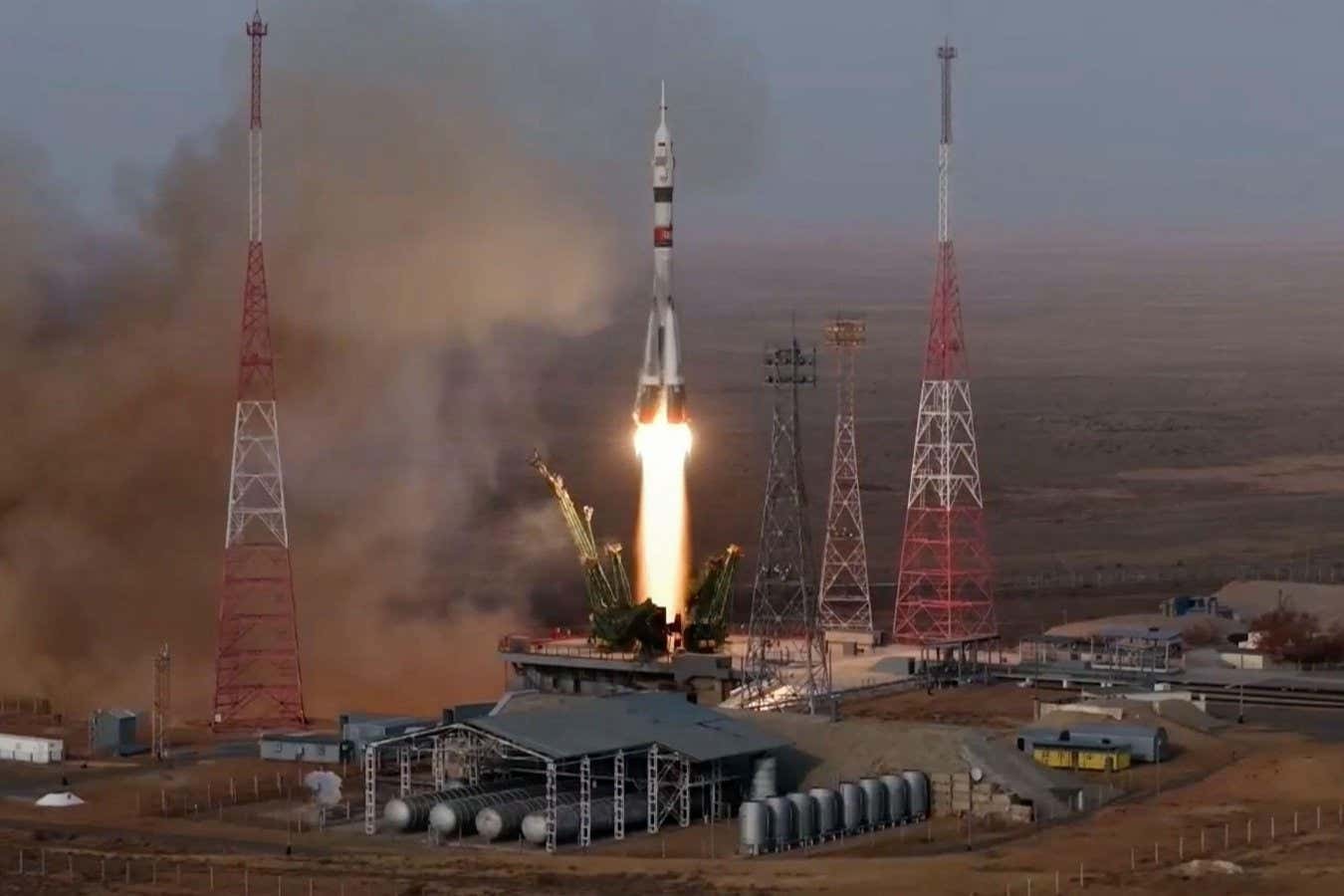
Recent damage at Russia’s primary human spaceflight launch facility threatens the future of the International Space Station (ISS). A critical support structure at Baikonur Cosmodrome, the only site capable of launching crewed missions, has collapsed, potentially disabling the pad for up to two years. This leaves NASA facing a difficult choice: shoulder increased costs and responsibility to keep the ISS operational, or risk its demise.
The incident occurred after a Soyuz spacecraft successfully docked with the ISS on November 27th. Post-launch inspection revealed a collapsed multi-level support structure, damaging the launch pad itself. Roscosmos claims repairs will occur “in the near future,” but independent experts estimate delays of up to two years.
Why This Matters: Baikonur’s Launch Pad 6 is unique. Russia’s other facilities—Plesetsk and Vostochny—are unsuitable for crewed ISS missions due to orbital constraints or lack of infrastructure. This creates a single point of failure for a project already nearing its end.
The ISS was initially slated for decommissioning in 2020, but extensions have kept it aloft. Current plans call for controlled deorbiting by 2030, culminating in a fiery atmospheric breakup in 2031. Without Russian support, NASA would have to either significantly increase funding or allow the ISS to deteriorate rapidly.
However, the US has strategic incentives to keep the ISS functioning. With no immediate replacements (commercial stations or lunar bases are years away), halting ISS operations would leave the US and Europe without orbital research facilities while China’s space station thrives.
“It wouldn’t look good,” says space expert Davide Amato. “And there’s definitely tonnes of incredible research that is enabled by that platform, so that would be a huge loss.”
The ISS was designed to require international cooperation: Russia’s segment provides critical orbital maintenance, while the US segment supplies power. Neither can operate independently. Tensions between Russia and the West, particularly since 2014, have complicated this interdependence.
If Russia fully withdraws, NASA would need to assume responsibility for propellant, supplies, and potentially the Russian Orbital Segment itself. Budget constraints already pose a challenge. Roscosmos has yet to comment on the extent of the damage, and ESA/CSA have not responded to inquiries.
NASA spokesperson Jimi Russell confirmed ongoing coordination with Roscosmos but declined to discuss contingency plans. SpaceX’s Dragon capsule offers an alternative launch solution, potentially reversing the US reliance on Russia that existed after the Space Shuttle’s retirement.
Though logistically complex, NASA could shift launch operations to SpaceX. The bigger issue would be maintaining the Russian Orbital Segment, which requires specialized training only Roscosmos cosmonauts currently possess.
Ultimately, the situation forces a decision: invest to preserve the ISS, or allow it to decline. The geopolitical implications and scientific losses weigh heavily on the outcome.