


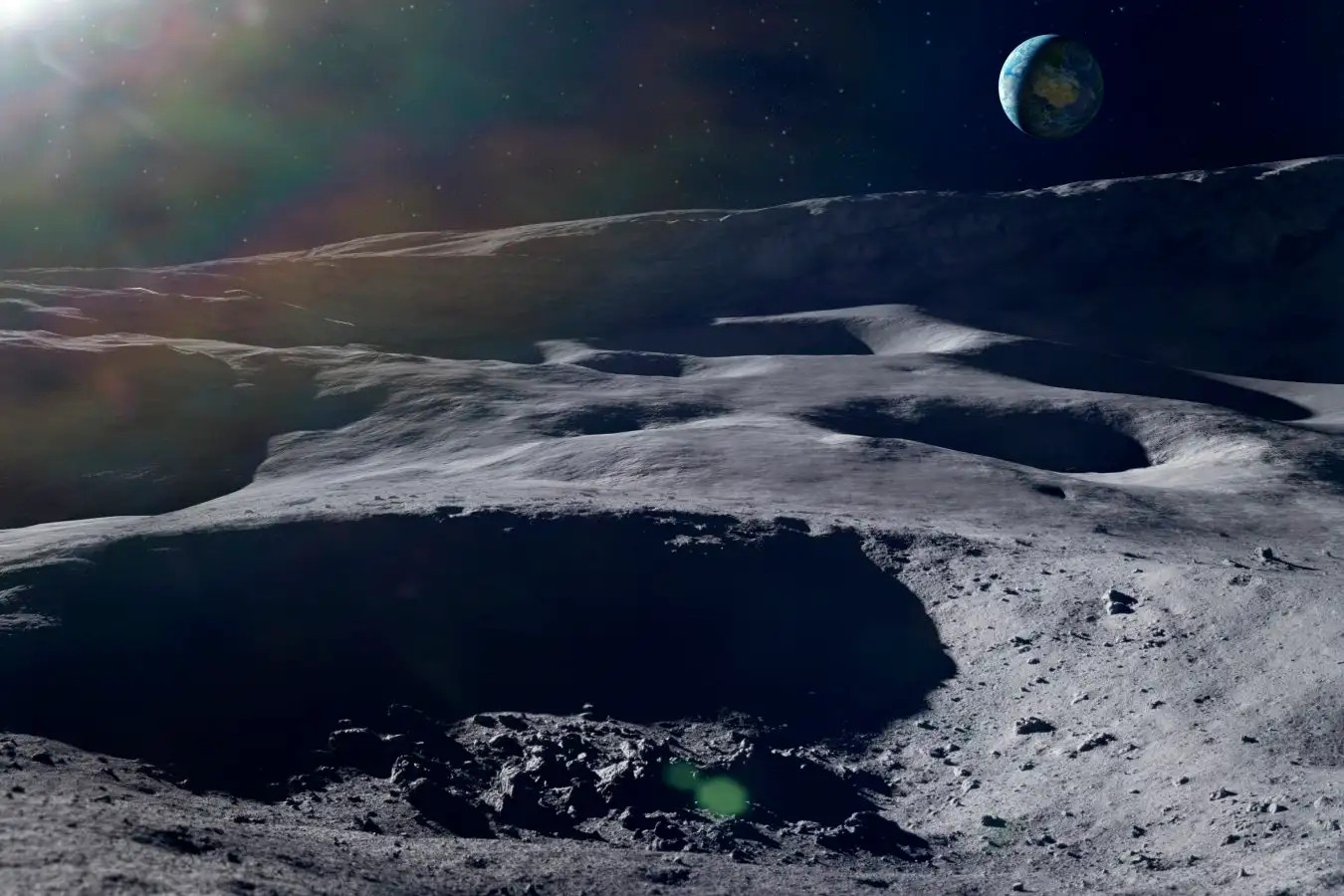
Scientists are proposing the construction of an ultra-stable laser within one of the Moon’s permanently shadowed polar craters. This isn’t about weaponry; it’s about precision timing and navigation for future lunar missions and potentially even Earth-based applications. The key idea: the Moon’s extreme cold and near-total vibration isolation create ideal conditions for a laser that could outperform any currently available on Earth.
Why the Moon? The Physics of Stability
The stability of a laser relies heavily on its environment. Highly precise lasers work by bouncing a beam between mirrors in a vacuum chamber. To keep the beam consistent, the chamber must remain at an extremely stable temperature and free from vibrations. Earth-based lasers struggle with this, as temperature fluctuations and seismic activity introduce errors.
The Moon, however, offers a solution. Its polar craters, perpetually shielded from sunlight due to the Moon’s minimal axial tilt, maintain incredibly low temperatures – some as cold as -253°C (-20 Kelvin). This natural deep freeze, combined with the Moon’s lack of atmosphere and minimal seismic activity, creates an environment where laser stability could be maximized.
How It Would Work: A Lunar Optical Cavity
The proposed device would be similar to optical cavities already developed in labs on Earth, consisting of a silicon chamber with two mirrors. However, due to the Moon’s stability, the laser could maintain coherence – meaning its light waves stay synchronized – for at least a minute, far longer than the few seconds achievable on Earth.
This extended coherence unlocks several possibilities:
- Lunar Timekeeping: Establishing a precise time zone on the Moon.
- Satellite Coordination: Enabling high-accuracy distance measurements between lunar satellites.
- Earth-Based Reference: Providing a stable reference point for Earth-based timing systems (given the 1.3-second signal delay).
Challenges and Future Implications
Implementing this project won’t be easy. Deploying and maintaining such a device on the Moon presents significant engineering hurdles. However, experts like Simeon Barber at the Open University, UK, agree that the concept is sound.
“Recent lunar polar landers have experienced suboptimal landing events due to lighting conditions, which affect vision-based navigation. A stable laser could dramatically increase landing reliability at high latitudes.”
The Moon’s frigid darkness could prove to be an unlikely asset, pushing the boundaries of precision technology. While the idea is ambitious, the potential benefits for future lunar exploration and even terrestrial applications make it a concept worth serious consideration.


