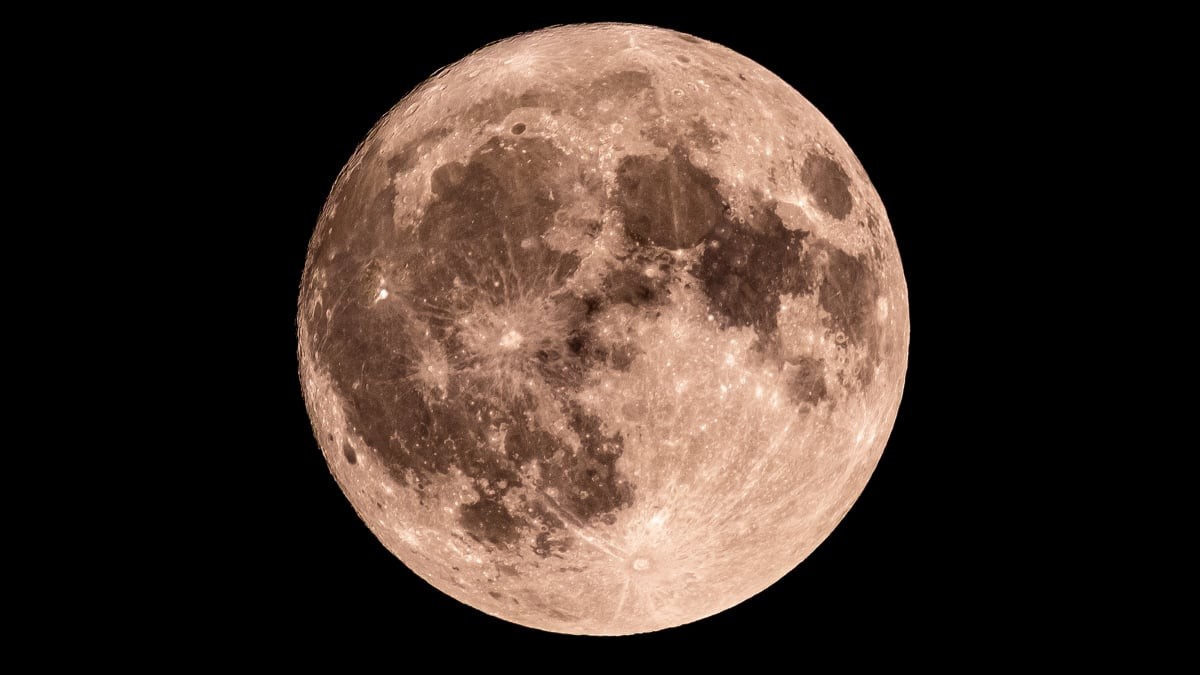
Tonight, the Moon is transitioning through its waning phase, appearing slightly less than full as it moves toward its next New Moon. For observers looking toward the night sky, this period offers a unique perspective on the lunar surface and a clear view of several prominent geological features.
Current Lunar Status: The Waning Gibbous
As of Wednesday, April 8, 2026, the Moon is in the Waning Gibbous phase. According to NASA, approximately 68% of the lunar surface is illuminated from our perspective on Earth.
In the lunar cycle, “waning” refers to the period when the visible illuminated portion of the Moon begins to shrink each night. This process is part of the roughly 29.5-day orbit the Moon completes around Earth, during which the angle of sunlight hitting the Moon changes, creating the shifting phases we observe.
Observation Guide: What to Look For
Depending on the equipment you have available, tonight provides several opportunities for celestial viewing:
- The Naked Eye: You can easily spot major features such as the Mare Imbrium (a large lunar plain), the Tycho Crater, and the Oceanus Procellarum (the Ocean of Storms).
- Binoculars: For a more detailed view, look for the Gassendi Crater, the Grimaldi Basin, and the Clavius Crater.
- Telescopes: High-magnification tools will allow you to observe specific landmarks, including the Schiller Crater and the historic Apollo 12 landing site.
Looking Ahead
If you are waiting for a fully illuminated sky, you will have to wait a little longer. The next Full Moon is projected to occur on May 1, marking the beginning of a month that will feature two full moons.
Understanding the Lunar Cycle
The changing appearance of the Moon is not due to the Moon itself changing shape, but rather due to its position relative to the Sun and Earth. As the Moon orbits our planet, we see different amounts of its sunlit side. This cycle consists of eight distinct phases:
- New Moon: The Moon is positioned between Earth and the Sun, making its visible side dark.
- Waxing Crescent: A small sliver of light begins to appear on the right side (in the Northern Hemisphere).
- First Quarter: Half of the Moon appears illuminated on the right.
- Waxing Gibbous: Most of the Moon is lit, but it has not yet reached full illumination.
- Full Moon: The entire face of the Moon is visible and fully illuminated.
- Waning Gibbous: The illuminated portion begins to decrease from the right side.
- Third Quarter: Half of the Moon is illuminated, but on the left side.
- Waning Crescent: A final thin sliver of light remains on the left before the cycle resets.
Summary: Tonight’s 68% illuminated Waning Gibbous Moon offers excellent viewing opportunities for amateur astronomers, providing a clear look at major craters and plains as the lunar cycle moves toward its next New Moon.