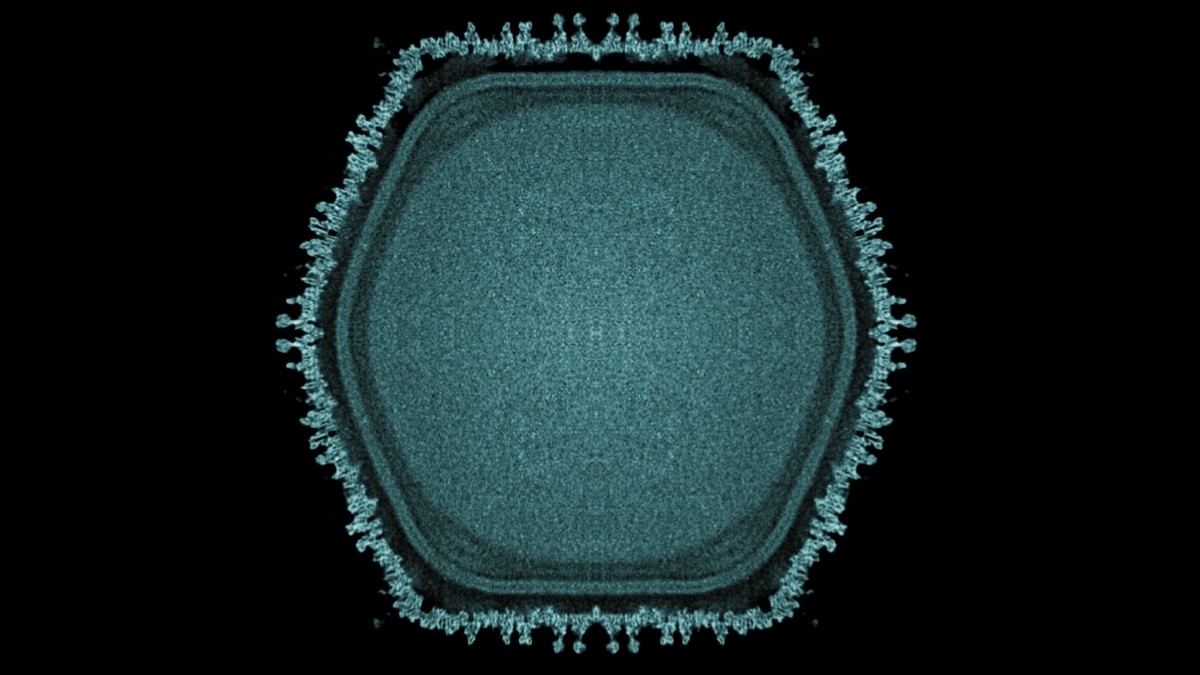
Scientists in Japan have identified a novel giant virus, dubbed “ushikuvirus,” extracted from an amoeba in a freshwater pond near Tokyo. This discovery isn’t just another addition to the growing list of oversized viruses – it could hold key clues to how complex life on Earth evolved from single-celled organisms into the multicellular forms we see today.
The Rise of Giant Viruses: From Overlooked to Ubiquitous
For decades, viruses were classified by size. Initial discoveries of viruses were often misidentified as bacteria due to their larger-than-expected dimensions. Now, scientists know giant viruses are far more common than previously thought. While the exact origins remain murky, viruses are the most abundant biological entities on Earth and exert immense influence over all life forms.
Viruses are not just agents of disease. They can also drive evolution by transferring genetic material between organisms and inserting their own DNA into host genomes. Up to 8% of the human genome consists of ancient viral remnants, which played critical roles in the development of features like myelin and the placenta.
Viral Eukaryogenesis: A Controversial Theory
But the most radical idea surrounding viruses is that they may have triggered the biggest leap in evolution: the emergence of eukaryotic cells. Unlike simpler prokaryotic cells, eukaryotes have a complex internal structure, most notably a nucleus enclosed by a membrane. How this transformation occurred is a long-standing mystery.
One theory suggests that nuclei originated from large DNA viruses invading prehistoric prokaryotes. Molecular biologist Masaharu Takemura proposed in 2001 that a virus like a poxvirus integrated into a host cell, eventually becoming the nucleus itself.
This concept, known as viral eukaryogenesis, gained traction when scientists discovered that giant viruses create internal “virus factories” resembling eukaryotic nuclei. New discoveries, like ushikuvirus, continue to fuel this debate.
Ushikuvirus: A Unique Piece of the Puzzle
Ushikuvirus was found infecting vermamoeba, a type of amoeba, and shares traits with other giant viruses. However, it stands out in how it destroys its host’s nucleus instead of preserving it, a behavior not observed in closely related viruses.
This difference is vital because it provides clues about the evolutionary pathways of giant viruses. Takemura and his team believe that understanding how these viruses diversified will shed light on the origins of eukaryotes.
“Giant viruses can be said to be a treasure trove whose world has yet to be fully understood,” Takemura says. “One of the future possibilities of this research is to provide humanity with a new view that connects the world of living organisms with the world of viruses.”
The discovery of ushikuvirus is more than just an isolated finding. It represents another step toward unraveling the ancient relationship between viruses and the evolution of complex life. Further research into these enigmatic entities could fundamentally reshape our understanding of biology.