PHOENIX – The Vera C. Rubin Observatory, equipped with the world’s largest digital camera, is poised to revolutionize astronomy. Beginning in June 2025, this observatory in Chile will generate unprecedented volumes of cosmic data, promising discoveries about the furthest reaches of the universe. However, this scientific breakthrough faces a looming challenge: the rapidly increasing number of satellites in Earth orbit.
The Rise of Satellite Constellations
As of today, approximately 14,000 satellites orbit the planet, with SpaceX controlling nearly 10,000. This number is set to grow dramatically as commercial ventures, including Blue Origin, OneWeb, and Chinese companies, expand their space-based infrastructure. SpaceX even proposes launching a million additional satellites for orbital data centers.
This explosion in space activity poses a direct threat to the Rubin Observatory. The telescope’s design – its wide field of view, high sensitivity, and rapid scanning capability – makes it uniquely vulnerable to interference from satellites appearing as streaks in its images.
Why Satellite Streaks Matter
The problem isn’t new; satellites have long interfered with astronomical imaging. But the sheer scale of upcoming constellations intensifies the issue. The Rubin Observatory’s efficiency in capturing vast amounts of data means it will inevitably record countless satellite streaks.
These streaks don’t merely mar images: they introduce systematic errors that complicate analysis. While simple visual removal (Photoshop) is possible for aesthetic purposes, extracting accurate scientific data from affected areas is far more difficult.
The Impact on Scientific Discovery
Astronomers warn that the interference could hinder key Rubin Observatory projects:
- Solar System Object Detection: The observatory aims to discover five million new solar system objects, but satellite streaks could mask faint or rapidly moving targets. Researchers estimate that between 10% and 30% of its main fields could be affected, potentially missing crucial discoveries.
- Near-Sun Twilight Surveys: These surveys, crucial for identifying near-Earth objects, are particularly vulnerable. The fast-moving satellites combined with the low light conditions could render exposures unusable.
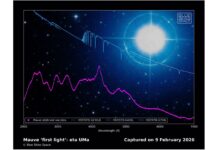
- High-Redshift Discoveries: A recent false discovery of a gamma-ray burst at a redshift of 11 (indicating an extremely early universe) was later revealed to be a satellite streak, highlighting the risk of misidentifying genuine phenomena.
Collaboration and Mitigation Efforts
The astronomical community is actively seeking solutions:
- Satellite Brightness Standards: The International Astronomical Union (IAU) recommends keeping satellites below magnitude 7 brightness to minimize interference. However, some companies, like AST SpaceMobile with its BlueWalker 3 satellite, have exceeded these limits by a significant margin.
- Industry Cooperation: The Rubin team is engaging with about 16 satellite companies, including SpaceX and Reflect Orbital, to explore mitigation strategies. Some companies have expressed willingness to adjust satellite orientation to reduce glare.
- Data Analysis Optimization: Researchers are developing algorithms to identify and flag images affected by satellite streaks. This will allow scientists to prioritize unaffected data while cautiously interpreting potentially contaminated observations.
The Burden of Responsibility
Despite some industry cooperation, the onus of resolving this conflict ultimately falls on satellite operators. The astronomical community needs transparent data sharing (satellite positions and orientations) to accurately predict interference. Without it, the Rubin Observatory’s potential to unlock cosmic secrets will be severely compromised.
The Rubin Observatory represents a monumental leap in astronomy, but its success hinges on the responsible deployment of space technology. The scientific community, satellite companies, and policymakers must collaborate to ensure that the pursuit of knowledge isn’t overshadowed by the unintended consequences of commercial expansion in low Earth orbit.