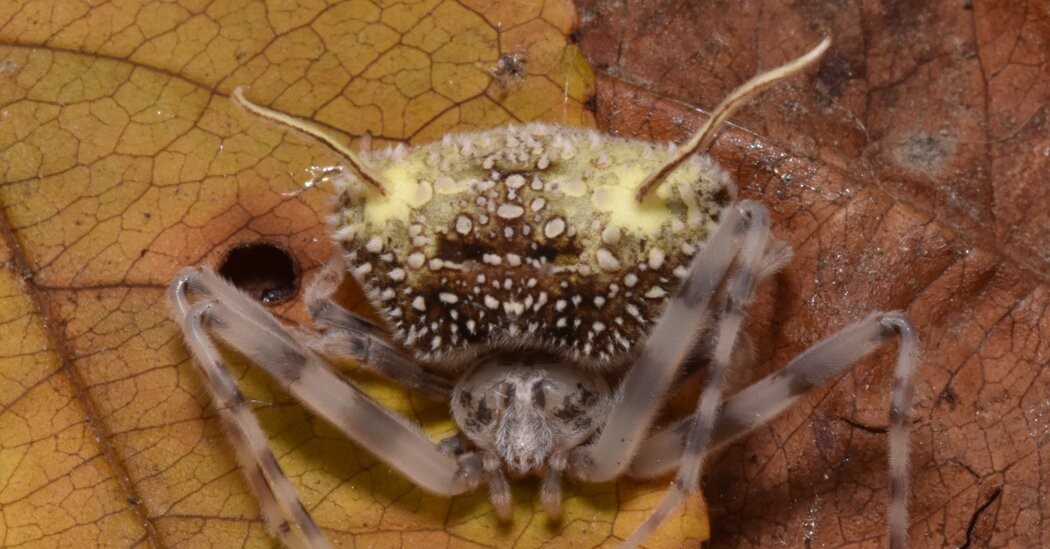
A herpetologist in Ecuador stumbled upon a bizarre sight in the Amazon rainforest: a spider that perfectly imitates the appearance of a deadly parasitic fungus. Alexander Bentley, who leads tours through the region, initially believed he had found a new case of cordyceps infection – a fungus made famous by the video game and TV series “The Last of Us”, where it turns humans into zombie-like hosts.
The Deceptive Mimicry
Bentley noticed the spider’s fungal mimicry while showing his tour group gibellula, a fungus closely related to cordyceps. When he touched what appeared to be the fungus’ tendrils, he was stunned to see them move. This was unusual; true fungal infections leave hosts immobile. Upon closer examination, it became clear that the “fungus” was the spider itself, deliberately contorting its body to resemble the parasitic growth.
Why This Matters
This behavior is an extraordinary example of Batesian mimicry: where a harmless species evolves to resemble a dangerous one to deter predators. The spider likely benefits by tricking birds or other insectivores into avoiding it, as they would avoid a visibly infected host. The discovery highlights the incredible pressures driving evolution in the rainforest.
Citizen Science to the Rescue
Bentley shared his observation on iNaturalist, a platform for amateur and professional biologists. The community quickly identified the creature as a spider mimicking gibellula, a genus of fungi that also parasitizes insects. The case underscores the power of collaborative science, where collective expertise can solve mysteries faster than individual research.
The spider’s imitation is a stark reminder that nature often rivals fiction in its ingenuity, and that even in well-studied ecosystems, unexpected adaptations continue to emerge.