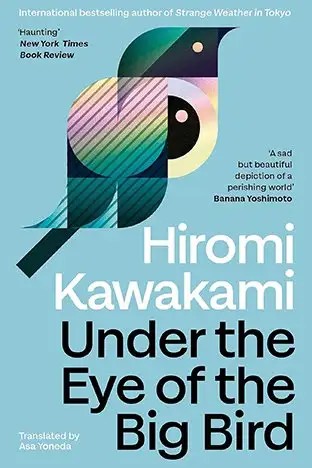
Hiromi Kawakami’s Under the Eye of the Big Bird, translated by Asa Yoneda, offers a strikingly unique take on the post-apocalyptic genre. Unlike many dystopian narratives that lean into grim despair, Kawakami’s novel presents a strangely hopeful, yet deeply unsettling, vision of humanity’s potential end.
A World Divided, Yet Connected
The story unfolds in a future where humanity survives not through triumph, but through fragmentation. Isolated communities, each monitored by enigmatic “Watchers” and nurtured by uncanny “Mothers,” struggle to rebuild after an unspecified catastrophe. The novel isn’t a traditional linear narrative; instead, it’s a series of interconnected short stories spanning millennia. This fragmented structure mirrors the very state of humanity it depicts — broken, yet somehow persisting.
Beyond Recognition: The Evolution of Humanity
Kawakami’s vision isn’t just about survival; it’s about transformation. The world introduces startling biological and psychological shifts: clones, individuals with three eyes, telepaths, and even humans capable of photosynthesis. These aren’t monstrous aberrations, but rather the next step in a species desperately adapting to survive. The novel subtly asks what defines “humanity” when the very definition is fluid and evolving.
The Core of Human Experience
Despite the fantastical elements, Under the Eye of the Big Bird remains profoundly grounded in the core of human experience. Love, friendship, loneliness, and despair are all present, but filtered through the lens of this alien future. The novel doesn’t shy away from humanity’s darker side either; hints of past failures and present prejudices reveal that even in a broken world, our flaws endure.
Kawakami’s novel doesn’t just show us how humanity might end, but who we would be in the process. It’s a hauntingly beautiful exploration of what it means to be human when the very concept is up for debate.
Under the Eye of the Big Bird is not simply another sci-fi dystopia; it is a tender and thought-provoking meditation on what it means to be human in the face of extinction. It forces us to confront the uncomfortable truth that survival might require us to become something… else.