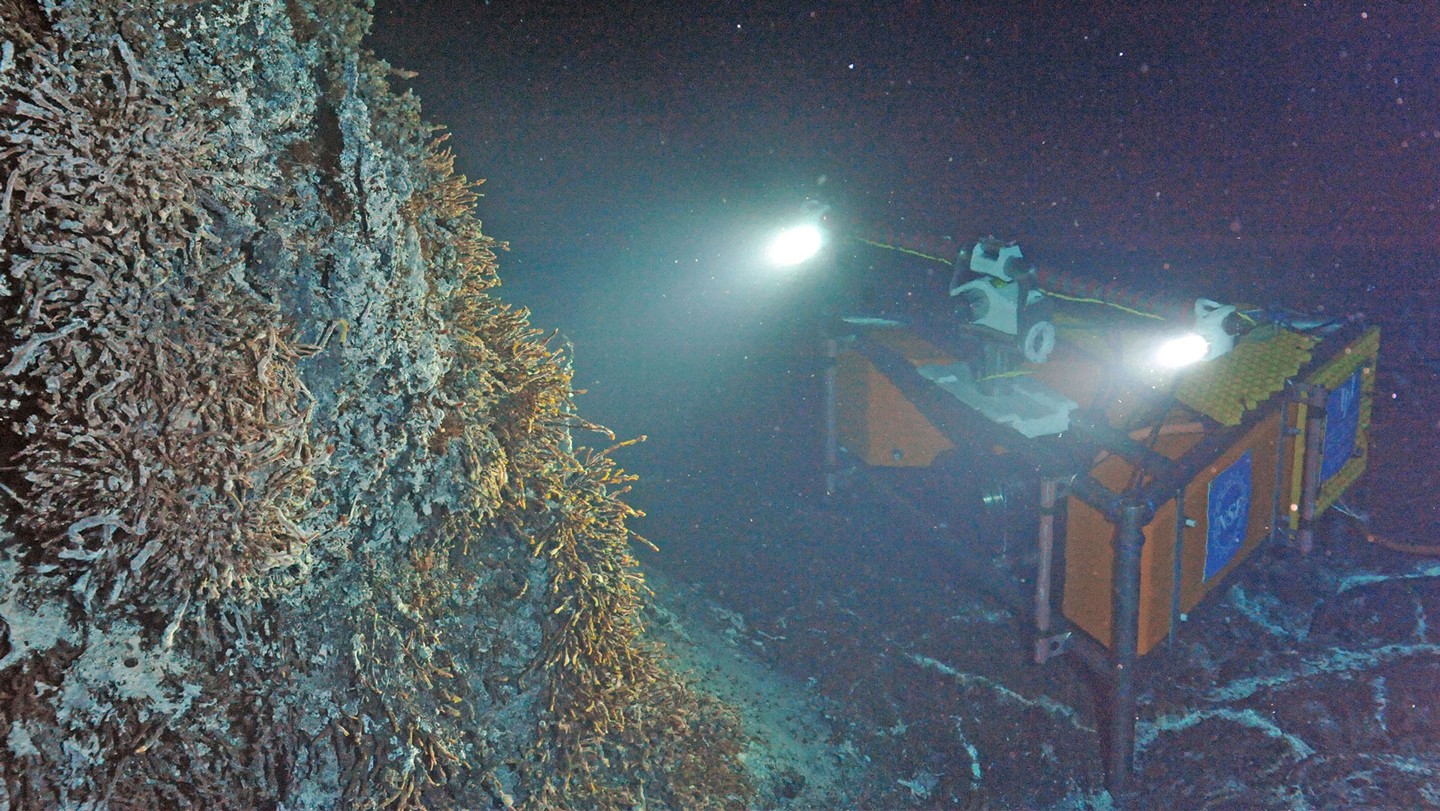
Scientists studying the Axial seamount, an underwater volcano off the coast of Oregon, have revised their eruption prediction from 2025 to sometime in 2026. This shift highlights the challenges of long-term volcanic forecasting, even in well-monitored environments. The initial prediction, based on patterns of seafloor inflation and seismic activity, did not materialize as expected.
The Limits of Current Prediction Models
The team at Oregon State University, led by geophysicist William Chadwick, had hoped to refine eruption forecasting by analyzing data from the highly instrumented Axial seamount. The volcano is equipped with over 150 sensors connected via a submarine fiber-optic cable network, part of the National Science Foundation’s Ocean Observatories Initiative (OOI). Despite the wealth of data, the patterns observed – particularly seafloor swelling and earthquake frequency – proved insufficient to accurately predict the timing of an eruption.
The key issue is irregularity: the volcano has inflated to higher levels than in 2015, yet an eruption didn’t follow. The previous model, which successfully predicted the 2015 eruption, relied on a combination of inflation and quake activity. The current analysis suggests a need for more precise thresholds – specifically, around 500 earthquakes per day – but even these remain uncertain.
New Approaches to Volcanic Forecasting
Researchers are now exploring alternative methods, including physics-based models that analyze geological structures for signs of imminent failure. Scientists at Uppsala University and ETH Zurich have developed a computer model to predict geological events, such as landslides and lava bursts. They are applying this model to real-time data from the OOI cable network, aiming to generate monthly eruption forecasts for Axial.
However, the future of the OOI itself is uncertain. Proposed funding cuts from the Trump administration could jeopardize the array’s operation, potentially hindering further research. Despite this challenge, the project remains active, with funding secured through summer 2026.
Why This Matters
The study of Axial seamount serves as a critical testing ground for volcanic forecasting. Unlike land-based volcanoes, Axial poses no immediate threat to human populations, allowing scientists to experiment without risk. The lessons learned from this research could ultimately improve predictions for volcanoes that do threaten communities.
Accurate eruption forecasting is becoming increasingly important as populations grow near active volcanic regions. The ability to predict eruptions could save lives, protect infrastructure, and reduce economic disruption. The ongoing refinements to prediction models – driven by data from Axial and similar underwater volcanoes – represent a significant step toward that goal.
Despite the delays and challenges, researchers remain optimistic about refining eruption forecasting. While the 2025 prediction missed the mark, the process has yielded valuable insights into the complex behavior of underwater volcanoes. The next eruption of Axial, whenever it comes, will provide further data for improving these models and enhancing our understanding of volcanic processes.