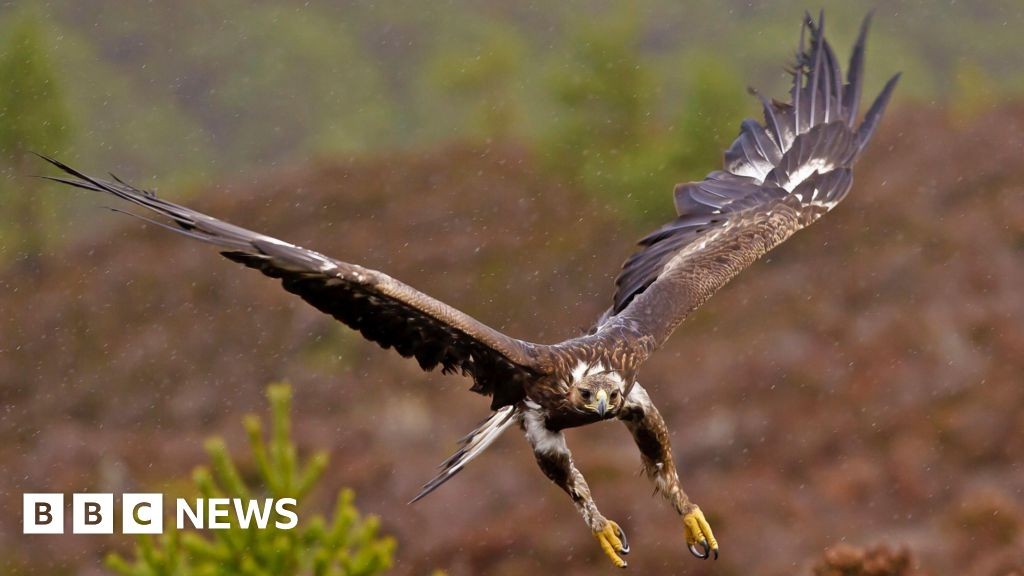
The golden eagle, once a common sight across the English landscape, is poised to make a permanent comeback. The UK government has pledged £1 million to fund a reintroduction program that could see these magnificent birds released into the wild as early as next summer.
This initiative marks a significant step in national nature recovery efforts, aiming to reverse the damage caused by 19th-century hunting campaigns that drove the species to extinction in England and Wales.
Restoring a “Keystone Species”
The project, led by the charity Restoring Upland Nature (RUN) in partnership with Forestry England, focuses on re-establishing populations in areas capable of supporting them. After extensive research into 28 potential sites, Northumberland has emerged as the primary candidate for the release.
Environment Secretary Emma Reynolds highlighted the ecological importance of the move, describing the golden eagle as a “keystone species.” In ecology, a keystone species is one that has a disproportionately large effect on its natural environment relative to its abundance.
The Ecological Impact
According to Ed Parr Ferris, a species recovery manager at Forestry England, the return of an apex predator provides essential “top-down” regulation of an ecosystem:
– Predator Control: Golden eagles can help manage “mesopredators”—middle-tier hunters like foxes and badgers.
– Biodiversity Boost: By controlling these mid-level predators, eagles create space for rarer, smaller species to thrive.
– Ecosystem Balance: Their presence forces a natural pressure that helps balance the entire food web.
Balancing Conservation with Farming Interests
Despite the ecological benefits, the project faces significant social hurdles. The primary point of contention is the potential threat to livestock, specifically lambs.
The history of raptor reintroduction in the UK is complex. In Scotland, the reintroduction of sea eagles led to friction with hill farmers who reported significant losses in lamb populations. To address these concerns, the government and conservationists are emphasizing several key points:
* Dietary Reality: Research suggests that while golden eagles may occasionally take a small lamb, it is rare. They are far more likely to feed on carrion (dead animals).
* Statistical Risk: Feasibility studies estimate that golden eagles would be responsible for only 0.15% to 3% of lamb losses within their hunting range.
* Public Consultation: A period of formal consultation will begin soon to engage landowners and farmers.
However, experts warn that the timeline must be handled carefully. Prof. Davy McCracken of Scotland’s Rural College noted that an 18-month consultation may be insufficient, as farmers have intensive seasonal workloads that prevent meaningful engagement at certain times of the year.
A Strategy for Nature Recovery
The golden eagle project is part of a broader trend in the UK to combat extreme nature depletion. With one in six UK species currently at risk of extinction, the government has supported various reintroduction programs, including those for beavers, pine martens, and whitefaced darter dragonflies.
Dr. Cat Barlow, CEO of RUN, suggests that charismatic species like the golden eagle can act as “ambassadors” for conservation. While it is difficult to generate public excitement for technical projects like peatland restoration, the presence of an iconic predator can capture the public imagination and draw attention to the wider necessity of ecosystem health.
“It is really difficult to get people excited about peat restoration,” says Dr. Barlow. “But something like a golden eagle can get new audiences excited, and make them aware of how the whole ecosystem can work together.”
Looking Ahead
The project remains cautious regarding security. To protect the birds from potential poaching or harm—following incidents where relocated birds have been found wounded—the government has decided not to disclose the exact release locations in Northumberland.
The success of this program will depend on whether conservationists can build trust with the agricultural community, proving that apex predators and productive farmland can coexist.