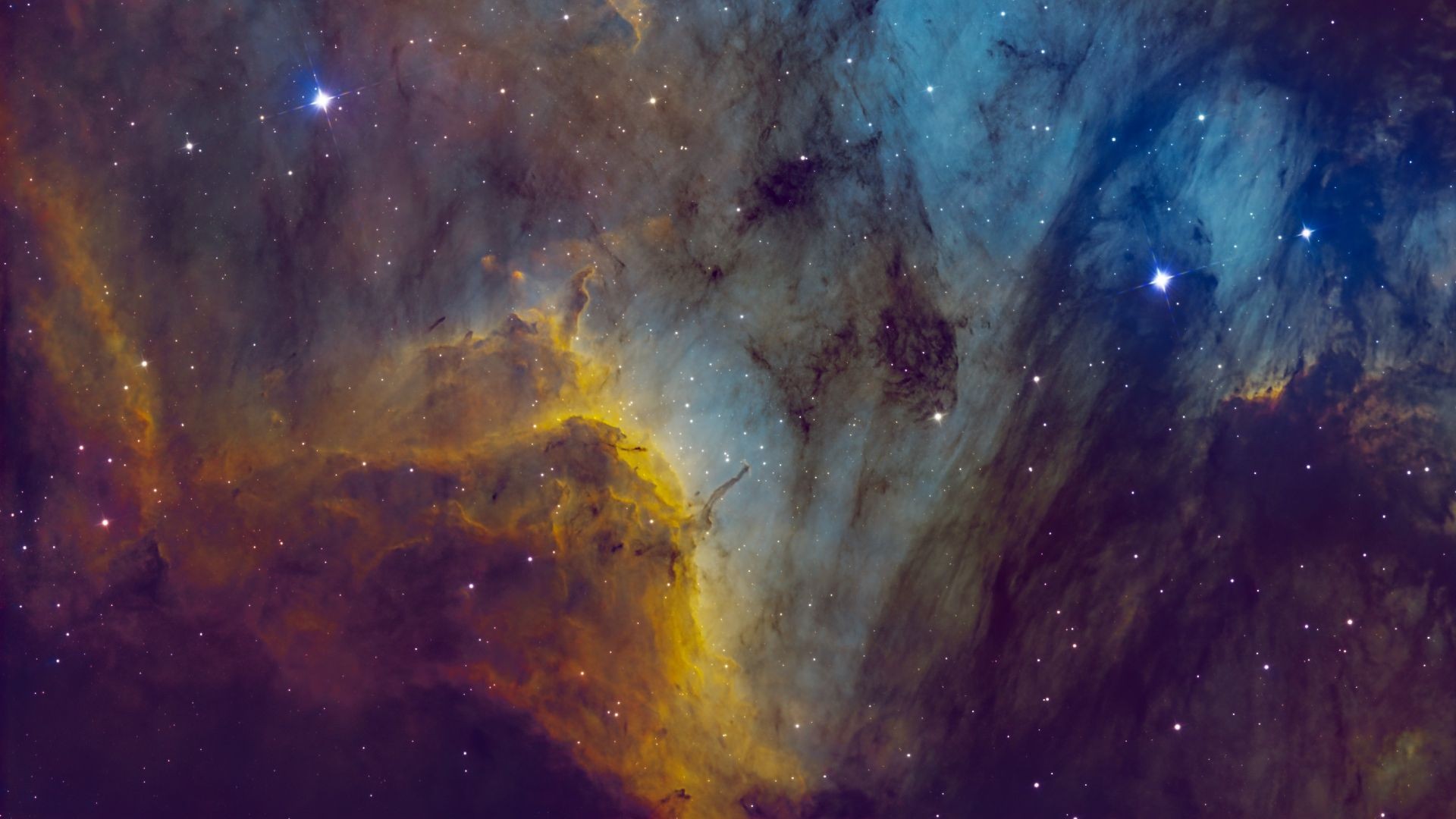
A breathtaking view of the Pelican Nebula, a stellar nursery 2,000 light-years away, was recently captured by NASA network engineer and astrophotographer Jason Livingston. What makes this image remarkable is where it was taken: from a backyard in Henderson, Nevada, just 9 miles from the bright lights of the Las Vegas Strip.
Overcoming Light Pollution
Livingston’s image reveals the Pelican Nebula in vivid detail, despite the extreme light pollution. The nebula gets its name from its resemblance to a pelican in flight, and it’s actively being reshaped by radiation from young stars. This area of space serves as a birthplace for new stars, though the nebula itself is invisible to the naked eye.
The two bright stars visible in the image – 57 Cygni and 56 Cygni – can be seen from dark sky locations near Deneb, the brightest star in the Cygnus constellation. Livingston’s achievement highlights the lengths amateur astronomers go to overcome light pollution, a growing problem that obscures the night sky for millions.
Technical Details
The image was taken over multiple nights in August 2025 using a high-quality refractor telescope (Apertura CarbonStar 150) and a specialized astronomy camera (ZWO). Livingston used narrowband filters to isolate specific wavelengths of light, then mapped these to visible colors in post-processing. This technique reduces the impact of light pollution, though it sometimes results in “false color” images.
It took a total of 27 hours of exposure time to complete the image, demonstrating the dedication and patience required for deep-space astrophotography. This process is not casual; it involves careful planning, precise equipment, and hours spent processing the final result.
Why This Matters
This image is more than just a pretty picture; it’s proof that even in heavily light-polluted areas, stunning astronomical views are still possible with the right tools and techniques. The Pelican Nebula itself is important because it showcases the ongoing process of star formation, a fundamental aspect of galactic evolution.
The fact that this was captured so close to a major urban center is a reminder that the beauty of the universe is accessible even in the most unexpected places.
The ability to capture such detail despite severe light pollution shows both the skill of the photographer and the resilience of astronomical observation in the face of modern interference.
If you’re interested in taking your own images of the night sky, specialized equipment such as high-quality telescopes, cameras, and lenses are recommended for optimal results.