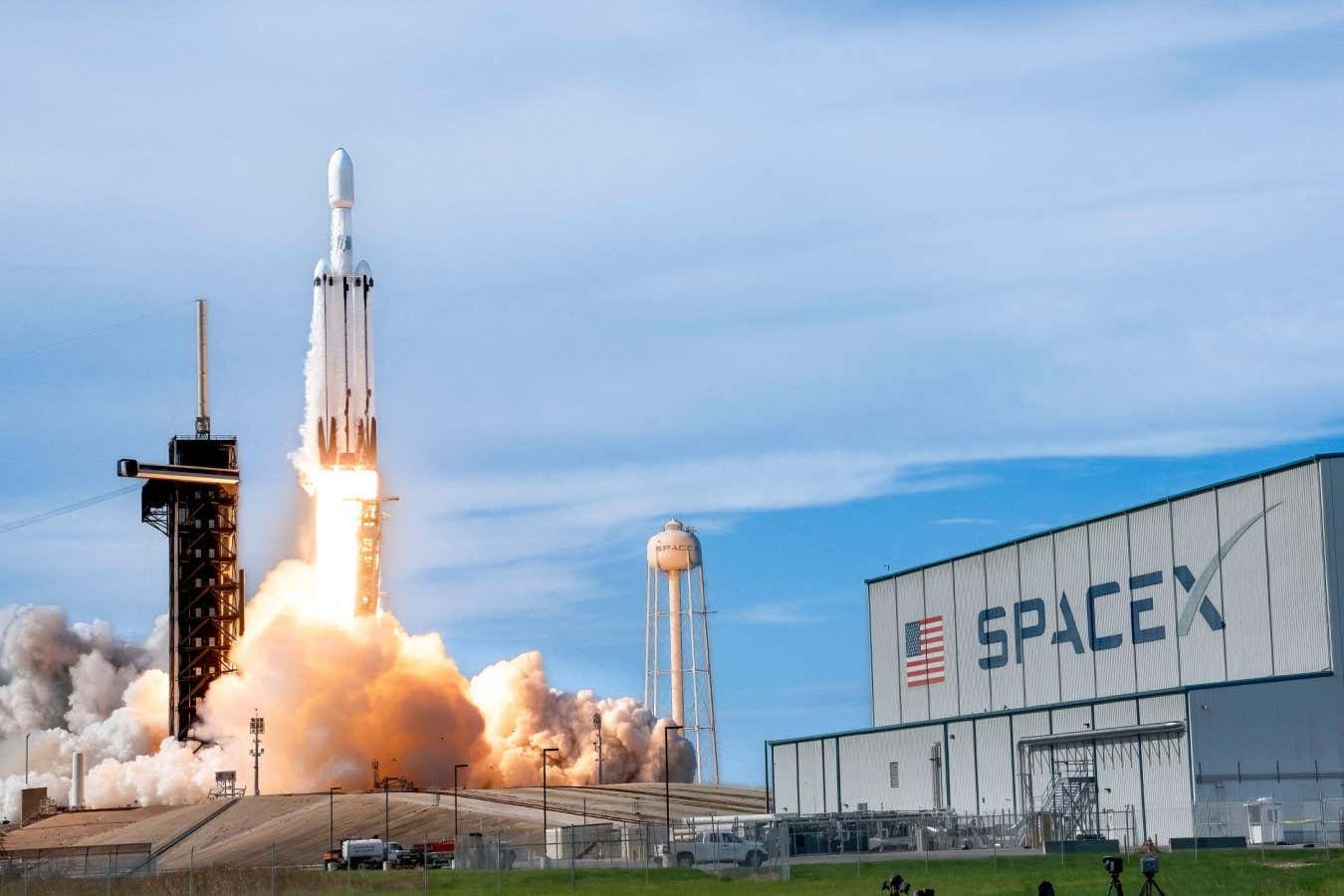
SpaceX is pushing forward with an application to launch 1 million satellites into orbit, a move that is rapidly raising concerns among astronomers and environmental scientists. The company’s proposal, submitted to the Federal Communications Commission (FCC) in late January, aims to establish a massive orbital network for artificial intelligence processing.
The Scale of the Proposal
Currently, roughly 14,500 active satellites orbit Earth. SpaceX’s plan would dramatically increase this number, dwarfing all existing infrastructure in space. The speed at which the FCC is processing this application—with public comments due by March 6th—is unusually fast, leaving experts scrambling to assess the potential consequences.
Environmental Concerns
The most immediate worry is the lack of mandatory environmental review for satellite launches under US law. The FCC is exempt from the National Environmental Policy Act regarding space activities, meaning SpaceX’s proposal isn’t automatically subject to rigorous impact assessments.
- Atmospheric Pollution: Satellites burning up upon re-entry release alumina (aluminum oxide), a known ozone-depleting substance. SpaceX’s continuous satellite replacement schedule (roughly one launch and re-entry every 3 minutes) could deposit teragrams of alumina into the stratosphere, potentially causing significant ozone depletion and altering atmospheric temperatures.
- Light Pollution: Tens of thousands of satellites could become visible to the naked eye at night, disrupting astronomical observations and altering the natural night sky.
- Telescope Interference: The sheer number of satellites would obscure the views of both ground-based and space-based telescopes.
Regulatory Gaps and Uncertainties
The FCC’s lack of in-house scientific expertise to assess atmospheric impacts further complicates the situation. While public comments can trigger more thorough scrutiny, there’s no guarantee that the agency will demand a full environmental review. SpaceX has also not disclosed crucial details about the satellites’ size or altitude, hindering accurate impact calculations.
“A million satellites is completely terrifying,” says Samantha Lawler, an astronomer at the University of Regina. “We are scrambling to gather up the information that we need to write to the FCC.”
Implications and Next Steps
The FCC’s decision, expected months after the comment deadline, will determine whether SpaceX proceeds with the full constellation, a partial deployment, or no approval at all. The situation highlights a critical gap in space regulation: current laws do not adequately address the environmental consequences of large-scale satellite deployments. Without stricter oversight, the rapid expansion of space infrastructure could pose a substantial threat to Earth’s atmosphere and the integrity of astronomical research.