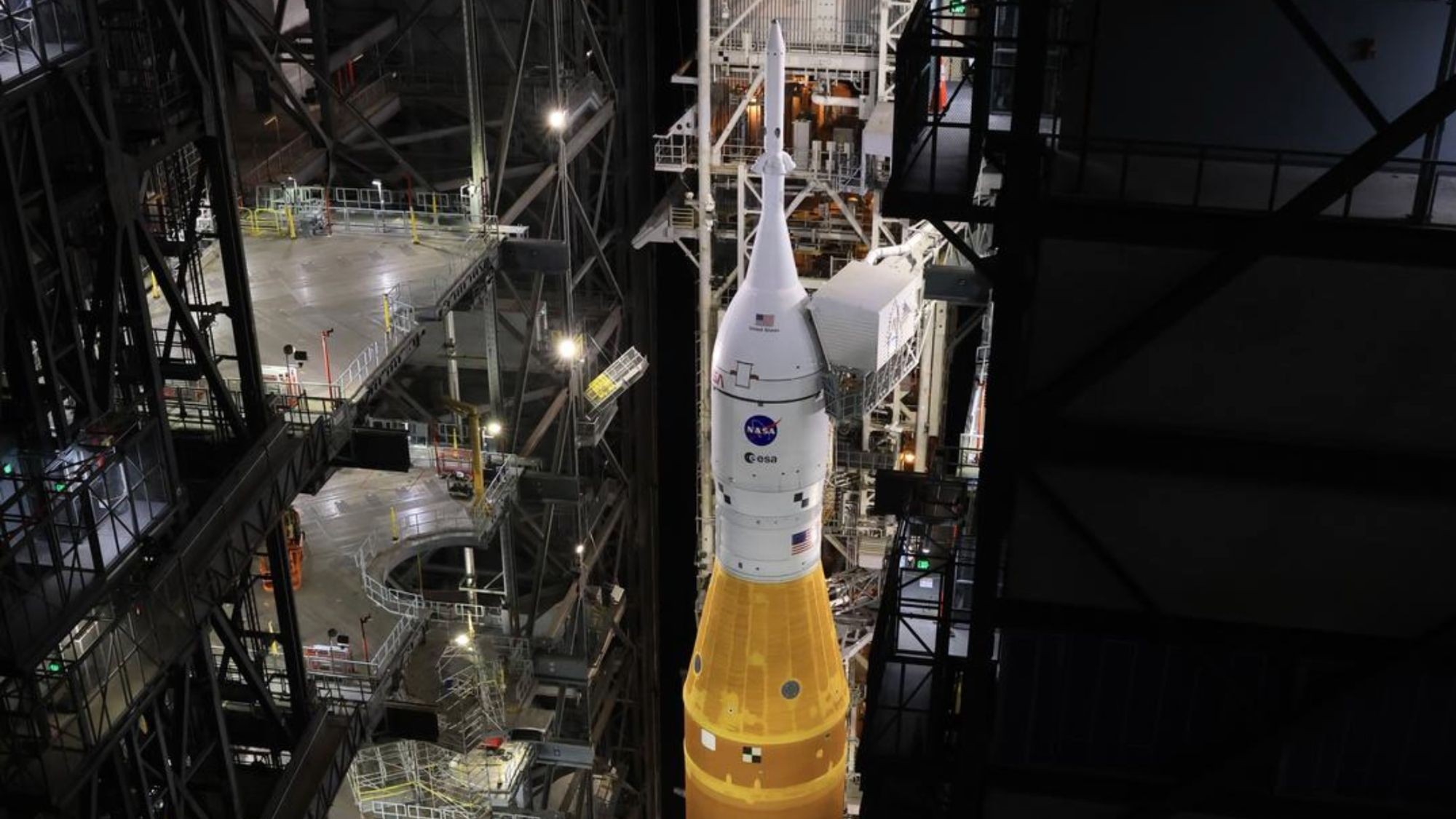
NASA’s Artemis 2 mission, intended to send four astronauts on a lunar flyby, has been put on hold after engineers discovered a helium flow malfunction. The 322-foot Space Launch System (SLS) rocket was rolled back from Launch Complex-39B to the Vehicle Assembly Building (VAB) at Kennedy Space Center on February 25, where technicians will work to resolve the issue.
Why this matters: This setback highlights the inherent complexities of deep-space missions. While the SLS rocket is a technological marvel, the process of testing and repairing such a system is proving to be slow and meticulous. The Artemis program is critical for NASA’s long-term goal of establishing a sustained human presence on the moon, and delays like this demonstrate the challenges of pushing the boundaries of space exploration.
The Problem: Helium Flow Malfunction
The issue was discovered after a successful “wet dress rehearsal” – a full fueling and simulated launch countdown – on February 20. A helium flow malfunction was detected in the rocket’s upper stage, specifically within the Interim Cryogenic Propulsion Stage (ICPS). Access to the affected areas is only possible inside the VAB, forcing NASA to postpone the launch.
Helium is essential for purging and pressurizing the fuel lines. The inability to route helium through the system effectively halted preparations. NASA Administrator Jared Isaacman noted on X (formerly Twitter) that several potential causes could be to blame, and the rollback will allow engineers to pinpoint the exact problem.
A History of Rollbacks
This isn’t the first time the Artemis program has faced such hurdles. During Artemis 1’s launch campaign in 2022, a persistent hydrogen leak forced multiple trips between the VAB and LC-39B before the uncrewed mission could finally lift off. NASA hopes to avoid a similar repeat with Artemis 2, having already implemented corrective actions to minimize recurrence.
The rollback itself took over 10 hours, with the massive Crawler-Transporter 2 slowly moving the rocket back to the VAB at a speed of approximately one mile per hour. The vehicle’s weight crushed the Alabama river rock road beneath it, leaving behind a trail of sand.
What’s Next?
NASA is now targeting a launch window opening April 1, with further opportunities from April 3-6. Engineers will diagnose and repair the helium flow issue inside the VAB. If successful, the SLS rocket will be rolled back to LC-39B for another wet dress rehearsal before attempting launch.
“Corrective actions were taken to minimize reoccurrence on Artemis 2,” Isaacman stated, suggesting NASA is prepared for the possibility of future complications.
The Artemis 2 mission remains a pivotal step towards lunar sustainability, but this delay underscores the unforgiving nature of spaceflight. Continued engineering precision and thorough testing will be crucial to ensure the safety and success of future missions.