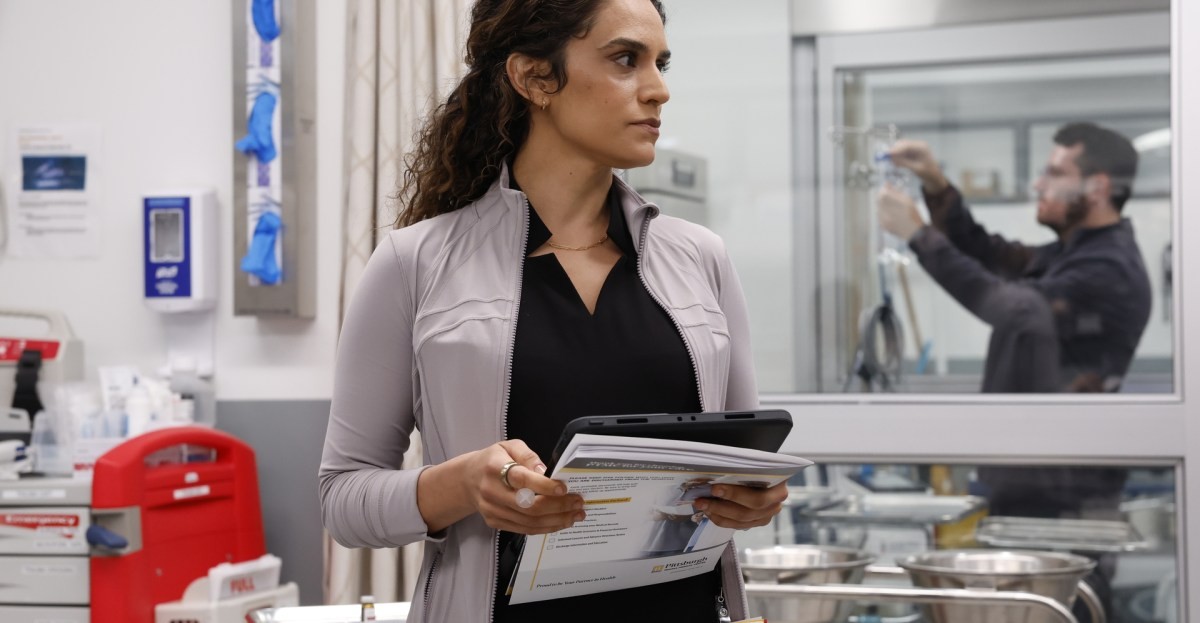
HBO’s The Pitt isn’t just a medical drama; it’s a stark reflection of the pressures facing modern healthcare. While the show doesn’t shy away from graphic injuries and emergency room chaos, its most unsettling storyline isn’t the gore—it’s the slow, creeping adoption of generative AI into hospital workflows.
The second season focuses on a single, brutal Fourth of July shift at Pittsburgh Trauma Medical Center. As veteran physician Dr. Robby Robinavitch prepares for a sabbatical, Dr. Baran Al-Hashimi arrives to help manage the emergency room. The tension isn’t just personal friction; it’s about differing philosophies on how to cope with an overloaded system. Dr. Al-Hashimi champions AI-powered transcription software, while others remain skeptical.
The core issue isn’t whether AI works, but why hospitals are turning to it in the first place. Second-year resident Dr. Trinity Santos struggles to keep up with charting, highlighting a systemic problem: understaffing and burnout. AI is presented not as a solution, but as a band-aid for deeper wounds. While the software accurately transcribes most dictation, the inevitable errors—like those in a surgeon’s chart—demonstrate that AI isn’t foolproof.
The Pitt doesn’t fall into the easy trap of “AI is evil.” Instead, it explores the pragmatic reasons why professionals might use it, alongside the critical need for skepticism. The show acknowledges real-world lawsuits over AI-related medical errors, and studies questioning the reliability of AI in healthcare. The AI boosterism from Dr. Al-Hashimi underscores how adopting tech can increase workload through double-checking, exacerbating burnout rather than alleviating it.
The underlying message is clear: technology can’t fix systemic problems. AI-powered transcription can speed up charting, but it can’t solve understaffing or overcrowding. The show reflects real-world challenges, including the national nursing shortage and hospital underfunding. The solution isn’t throwing more tech at the issue, but addressing the root causes: more staff, more resources, and a sustainable system.
The Pitt isn’t just a drama; it’s a cautionary tale about how technology can mask fundamental failures in healthcare, rather than solving them. The show’s brilliance lies in its refusal to simplify a complex issue.