For millennia, the Arctic has been seen as a harsh, isolating region. However, new archaeological evidence reveals that intrepid seafarers were visiting remote islands off the north-west coast of Greenland as early as 4,500 years ago. This remarkable feat required traversing over 50 kilometers of open water—one of the longest sea journeys undertaken by Indigenous Arctic peoples.
The Discovery at Kitsissut Islands
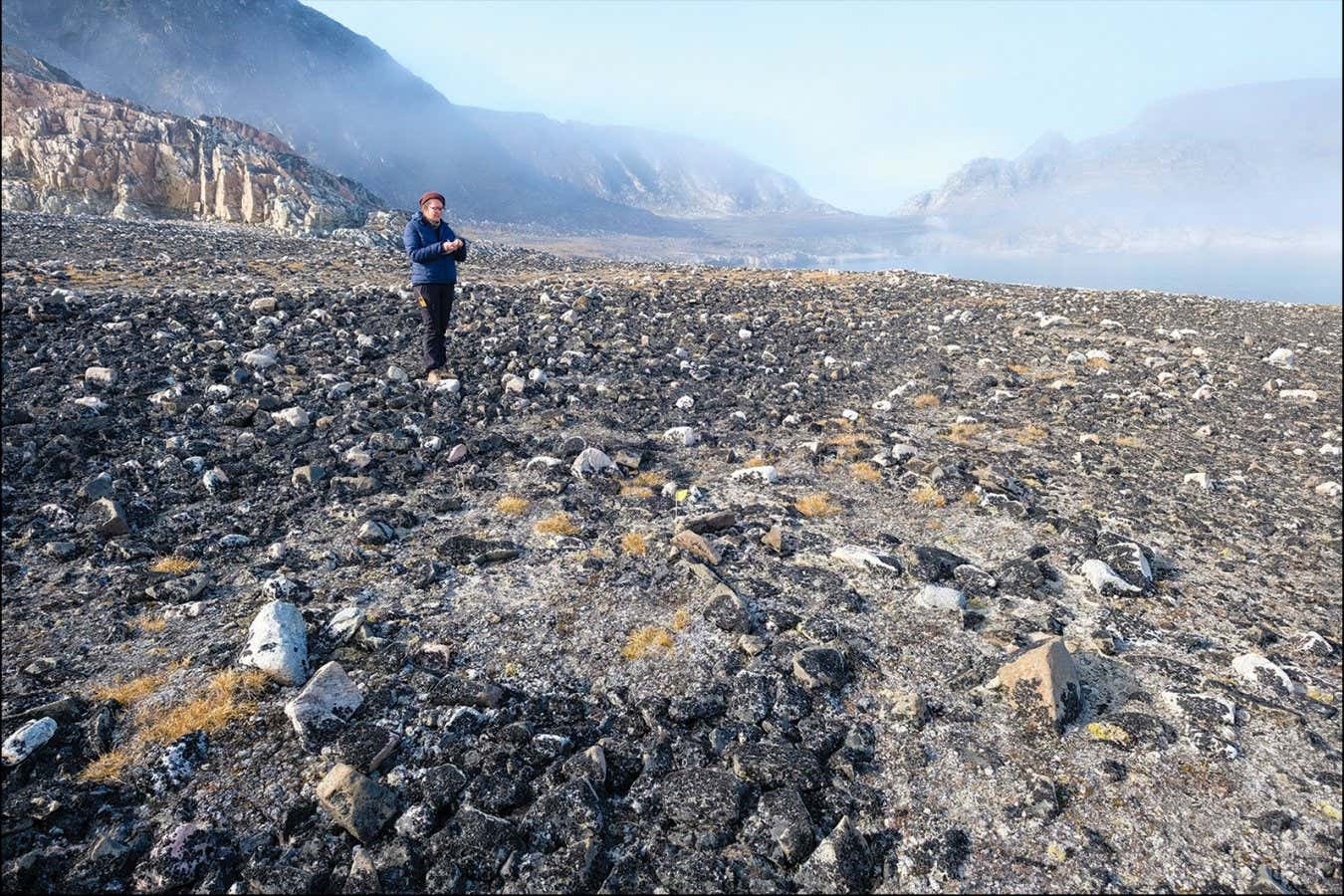
The findings, uncovered by researchers led by Matthew Walls at the University of Calgary, focus on the Kitsissut Islands (also known as the Carey Islands). These islands lie within the Pikialasorsuaq polynya, a unique area of open water surrounded by sea ice that formed approximately 4,500 years ago. Archaeological surveys across three central islands—Isbjørne, Mellem, and Nordvest—revealed 297 features, including the remains of 15 circular tents.
These tents are distinctive “bilobate” structures, divided into two sections with a central hearth, characteristic of the Paleo-Inuit, the first people to settle northern Canada and Greenland. Radiocarbon dating of a seabird bone found within one of the tent rings confirms human presence on the islands between 4,400 and 3,938 years ago—very shortly after the polynya itself formed.
A Challenging Voyage
The distance from Greenland to Kitsissut is roughly 52.7 kilometers. Given prevailing currents and winds, the Paleo-Inuit likely embarked from a more northerly point, making the journey longer but safer. To the west lies Ellesmere Island, part of modern-day Canada, but currents in that area are treacherous.
The scale of this undertaking is significant. Compared to the Bering Strait crossing—a migration that occurred at least 20,000 years ago but with stepping-stone islands available for rest—Kitsissut required a direct, sustained sea voyage.
Craft and Community
Archaeologist John Darwent notes that the journey demanded sophisticated watercraft. Single-person kayaks would not have sufficed for transporting entire families, including children and the elderly. Instead, the Paleo-Inuit likely used larger boats capable of carrying nine or ten people. Although no boat remains have been found (Arctic conditions rarely preserve such materials), evidence suggests they were skin-on-frame vessels similar to those used by later Inuit communities.
Ecological Impact
The arrival of these first settlers also influenced the islands’ ecosystem. By bringing nutrients from the sea and leaving waste on land, the Paleo-Inuit inadvertently fertilized the barren soil, encouraging vegetation growth. Walls argues that the islands’ initial vegetation was, in part, dependent on this human-driven nutrient cycle.
The ability to reach and sustain a presence on these remote islands demonstrates an impressive level of maritime skill and adaptability among the Paleo-Inuit. This voyage wasn’t just about survival; it was a testament to their ability to thrive in one of the world’s most challenging environments.