


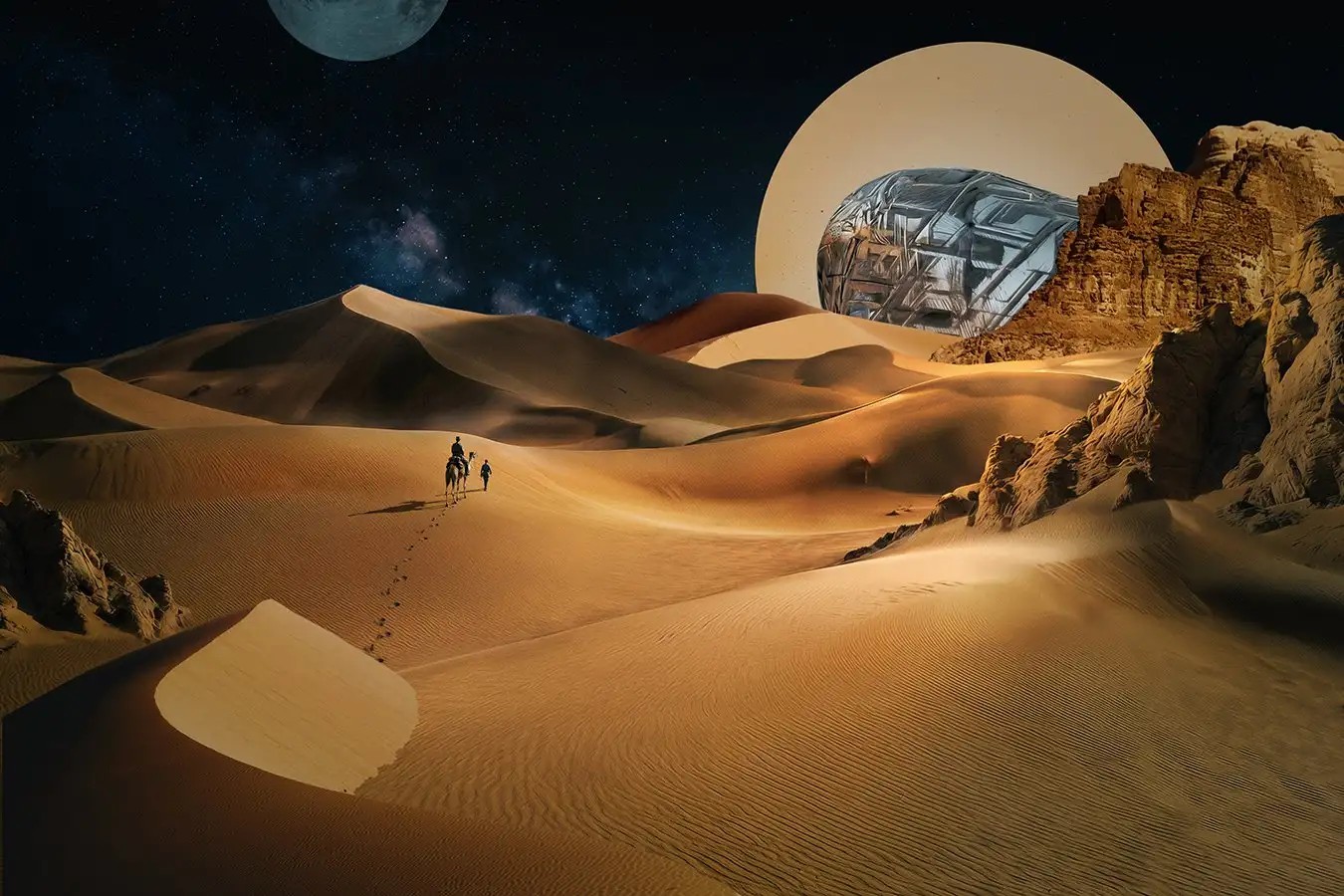
For over a century, explorers, scientists, and treasure hunters have pursued the legend of a colossal meteorite reportedly seen in the Mauritanian Sahara. The story began in 1916 with Gaston Ripert, a French army captain recovering in the remote town of Chinguetti. Hearing local tales of a massive “iron of God” buried in the dunes, he embarked on an expedition guided by a reluctant local who insisted on secrecy.
Ripert described a metallic cliff face roughly 100 meters wide, polished smooth by windblown sand, with an unknown third dimension hidden beneath the dunes. He collected a sample, later confirmed as a genuine meteorite – specifically a rare type called a mesosiderite. This discovery sparked intense interest, as the iron of God, if real, would dwarf any meteorite ever found.
The Elusive Search
Despite decades of searching, the meteorite has remained elusive. Early attempts were hampered by vague directions from Ripert, shifting accounts, and the ever-changing desert landscape. The man who guided Ripert insisted on keeping the location secret, potentially traveling blindfolded. Later expeditions relied on Ripert’s notes, which gave scant information beyond a rough estimate of 45 kilometers southwest of Chinguetti.
Theodore Monod, a naturalist and former priest, devoted decades to the hunt, making numerous camel expeditions. He ultimately concluded Ripert mistook a rocky hill for the meteorite, a theory dismissed by some who knew Ripert’s scientific background. Modern attempts using magnetometers and isotopic analysis yielded inconclusive results. Some scientists believe the meteorite never existed as described, pointing to calculations that suggest no asteroid could survive atmospheric entry at that size.
New Hope from Identical Twins
Recent work by identical twins – Robert, an engineer, and Stephen, an astrophysicist – has reignited the search. Robert stumbled upon the legend while working in Mauritania and meticulously gathered data, including satellite imagery and historical accounts. Stephen brought his scientific skepticism and analytical expertise to narrow down potential locations. The twins believe systematic magnetometer surveys haven’t been conducted effectively, and they’ve identified two plausible areas where the meteorite might lie buried.
Why It Matters
The hunt for the iron of God isn’t just about finding a massive rock. Meteorites offer invaluable insights into the solar system’s history. Mesosiderites, in particular, reveal information about asteroid collisions and planetary formation. If Ripert’s account is accurate, the meteorite represents an unprecedented opportunity to study a massive space rock up close. The story also highlights the enduring human fascination with the unknown and the lengths people will go to unravel its mysteries.
The twins are preparing another expedition to explore their prime locations, armed with new data and a renewed sense of purpose. Whether the iron of God truly exists remains an open question, but with each step closer, the legend comes into sharper focus.


