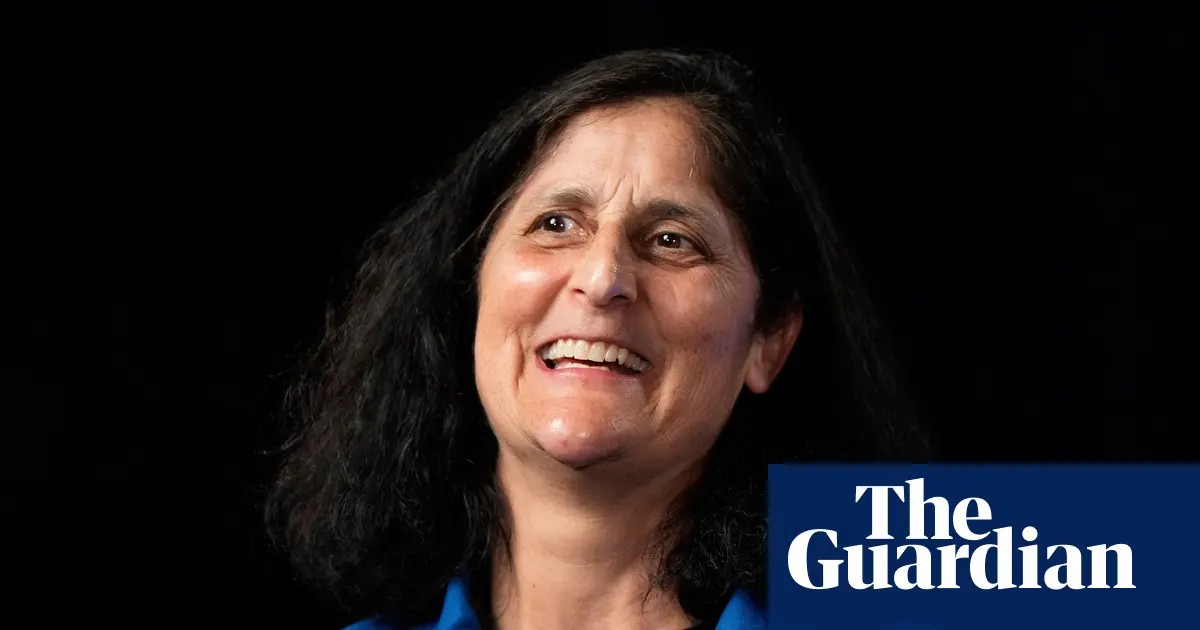
After 27 years with NASA, astronaut Suni Williams has retired, marking the end of a career defined by record-breaking spacewalks, an unprecedented extended stay on the International Space Station (ISS), and a generational shift in space exploration. The 60-year-old former Navy captain leaves behind a legacy as a pioneer in human spaceflight.
The Prolonged Starliner Mission: A Test Turned Odyssey
Williams is perhaps most recognized for her role in Boeing’s first crewed Starliner mission in June 2024. What was intended as a brief test flight to the ISS became a 286-day odyssey when technical issues stranded Williams and fellow astronaut Barry “Butch” Wilmore in orbit. The situation quickly escalated into a political flashpoint, with figures like Donald Trump and Elon Musk publicly framing the astronauts’ predicament as an abandonment by the Biden administration.
While the astronauts themselves downplayed any sense of being marooned—Wilmore conceded they were “stuck” to some degree—the incident highlighted the risks of relying on commercial space travel and the potential for political interference in space missions. They eventually returned on a SpaceX Dragon capsule, a mission Trump later characterized as a “rescue” orchestrated by Musk.
A Career Defined by Endurance and Firsts
Throughout three space launches—aboard the Space Shuttle Discovery in 2006, a Russian Soyuz in 2012, and the ill-fated Starliner in 2024—Williams logged a total of 608 days in space, second only to Peggy Whitson’s 695. Her contributions extend beyond time in orbit: she holds the record for the most accumulated spacewalk time by a woman, exceeding 62 hours across nine operations.
Notably, Williams was the first astronaut to run a marathon in space, completing a treadmill run in 2007 as an official participant in the Boston Marathon. This feat exemplifies her dedication to pushing boundaries, even in extreme environments.
Transitioning to a New Era
Williams’s retirement, announced on the 96th birthday of Buzz Aldrin, coincides with NASA’s preparations for the Artemis II mission, the first crewed flight around the moon since 1972. The launch window opens February 6th. This generational shift underscores NASA’s forward momentum, building on the foundation laid by veterans like Williams to reach for lunar and Martian exploration.
NASA’s administrator praised her as “a trailblazer,” while the Johnson Space Center director emphasized her “exceptional dedication” as an inspiration for future explorers. With over 2.5 million people claiming digital “boarding passes” for the Artemis II mission, public enthusiasm for the next phase of space exploration is evident.
Williams’s career underscores the importance of perseverance and adaptability in the face of unexpected challenges, a quality that will continue to drive innovation in space travel for generations to come.
The successful completion of Artemis II will pave the way for Artemis III, targeting the first human lunar landing in over half a century, currently scheduled for next year. Williams herself recognized the ISS as a stepping stone toward these new ambitions, opening the pathway to the moon and Mars.