On April 6, the crew of NASA’s Artemis 2 mission will attempt to capture a modern successor to one of the most influential images in human history: the “Earthrise” photograph. As the spacecraft swings around the far side of the moon, astronauts will attempt to document our home planet rising over the lunar horizon, hoping to evoke the same sense of global unity that the original 1968 image inspired.
The Legacy of Apollo 8
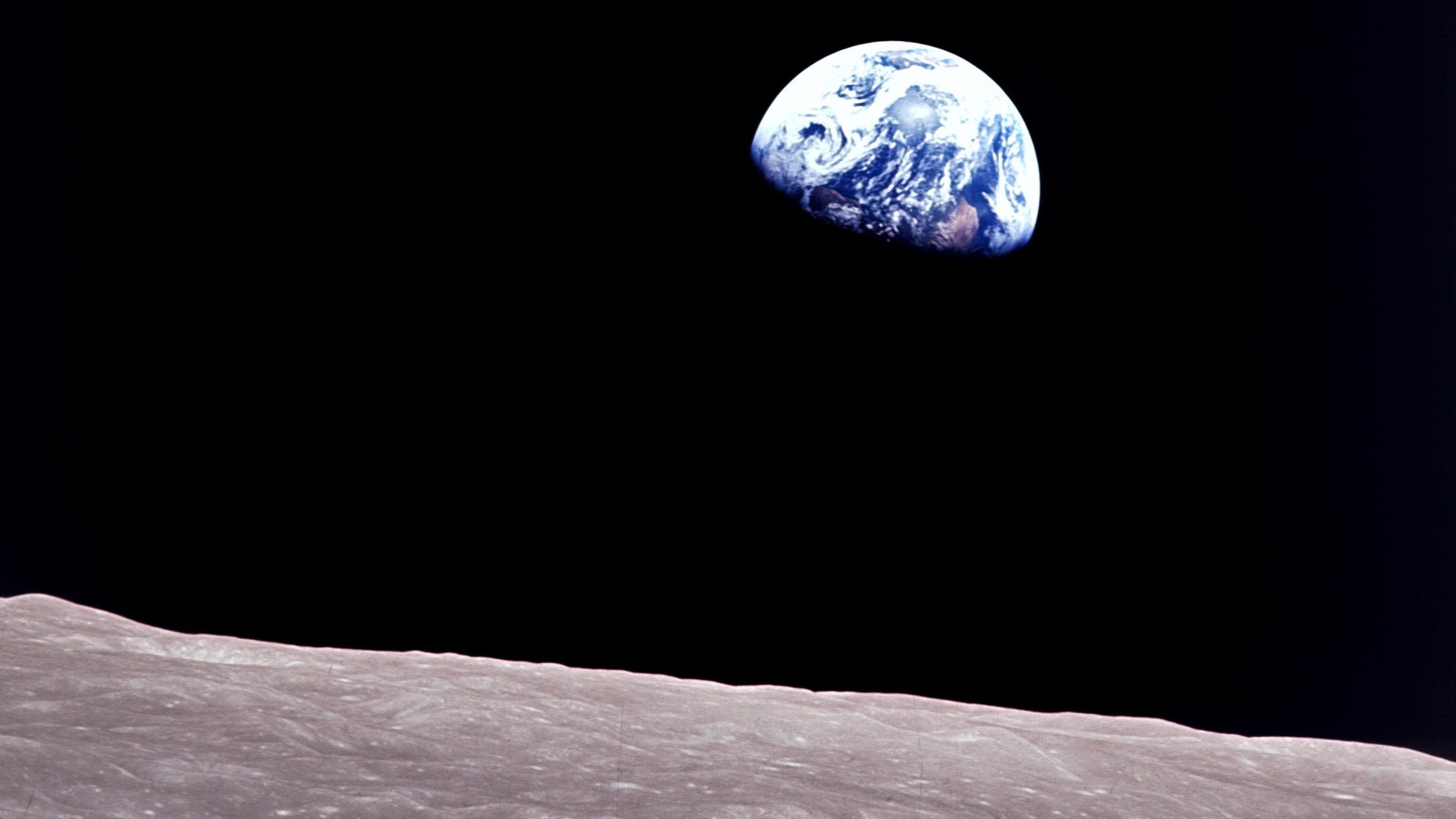
To understand the significance of this upcoming mission, one must look back 57 years to Christmas Eve, 1968. During the Apollo 8 mission, astronaut Bill Anders captured a spontaneous shot of a vibrant, blue Earth peeking over the barren, gray lunar landscape.
At the time, the world was deeply divided by the Vietnam War and facing emerging environmental crises. The “Earthrise” photo became a powerful cultural symbol, serving as a visual manifesto for both anti-war movements and the burgeoning environmental movement. It provided a perspective that humanity had never seen: a “blue marble” appearing incredibly fragile and isolated against the vast, unforgiving vacuum of space.
A Planned Mission vs. A Spontaneous Moment
While the original Earthrise was a stroke of luck, the Artemis 2 attempt is a deliberate scientific and artistic endeavor.
- Apollo 8: The crew performed 10 lunar orbits. The iconic photo was unplanned; Anders noticed the view through a window and had to quickly swap black-and-white film for color to capture the moment.
- Artemis 2: This mission is a high-speed flyby. The Orion capsule, named Integrity, will not enter lunar orbit but will instead swing around the far side at an altitude between 4,000 and 6,000 miles.
The crew—Reid Wiseman, Victor Glover, Christina Koch, and Jeremy Hansen—will have a very narrow window of opportunity. They are tasked with capturing both “Earthrise” (the planet appearing over the lunar horizon) and “Earthset” (the planet disappearing behind it) during a brief 45-minute transit around the moon’s far side.
Technical Differences: Then and Now
The new images will look fundamentally different from the 1968 original due to several technical and orbital factors:
- Altitude: Apollo 8 flew just 60 miles above the lunar surface, creating a sense of proximity. Artemis 2 will be up to 100 times higher, meaning the moon will appear much smaller in the frame—roughly the size of a basketball held at arm’s length.
- Lighting: While Apollo 8 captured a sunlit lunar surface, Artemis 2 will fly through partial illumination. NASA expects this to create long shadows that highlight the moon’s topography, revealing ridges and crater rims that are often washed out by direct sunlight.
- Equipment: The era of film has passed. Instead of a Hasselblad camera, the crew will utilize digital Nikon D5 cameras, allowing for much finer control over exposure and settings to ensure the shot is successful.
Why This Matters Today
The pursuit of a new “Earthrise” is more than a photography exercise. We are currently living through an era defined by intense geopolitical tensions and escalating climate concerns—parallels to the social climate of the late 1960s.
“The original Earthrise image had such influence in part because of the circumstances on Earth at the time it was taken… We can only hope that a new Earthrise image will provide a timely reminder that we all live together on a single fragile planet.”
By attempting to capture this perspective once again, NASA aims to provide a modern visual reminder of our shared responsibility to protect the only home we have.
Conclusion: By revisiting the iconic imagery of the Apollo era, the Artemis 2 mission seeks to bridge the gap between historical inspiration and modern exploration, using a new vantage point to remind a divided world of its shared fragility.