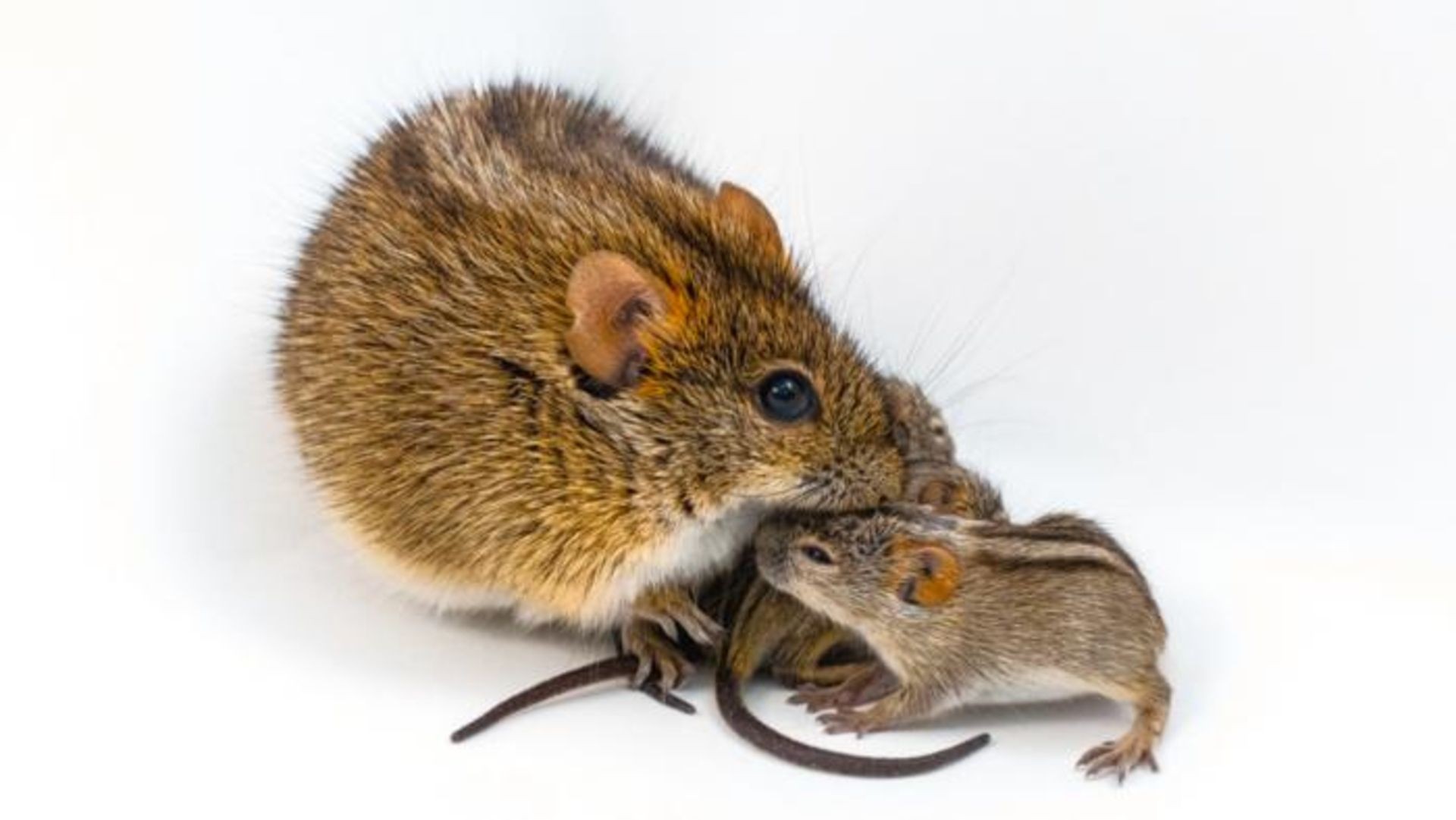
New research reveals a striking genetic mechanism in African striped mice that appears to govern whether a male exhibits nurturing or aggressive behavior toward his offspring. Scientists have identified a single gene, Agouti, which, when activated, can flip a male mouse from attentive fatherhood to infanticidal aggression. However, the study emphasizes that this genetic “switch” operates in tandem with social conditions, suggesting that biology and environment interact to shape paternal care.
The Rarity of Involved Fathers in the Mammalian World
Active paternal care is remarkably uncommon among mammals, present in only about 5% of the roughly 6,000 species. This scarcity has made understanding the underlying mechanisms behind fatherly behavior a significant challenge. The African striped mouse (Rhabdomys pumilio ) offers a unique opportunity for study because males within this species display a wide spectrum of paternal behaviors, ranging from attentive nurturing to complete indifference—or even violence toward their own pups.
Social Context Drives Aggression: Group vs. Solitary Housing
Researchers found that male mice housed in groups with other fathers and their young were far more likely to ignore or attack the pups than males kept in isolation. This suggests that social pressure and competition play a crucial role in regulating paternal behavior. When males were moved from crowded cages to solitary confinement, their aggression decreased, and nurturing instincts resurfaced.
The Role of the Agouti Gene and the Medial Preoptic Area (MPOA)
The study pinpointed the medial preoptic area (MPOA) – a brain region long known for its involvement in maternal care across mammals – as a key area regulating paternal behavior. Brain activity monitoring showed that attentive fathers had higher activity in the MPOA. Subsequent analysis of gene expression within the MPOA revealed that the Agouti gene was significantly more active in aggressive fathers than in caring ones.
“Decades of work has shown that the MPOA acts as a hub for maternal care across mammals,” explains Dr. Forrest Rogers, lead author of the study.
To confirm the gene’s influence, researchers artificially increased Agouti expression in the MPOA of male mice using viral vectors. The result was a dramatic shift in behavior: previously caring fathers became aggressive toward pups, suggesting that Agouti acts as a molecular switch for paternal care.
Not Just Genetics: Social Conditions Moderate the Effect
While the Agouti gene appears to have a strong link to the change in paternal care, Rogers cautions that this molecular switch isn’t the whole story. The research shows that social housing, for example, could moderate this effect. When males were moved from group housing to solitary cages, Agouti levels dropped and caregiving increased, suggesting that the gene is influenced more by social context than by food availability.
Limitations and Future Research
It’s essential to note that this study focused exclusively on African striped mice. The findings cannot be directly extrapolated to other species, including humans. While Agouti may play a similar role in other mammals, there’s currently no evidence to support this. This research provides a critical starting point for further investigation into the complex interplay between genetics, social environment, and paternal behavior in mammals.
The study underscores that even seemingly instinctive behaviors like parental care are not solely hardwired but are instead shaped by a dynamic interaction between genes and the surrounding environment.