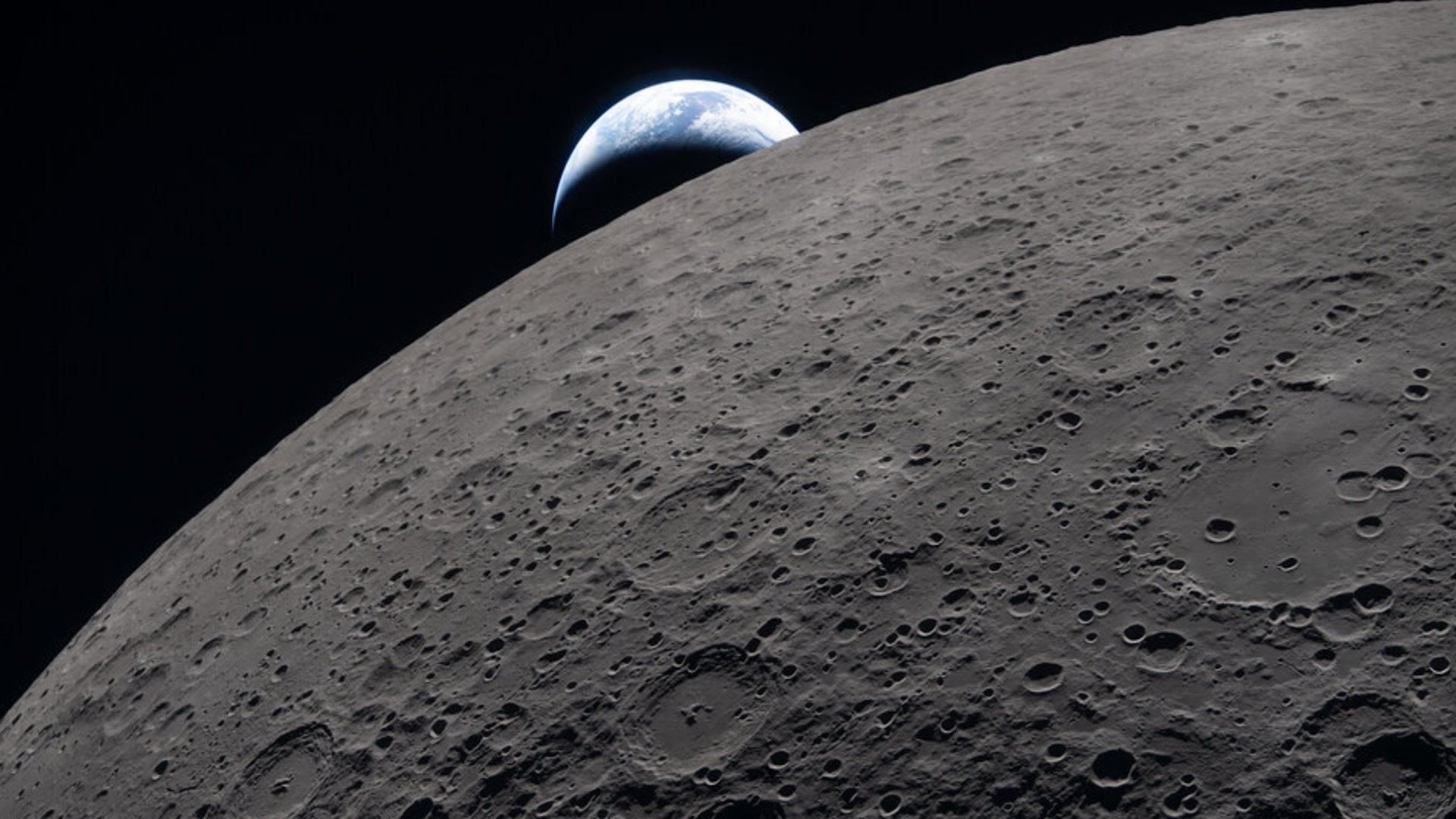
For a space historian, the Moon is not just a celestial body; it is a lifelong obsession. For those who grew up during the height of the Space Race, the lunar missions were more than news stories—they were defining cultural moments. After decades of looking backward at the achievements of the 1960s and 70s, the recent Artemis 2 mission has signaled a profound shift: humanity is no longer just remembering the Moon; we are returning to it.
The Legacy of Apollo: A Distant, Dreamlike Era
The connection to lunar exploration often begins with a sense of wonder. During the Apollo 8 mission in December 1968, the world watched through grainy, black-and-white television broadcasts. The images were fuzzy and dreamlike, capturing a sense of immense distance and the quiet gravity of being the first humans to orbit another world.
For those who lived through it, the Apollo era was defined by:
– Technical restraint: Astronauts maintained a professional, “Right Stuff” composure during transmissions.
– Visual limitations: Low-resolution imagery that felt both momentous and ethereal.
– A sense of finality: After the Apollo program ended in 1972, the era of human lunar exploration seemed to vanish, leaving a void that lasted for decades.
The Artemis 2 Experience: A New Dimension of Discovery
The arrival of the Artemis 2 mission, carrying astronauts Reid Wiseman, Victor Glover, Christina Koch, and Jeremy Hansen aboard the Orion spacecraft “Integrity,” has fundamentally changed the way we experience space. Unlike the distant, flickering images of the past, Artemis 2 has brought the Moon into the high-definition era.
The differences are striking:
– Unprecedented Clarity: Modern technology allows for real-time, high-definition views from inside the cabin. The lunar surface is no longer a blurry grey mass but a detailed landscape of jagged peaks and bright, pinprick craters.
– Emotional Connection: Where Apollo astronauts were stoic, the Artemis crew expresses raw exhilaration. Their descriptions—comparing craters to a “lampshade with tiny pinprick holes”—bring a human, relatable dimension to the void.
– Immediate Data: In the Apollo era, high-resolution images took years to process. Today, full-resolution digital photos of the lunar far side and the “Earthrise” are available just hours after the mission events.
The “Sci-Fi” Moment: Witnessing the Impossible
One of the most significant milestones of the flyby was the hour-long total solar eclipse experienced by the crew as the spacecraft entered the Moon’s shadow. This phenomenon, lasting ten times longer than an eclipse seen from Earth, provided a view of the solar corona and the lunar night side illuminated by “Earthshine.”
The experience was so visually overwhelming that even seasoned professionals struggled to find the words. As astronaut Reid Wiseman noted, the sight was so surreal that the human brain struggled to process the image, rendering traditional adjectives insufficient.
Why This Shift Matters
This transition from Apollo to Artemis represents more than just a technological upgrade; it marks a change in the human relationship with deep space. We have moved from an era of “looking back” at historical triumphs to an era of “looking ahead” at sustained exploration. The ability to transmit high-definition, real-time data means that the entire world can now participate in the sensory experience of spaceflight, turning a solitary mission into a shared human journey.
The transition from the grainy, stoic broadcasts of Apollo to the vivid, emotional, and high-definition reality of Artemis marks the true beginning of a new era in deep space exploration.