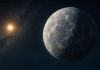
Astronomers have witnessed a second asteroid collision in the Fomalhaut system, a star just 25 light-years away, offering unprecedented insight into the chaotic early stages of planet formation. The observations, made by the Hubble Space Telescope, reveal that collisions between space rocks in this young stellar system occur far more frequently than previously assumed.
Fomalhaut: A Stellar Nursery in Action
Fomalhaut is a relatively young star at 440 million years old, still surrounded by a disk of debris left over from its formation. This debris disk is crucial because it represents the raw material from which planets are built. Studying collisions within this disk helps scientists understand how planets come together. The fact that collisions are observed so soon after the star’s formation suggests that planetary systems may begin as violent, fragmented environments before settling into stability.
First Collision, Then Another: A Repeating Pattern
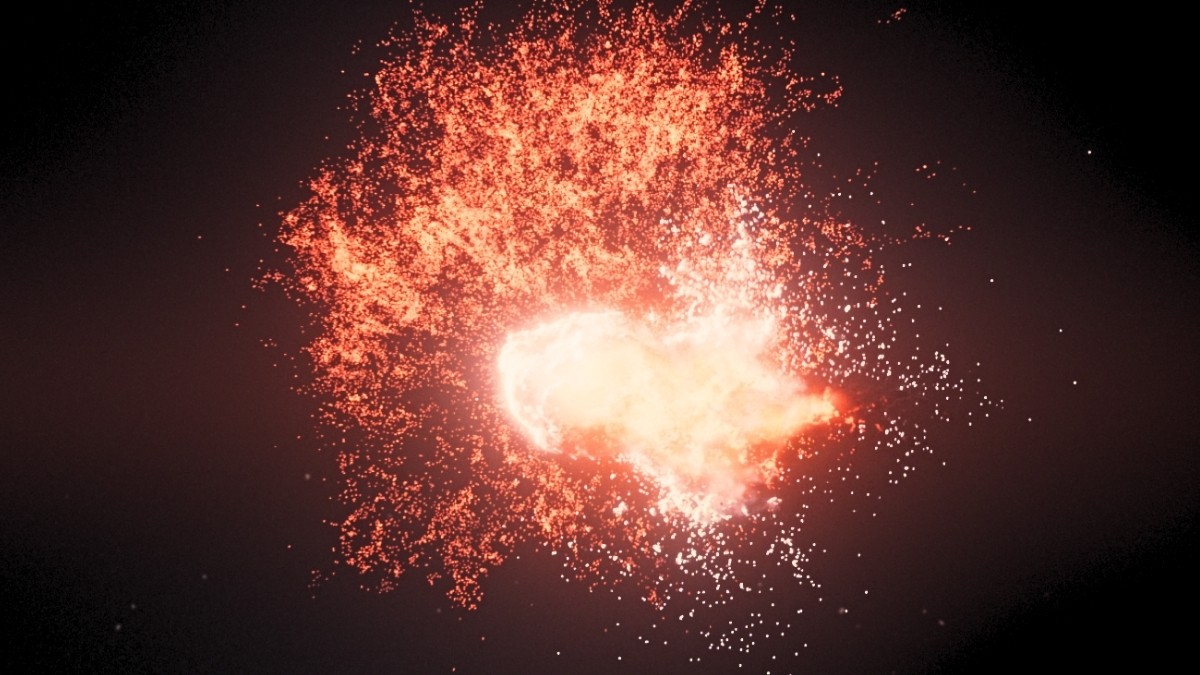
The first documented collision in this system led to the temporary appearance of an object dubbed “Dagon” in 2004. By 2014, Dagon had vanished, with astronomers concluding it was not a planet but a massive dust cloud from a collision. The most recent event, observed in 2023, produced a similar bright, expanding cloud now called Fomalhaut cs2.
“This is the first time we’ve seen a point of light appear out of nowhere in an exoplanetary system,” explains astronomer Paul Kalas. “It means we just witnessed a violent collision between two massive objects.”
The rapid succession of these events—two significant collisions within two decades—challenges previous estimates that such impacts occur every 100,000 years or longer. Kalas suggests that if one could speed up observations of this system over millennia, the sky would be “sparkling with these collisions.”
Implications for Planet Formation
The colliding asteroids were each roughly 60 kilometers (37 miles) in diameter. If they hadn’t shattered, they could have eventually grown into planets. Astronomers now estimate that Fomalhaut’s disk contains approximately 300 million similar objects, constantly colliding and grinding against each other.
The system also exhibits concentric gaps in the debris disk, suggesting that unseen planets may already be clearing paths in their orbits. This indicates that Fomalhaut is a dynamic environment where planet formation is actively underway.
Future Observations
Researchers plan to continue monitoring Fomalhaut using both Hubble and the James Webb Space Telescope to track the evolution of Fomalhaut cs2 and search for further collisions. By studying these events, scientists can refine their understanding of how planets form in the early stages of stellar evolution.
The ongoing observations of Fomalhaut provide a rare glimpse into the chaotic, formative years of a planetary system, demonstrating that planet formation is not a gentle process but rather a violent and dynamic one.