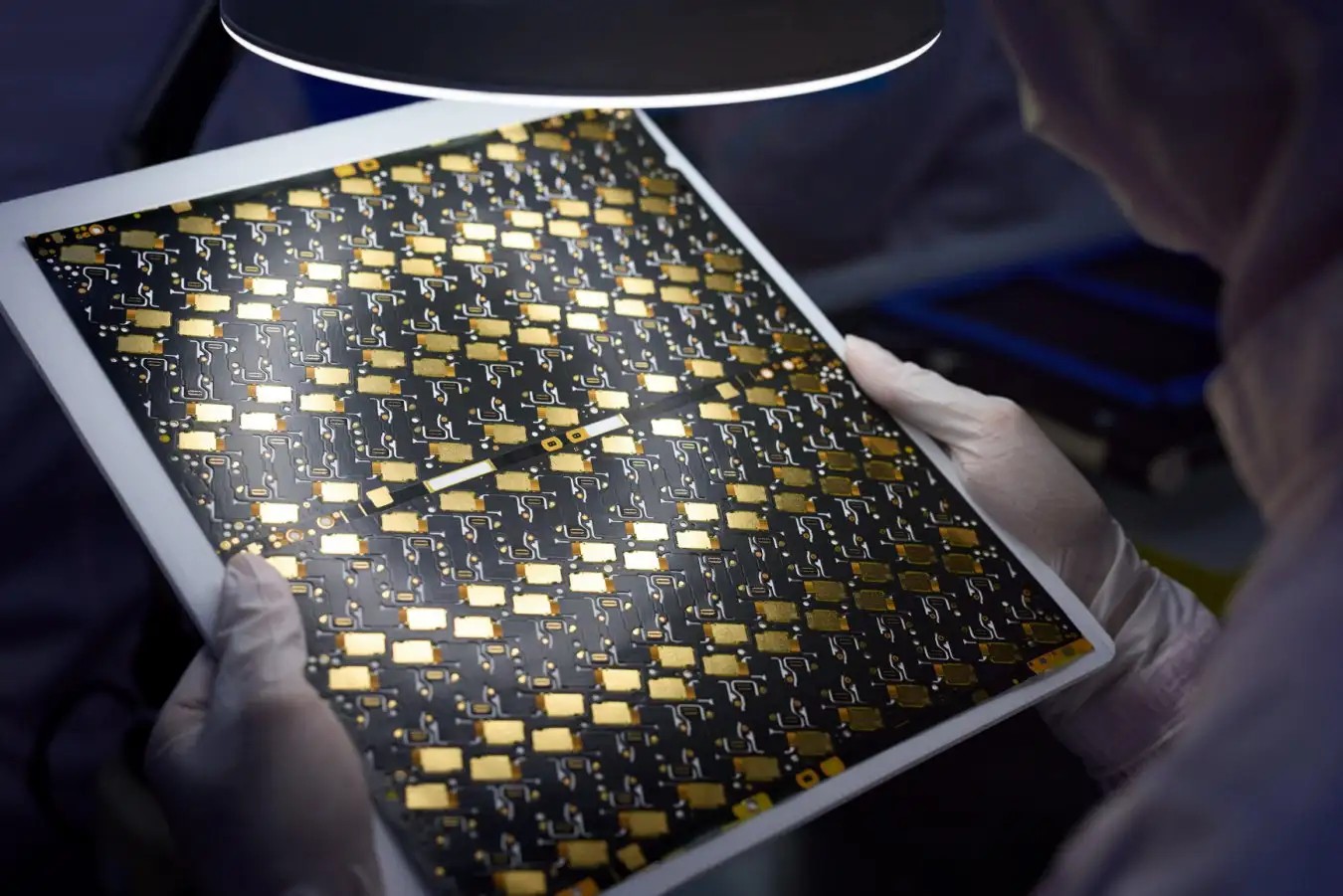
The silicon chips powering your latest smartphone or laptop are likely imperfect—and that is a feature, not a bug. As manufacturers like Apple increasingly utilize chips with minor defects to produce affordable devices, they are tapping into a long-standing industry practice known as binning. Far from being a sign of poor quality control, this method significantly reduces costs for consumers and minimizes electronic waste, proving that “good enough” is often just right.
The Farming Roots of Semiconductor Sorting
The term “binning” borrows its logic from agriculture. In farming, produce is sorted into categories: premium fruits go to high-end markets, misshapen but edible items are sold at lower prices or used in processed foods, and damaged goods become animal feed. Nothing is wasted; every item finds a purpose based on its quality grade.
Semiconductor manufacturing operates on the same principle. Silicon wafers are processed in batches, and while the vast majority of chips meet strict specifications, a small percentage inevitably emerges with minor flaws. Rather than discarding these imperfect chips, manufacturers categorize—or “bin”—them based on their specific capabilities. This ensures that every usable chip finds a home, whether in a flagship device or a budget-friendly alternative.
Apple’s MacBook Neo: A Case Study in Efficiency
A recent example of this practice involves Apple’s rumored entry-level laptop, potentially named the MacBook Neo. Reports suggest this device will utilize the A18 Pro chip, originally designed for the iPhone 16 Pro, but with a slight modification: it features five GPU cores instead of six.
Industry experts indicate that Apple is likely using A18 Pro chips where one of the six graphics cores was defective during manufacturing. By disabling the faulty core and marketing the chip as a five-core variant, Apple can offer a more affordable laptop option. This strategy allows the company to:
– Reduce production costs by maximizing the yield from each silicon wafer.
– Lower the environmental impact by preventing functional chips from ending up in landfills.
– Provide accessible technology to budget-conscious consumers without compromising overall performance for everyday tasks.
While Apple has not officially confirmed this strategy, semiconductor experts note that such practices are standard across the tech industry, extending beyond consumer electronics to automotive and industrial sectors.
The Complexity of Perfection
Creating a microchip is one of the most complex manufacturing processes in human history. As explained by Owen Guy, a researcher at Swansea University, a single 300-millimeter silicon wafer contains trillions of transistors. The production process involves thousands of precise steps, layering circuits, insulation, and chemicals with thicknesses measured in nanometers.
Given this extreme complexity, achieving a 100% success rate is statistically improbable. Even with a high yield rate of 99% for standard silicon chips, the margin for error grows with more advanced designs and newer materials like silicon carbide. The key distinction lies in the type of defect:
– Killer Defects: Errors that render the chip completely non-functional.
– Minor Defects: Flaws that affect only a specific part of the chip, such as a single core or a section of memory.
In a scenario with a 90% yield, 10% of chips may have minor defects. Instead of being discarded, these chips are reclassified. A chip with a damaged core might be sold as a lower-spec model, while a chip with thermal limitations might be rated for lower voltages. This granular sorting ensures that no functional silicon is wasted.
Invisible to the User
For the end consumer, these imperfections are entirely invisible. Modern software and hardware architectures are designed to handle redundancy and error correction seamlessly.
Tony Kenyon from University College London explains that error-correction software can isolate broken transistors in memory chips to prevent data loss. Similarly, processors can route calculations around damaged cores, ensuring that software runs smoothly without crashes.
“Everyone thinks that all chips are identical, and the reality is that they’re not,” says Kenyon. “If you look under the hood at the transistor level, there will be bits that don’t function. It is very common.”
Conclusion
The presence of minor defects in consumer electronics is not a flaw in the system but a testament to efficient engineering. By embracing binning, manufacturers like Apple are able to offer more affordable devices while reducing waste. For the user, this means access to high-quality technology at a lower price point, with performance that remains robust and reliable for daily use. The next time you buy a budget-friendly gadget, remember that its “imperfect” chip might just be doing its job perfectly well.