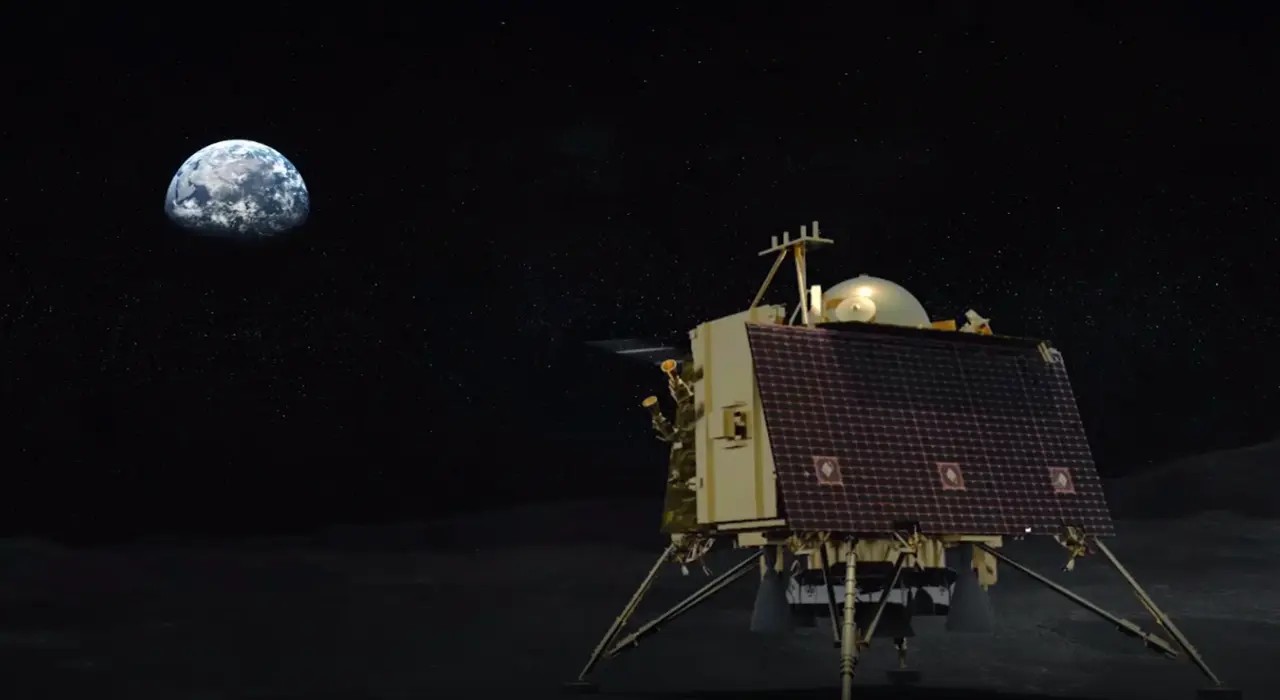
The long-awaited moment has finally arrived. India’s Chandrayaan-2 mission is officially divided into two separate parts: the orbiter and the lander. This was confirmed by the Indian Space Research Organization (ISRO) on Monday, September 2, just four days before the real drama began. The unmanned expedition launched back on July 22nd and is now close to its main objective. Their goal is to land near the Moon’s south pole in the early morning of September 7.
Success here changes everything. If the landing is successful, India will become the fourth country in history to achieve a soft landing on the moon. They join the exclusive club of the Soviet Union, the United States, and China. This is a significant step forward in the country’s space program. Consider recent failures elsewhere. In April, an Israeli lander crashed. This mission is an opportunity for India to prove that it can succeed.
Vikram lander successfully separated from Chandrayaan-2 orbiter on September 2, 2019 at 1:15 PM IST.
The split took place at 1:15 PM Indian Standard Time (7:45 GMT). ISRO announced the milestone on Twitter as the spacecraft continues to orbit the moon. It’s a quiet moment in space, but the stakes are very high. The lander named Vikram broke off. Now it has to descend.
Reaching the moon this way was not direct. The launch vehicle is not powerful enough to launch a spacecraft directly. So the team used a clever trick. They use Earth’s gravity to slingshot the spacecraft outward. Chandrayaan-2, which means “moon chariot” in Hindi, spent several weeks circling the Earth. The height of each orbit increases little by little. It’s a gradual rise. It eventually escaped Earth’s gravity and entered the orbit of the Moon.
Now the focus shifts to Pragyaan. This is Rover’s name meaning “wisdom”. The schedule is tight. The spacecraft is designed to operate for one lunar day. This sounds like a long time until you do the math. One lunar day is about 14 Earth days. That’s the entire window the spacecraft needs to do its job.
So what happens? Pragyaan studies surface rocks and soil. This requires analyzing the lunar regolith. To do this, It needs to understand the geology near the south pole. The information sent back is important for future missions. Soil content can helps us plan for a long-term stay. It helps to understand the history of the moon.
The pressure is on. Landing is dangerous. the south pole has a rugged terrain. The shadow is deep. Communication is difficult. But the separation is complete. The hardware is ready. India is holding its breath. The whole world is watching. Will Vikram have a soft landing? Or will it meet the same fate as other failed attempts?
The answer comes soon. The landing window is narrow. There is no margin of error. We stand on the edge of history.
Stay up to date with real-time science news
Following major science and technology news outlets has changed from an everyday hobby to a daily necessity. As the number of breakthroughs explodes, missing a headline means missing out on contextual information on everything from medicine to global climate data.
But how do you keep up without spending hours scrolling? The answer can be found in direct, push-based channels such as WhatsApp and Google News. These platforms reduce noise and deliver verified updates directly to your device.
“Follow Futura on WhatsApp and Google News to never miss important science and technology updates.”
For those following the rapid development of artificial intelligence, space exploration, and public health, this approach emphasizes active awareness over passive consumption. You get the facts. You get them fast. And you can get them without the confusing algorithms that often obscure the truth of mainstream information.