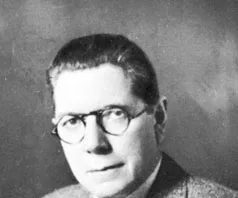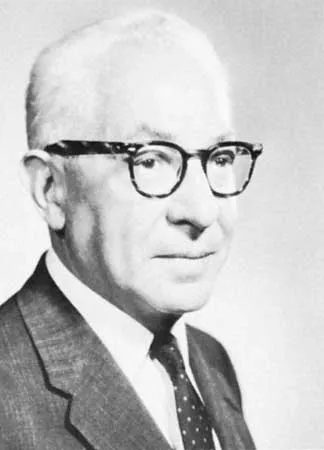
Isidor Isaac Rabi did not just study physics. He built the tools that let us see inside the atom. Born in Rymanów, Austria-Hungary (now Poland) in 1898, he moved to New York City with his parents the following year. The path from a young immigrant to Nobel laureate was not straight. He started in chemistry at Cornell University, graduating in 119. Then he pivoted. He switched to physics. He earned his Ph.D. from Columbia University in 1927.
He spent time studying in Europe before returning to take a faculty position at Columbia in 1929. By 1937, he was a full professor. That same year, he made a discovery that changed everything.
The Atomic Beam Magnetic Resonance Method
Rabi’s big win came in 1944 when he received the Nobel Prize in Physics. The committee cited his invention of the atomic and molecular beam magnetic resonance method. It sounds dry. It is not.
Before Rabi, scientists were guessing at the structure of the nucleus. They knew things existed. They did not know how to measure their specific magnetic properties. Rabi figured out how to measure the spin of protons in the atom’s core. This is nuclear magnetic moment. It is the key.
By applying his magnetic resonance method, researchers could deduce mechanical and magnetic properties. They could see the shape of the atomic nucleus. The measurements were precise. This precision mattered. It opened doors to technologies we use every day.
Rabi’s method provided the central technique for virtually all molecular and atomic beam experimentation.
The Radar War Effort and Policy Power
The 1930s work set the stage for the 1940s. From 1940 to 1945, Rabi led a group of scientists at MIT. They worked on radar. This was not theoretical physics then. It was wartime engineering. The development of radar helped end a global conflict.
After the war, Rabi’s role shifted from the lab to policy. He joined the General Advisory Committee of the Atomic Energy Commission. He served from 1946 to 1956. He even succeeded J. Robert Oppenheimer as chairman from 1952 to 1956.
He was not just a scientist. He was a shaper of science policy. He originated the concept for CERN, the international laboratory for high-energy physics in Geneva, Switzerland. He was also a founder of the Brookhaven National Laboratory in Upton, New York.
Building a Department of Winners
Rabi built one of the world’s finest physics departments at Columbia University. It was not just about him. He cultivated talent. The department produced several Nobel Prize-winning physicists. He created an environment where the next generation could do the work he started.
His invention in 1937 was not just a paper. It was a foundation. The precise measurements from his method made subsequent applications possible.
Think about the technology in your pocket or your hospital. The atomic clock. The maser. The laser. All of these rely on the principles Rabi established.
Then there is the medical side. Nuclear magnetic resonance imaging (MRI) is used in diagnostic medicine today. It saves lives. It allows doctors to see inside the body without cutting it open. The technique stems directly from Rabi’s work on measuring nuclear magnetic moments.
R