


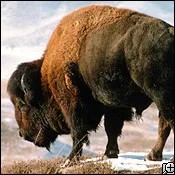
The year 1887 marked a turning point for the plains bison (Bison bison bison ). Once countless across the Great Plains, the herd had collapsed to just 541 individuals due to relentless overhunting. It was a near-extinction event. Today, conservation work in Oklahoma and Montana has helped reestablish this subspecies. But the story isn’t uniform. The wood bison (B. bison athabascae ), the other major subspecies, remains listed as endangered.
These bovids aren’t solitary loners. They graze in large herds, preferring mixed-grass and short-grass prairie environments. As the largest native land mammals in the western hemisphere, they pack a punch physically, though sexual dimorphism is stark: females are significantly smaller than males. Both sexes grow horns, but the social dynamics shift during breeding season. Males fight for access to females, a ritual that underscores their robust build.
Why Ranchers Worry About Bison Cattle Disease Transmission
A persistent concern among livestock owners involves shared bacterial infectious diseases. Some ranchers fear bison could transmit these pathogens to cattle. However, scientific studies suggest this risk is unlikely. The fear persists, but the data doesn’t strongly support the idea that bison pose a major disease vector for domestic herds.
Where Do American Bison Live and What Do They Eat?
You’ll find Bison bison primarily in Western Canada and the northwestern United States. Their habitat includes open woodlands and vast prairies. Their diet is broad, consisting of grasses, grasslike plants, berries, lichens, and horsetails. They are adapted to forage in these rugged landscapes.
| Attribute | Details |
|---|---|
| Family | Bovidae (Cattle and Relatives) |
| Head & Body Length | 6.5 to 13 feet (2 to 4 m) |
| Tail Length | 20 to 24 inches (50 to 60 cm) |
| Shoulder Height | 5 to 6.5 feet (1.5 to 2 m) |
| Weight Range | 700 to 2,200 pounds (320 to 1,000 kg) |
| Conservation Status | Lower Risk (Conservation Dependent) |
| Major Threat | Habitat loss |
How Big Are American Bison and How Do They Reproduce?
Size varies significantly. A bison can stand 5 to 6.5 feet at the shoulder, with a total head-and-body length reaching up to 13 feet. Weights range from 700 pounds for smaller females to 2,200 pounds for large males. The males are distinguished by a prominent shoulder hump, a large heavy head, and a bearded chin. Their coat is shaggy and brownish-black on the head, neck, and shoulders, transitioning to lighter brown on the hindquarters.
Reproduction follows a specific cycle. Mating occurs from June to September. Gestation