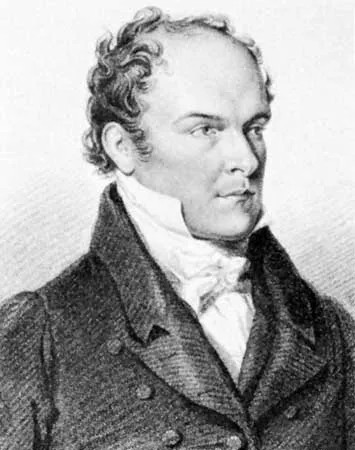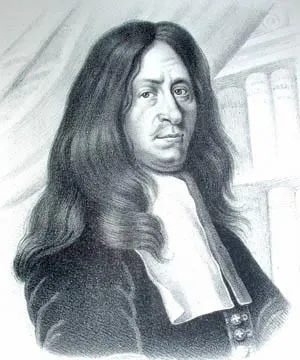
History remembers Thomas Bartholin as the man who finally showed us where our body’s drainage system really leads. Born in Copenhagen on October 20, 1616, he was not only involved in cataloging bones and muscles. He traced the entire human lymphatic system, which no one had ever accomplished before 1652.
His work came from a family steeped in science. His father, Caspar Bartholin, was already a heavyweight in the world of anatomy. But Thomas didn’t just ride on his father’s coattails. He was part of a scientific powerhouse duo. Together with his older brother Erasmus Bartholin, he helped promote European medicine.
The Bartholin brothers were not only concerned with anatomy; they discussed it. They were students of strict Dutch anatomical studies. When the English physician William Harvey presented his controversial theory about the circulation of blood in the body, many scientists were skeptical. Thomas and Erasmus supported Harvey. They looked at the evidence and agreed: the heart pumps, the blood flows, and the body is a closed circuit. It was a brave attitude back then.
Thomas was not satisfied with mere theory. He taught at the University of Copenhagen in 1646–1661. That’s a long time to sit in front of a lecture hall, dissecting corpses and trying to explain the invisible networks in the human body. His students learned that science requires precision. If you can’t measure it, you can’t prove it.
Later in life, his skills landed him a high-profile gig. From 1670 until his death in 1680, he served as King Christian V’s personal physician. As a royal physician in Copenhagen, it wasn’t just about treating the monarch’s ailments. It was a badge of honor. This meant that the king trusted Bartholin’s judgment. This meant that the highest powers in Denmark respected his work.
“He was the first to fully describe the entire human lymphatic system.”
Why is this important today? We often think that blood is the only fluid that matters. We see it in the veins. We can’t see the lymph. But without Bartholin’s detailed mapping, we wouldn’t be able to understand how the immune system moves, how tissue stays dry, or how disease spreads throughout the body. He opened the door to modern immunology, although he could not identify the microscopic soldiers that would later populate this system.
He died on 4 December 1680 in his hometown. The lymphatic system he described still exists today. It continues to do its quiet, necessary work. And whenever a doctor looks for signs of an infection or the spread of cancer, he goes through the map that Bartholin drew more than three centuries ago.