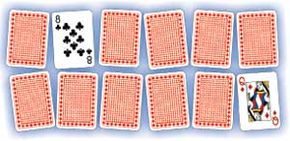
We’ve all been there. You’re sitting at a kitchen table with your kids, convinced you’re about to crush them at Concentration. You know the drill. Standard 52-card deck. Face down. Match the pairs. It’s the first card game most of us learn, which is exactly why we underestimate it. Don’t be surprised if the ten-year-old across from you dismantles your strategy while you’re still trying to remember if you looked at the Queen of Hearts three turns ago.
The classic game is simple enough to grasp in seconds. Deal the entire deck out. No neat rows required. A messy, haphazard spread works just fine. Your turn consists of flipping two cards. If they match in rank, you keep them. Go again. If they don’t, flip them back over. End of turn. It sounds easy. It relies entirely on visual and spatial recall. When in doubt, trust your gut. You’ll likely be right more often than not.
But let’s be honest. The standard version eventually becomes predictable. The layout stays static. You memorize the board. That’s where the real challenge begins.
The Moving Variation Explained
If you want a memory workout that actually tests your brain, you need to introduce movement. This is where Moving Concentration separates the casual players from the memory masters. The rules for dealing and scoring remain largely the same. You still aim to gather the most pairs. High scorer after three games takes the crown.
The twist changes everything.
When you flip two cards and they don’t match, you aren’t forced to return them to their exact original spots. You can place them anywhere else on the table. This small addition transforms a game of simple recognition into a complex spatial puzzle.
Why does this matter? Because chaos is your friend.
In the early stages, when the table is cluttered with face-down cards, it is significantly harder for your opponent to track where you just put a specific card. The visual noise increases. The cognitive load spikes. Your opponent has to scan the entire layout to find the card you moved.
Strategic Placement
This isn’t just about random chaos. There is a method to the madness. You can use the move option to disrupt your opponent’s flow. If you notice a pattern in where they tend to place cards they want to keep, you can intervene. Move that card. Break their rhythm. Force them to re-evaluate.
It creates a layer of psychological warfare on top of the memory game. You’re not just remembering; you’re manipulating the board state.
The Endgame Constraint
There is one catch. As the game winds down, the rules tighten. When you are left with the final six cards, you lose the ability to move them. You must return non-matching pairs to their current locations. This forces a final, frantic sprint to clear the board using only pure recall. No more hiding cards behind a pile of random debris.
Why You Should Try It
Most people stop at the basic rules. They think they’ve mastered the game. But the static board eventually becomes a solved puzzle. Moving Concentration keeps the board alive. It forces you to pay attention to where your opponent places cards, not just what they are.
It’s faster. It’s more aggressive. And yes, it will still beat your kids.
So, next time you’re bored, shuffle the deck. Spread it out. And remember: if you can’t move the cards, you’re playing the wrong version