Clocks are more than just machines that tell you when to wake up. They are electronic devices or mechanical systems designed to measure and record the passage of seconds. We often take this precision for granted. But the journey to get here was long.
Ancient cultures didn’t just guess at time. Egyptians, Greeks, and Romans used sundials. They tracked hours with candle clocks. Sandglasses were common too. These tools worked well enough for daily life. They weren’t precise. But they were a start.
The Mechanical Revolution
The real shift happened with the first mechanical clocks. They were heavy. Weight-driven. And likely built for monks.
Monastic life demanded strict schedules. Prayer and work needed to happen at specific times. The church needed order. So engineers built the first true clocks.
Then came public time. In 1335, Milan erected its first European public clock. It struck the hours. This changed urban life. People could coordinate. Markets opened together. Work shifts aligned.
Surviving examples are rare. The oldest in England dates to 1386. France has one from 1389. By the late 14th century, domestic clocks appeared. You could finally own time in your home.
Portability and Precision
For centuries, clocks stayed put. That changed around 1500.
Peter Henlein, a German locksmith, solved the portability problem. He made the first spring-driven timepieces. Small. Portable. You could carry them. This was a huge leap. Travelers and merchants now had reliable time.
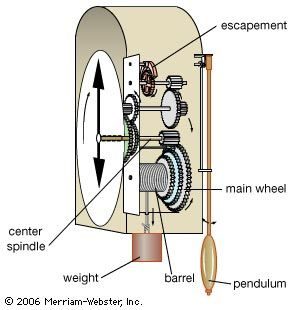
Accuracy improved slowly. Christiaan Huygens changed the game in 1656. He invented the pendulum clock. The swinging pendulum regulated the gears. It was much more stable than spring-driven mechanisms.
Big Ben in London set the standard. Installed in 1859, this great clock at Westminster became the benchmark for tower pendulum clocks. If your clock matched Big Ben, it was good.
Short pendulums actually offer the highest mechanical accuracy. Those about 39 inches (990 mm) long can stay within a few thousandths of a second per day. That’s impressive. But it wasn’t enough.
The Electronic and Atomic Leap
Mechanical limits were hit. Engineers looked elsewhere.
In 1929, they applied quartz crystal vibration to timekeeping. Quartz vibrates at a constant frequency when electrified. This eliminated mechanical wear. Observatory quartz clocks had a maximum error of only a few ten-thousandths of a second per day.
Then came the atomic age.
The first atomic clock went online in 1951. It didn’t rely on gears. It didn’t use pendulums. It used the natural periodic behavior of atoms. Think of vibrations or radiation emission. Atoms don’t lose tension. They don’t wear out.
Atomic clocks are regulated by these atomic properties. The result? Accuracy exceeding one billionth of a second per day.
They are the most accurate devices yet invented.
Why It Matters
You might think this is just trivia. It isn’t.
Every time you use GPS, you rely on atomic clocks. Satellites need nanosecond precision to triangulate your position on Earth. A tiny error in time