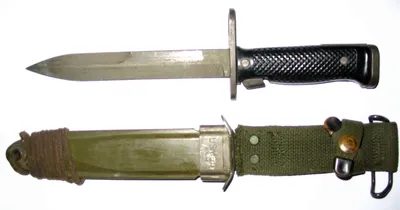
It’s easy to assume that a bayonet is just a cold piece of steel attached to the end of a gun. It looks like pure violence. Simple. Brutal. But the truth is more complicated. The bayonet was originally a clumsy, dangerous piece of engineering that would almost break muskets before it ever touched the enemy.
According to tradition, the idea came from Bayonne, France. Early 17th century. That is the origin story. Maréchal de Puységur, a French military man, described the first versions as straight, double-edged blades. About a foot long. They had equally long wooden handles. You put the handle on the muzzle of the musket. It was heavy. It was awkward.
But it worked. That changed everything.
In the past, infantry had to carry two weapons. A musket to shoot. A pike for stabbing. The pikemen stood in front of the shooters to protect them. It was a complicated dance. The bayonet combined these two tools. Soldiers no longer needed pikes. The weapon spread throughout Europe. The pike was thrown away. The infantry was now a single, lethal unit.
The Fatal Flaw of the Plug Bayonet
A problem occurred. Big.
An early version was called a plug bayonet. You inserted the wooden handle into the barrel. Then you fired. You had to pull it out to reload. To stab, you had to push it in. This was a logistical nightmare.
If you squeezed it too tight, you couldn’t get it out. If you didn’t pack it tight, the explosion might blow it off. And as long as the bayonet was in the barrel, the gun could not be fired. You either shot or stabbed. Not both. It was a binary choice on the battlefield.
This restriction lasted until 1688. Then Sébastien Le Prestre de Vauban changed the game.
Vauban was a military engineer. He worked for the French army. He introduced the socket bayonet. This design didn’t plug the muzzle. It slipped over it. There was a metal sleeve around the barrel. The bolt on the barrel locks into the rectangular slot on the bottom. It stayed put. The gun could be fired with the bayonet attached.
Why Vauban’s design was important
The socket bayonet was a revolution. Why? Because it allowed simultaneous use.
A soldier could load his powder, ram the ball and aim. He could keep the bayonet fixed to the barrel without obstructing the shot. This shifted the balance of power. This made infantry volleys more lethal. It made the charge more terrifying.
The blade itself was usually triangular in cross-section. This shape helped it penetrate armor or clothing. It also increased structural strength.
Vauban’s design was so good that it became the standard. The basic form remained unchanged for centuries. Minor changes have been made. In the 19th century, some bayonets had saw teeth on the back. Engineers used them to cut wood or wire. Some were designed as entrenching tools. Digging a foxhole became a combat skill.
The Repeating Rifle Paradox
Then came the repeating firearm.
Gatling