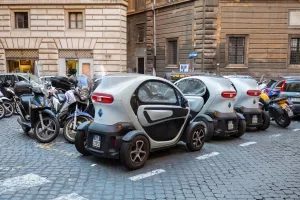
They are clogging sidewalks, appearing in rental docks, and generally reshaping urban landscapes. E-bikes. E-scooters. Segways. Hoverboards. Whatever you call them, these electrically powered vehicles for short trips are rapidly gaining popularity in our cities. But beneath the clutter lies a genuine question: is this micro-mobility trend just a passing fad, or does it hold real, lasting potential?
Laura Gebhardt, a traffic researcher at the German Aerospace Center (DLR), has spent her career untangling these questions. In a recent discussion, she offered a clear-eyed look at what is driving this shift, the opportunities it presents, and the significant hurdles that remain. Her insights suggest that while the chaos on our streets is real, the underlying movement toward shorter, electric distances is more than just a momentary craze.
Why Micro-Mobility Matters Now
The rise of these vehicles isn’t random. It responds to a specific gap in urban transport. Public transit gets you from A to B, but what about B to C? Traditional cars are often overkill for short distances, contributing to congestion and pollution. Micro-mobility offers a middle ground.
Gebhardt’s work highlights that the appeal lies in flexibility. These vehicles are lightweight, easy to park, and cheap to operate compared to cars. They fill the “last mile” problem that has plagued city planners for decades. But they also introduce new challenges. Safety concerns, infrastructure mismatches, and regulatory confusion are frequent topics of debate.
The DLR Perspective
The German Aerospace Center (DLR) is not just observing; it is actively researching the impact of these technologies. Gebhardt points out that data from various cities shows a steady increase in usage, particularly among younger demographics and commuters looking for alternatives to driving.
However, the reality is messy. Sidewalks aren’t always designed for two-wheeled traffic. Bike lanes are often incomplete or poorly maintained. The integration of e-scooters into existing transport networks requires thoughtful planning, not just deregulation.
“Micro-mobility is not a silver bullet, but it is a necessary piece of the urban puzzle,” Gebhardt notes. “The key is integration, not isolation.”
Challenges on the Road
One of the biggest hurdles is safety. Accidents involving e-scooters and pedestrians are on the rise in many cities. Speed limits, helmet use, and designated paths are all points of contention. Gebhardt argues that infrastructure needs to catch up with technology. We cannot expect users to behave perfectly if the road design encourages risky behavior.
Another issue is equity. Rental e-scooter companies often drop their devices in affluent areas, leaving underserved neighborhoods without access. This raises questions about who benefits from micro-mobility and who bears the cost of its inefficiencies.
The Future of Urban Transport
Despite the challenges, the trajectory is clear. Cities that embrace micro-mobility as part of a broader sustainable transport strategy are seeing benefits. Reduced traffic congestion, lower emissions, and healthier lifestyles are just some of the positive outcomes.
Gebhardt suggests that the next phase will involve better data sharing between private companies and public authorities. Imagine a system where your e-scooter rental seamlessly connects with a bus or train ticket, all optimized for speed and cost. That future is possible, but
Mikromobilität: Definition, neue Antriebe und echte Nutzungsmuster
Mikromobilität klingt nach einem buzzword, ist aber eigentlich ganz bodenständig. Es beschreibt Fahrzeuge, die maximal zwei Personen transportieren können. Da gehören E-Scooter, Pedelecs, Segways und Hoverboards dazu. Sogar kleine Elektro-Kleinstwagen wie der Renault Twizy fallen in diese Kategorie. Die Fahrzeuge selbst sind keine Erfindung der heutigen Zeit. Viele dieser Modelle gibt es schon seit Jahren.
Was die Kategorie erst jetzt relevant macht, sind zwei Faktoren. Der elektrische Antrieb. Und das Sharing-Prinzip.
Beides hat den Markt aufgebrochen. Plötzlich sind diese Geräte nicht mehr nur Spielzeug oder Nischenprodukte. Sie sind ein Teil der täglichen Infrastruktur.
Die letzte Meile als Hauptanwendungsgebiet
Wo werden diese Fahrzeuge genutzt? Meistens an der sogenannten letzten Meile. Das ist der Abschnitt zwischen dem öffentlichen Nahverkehr und dem eigentlichen Ziel. Man steigt aus der U-Bahn aus. Man läuft nicht den ganzen Weg nach Hause. Stattdessen holt man sich einen E-Scooter. Man legt die letzten ein bis zwei Kilometer zurück. Dann parkt man ihn.
Im Sommer sieht es oft so aus, dass Strecken zurückgelegt werden, für die man sonst zu Fuß gegangen wäre. Oder mit dem klassischen Fahrrad. Das ändert die Gewichtung im urbanen Raum.
Datengrundlage: Was die Zahlen wirklich sagen
Wir brauchen mehr Daten, um das genau zu quantifizieren. Bisher stützen wir uns auf die Zahlen der Anbieter. Die sind gut, aber nicht vollständig. Es gibt Lücken.
Was wir wissen, ist Folgendes. Die durchschnittliche Weglänge liegt bei rund zwei Kilometern. Das ist kein langer Weg. Das ist ein kurzer Trip.
Die Nutzungszeiten sind spezifisch. E-Scooter werden vorwiegend am Abend genutzt. Und samstags. Das deutet stark auf Freizeitnutzung hin. Nicht auf den Weg zur Arbeit. Sondern auf den Weg zum Treffen. Zum Spaziergang. Zur Bar.
Seit der Pandemie hat sich das Bild gewandelt. Die Weglänge ist um 25 bis 30 Prozent gestiegen. Warum? Weil die Menschen weniger häufig das Ziel erreichen. Oder weil die Wege anders strukturiert sind. Die Pandemie hat die Mikromobilität von der Freizeit- zur Alltagsmobilität geschoben. Oder zumindest verlängert.
Warum die Datenlage noch nicht reicht
Wir können keine wissenschaftlich fundierten Aussagen über die gesamte Verkehrsleistung treffen. Die Daten der Anbieter zeigen nur, was sie gemessen haben. Sie zeigen nicht, was nicht gemessen wurde. Was abseits der App passiert.
Das ist ein Problem. Wenn wir die Stadt planen wollen, brauchen wir ein vollständiges Bild. Nicht nur die Peaks. Nicht nur die Samstage. Sondern auch die Wochentage. Die Regenperioden. Die Wintermonate.
Bisher fehlt diese Tiefe. Wir sehen die Spitze des Eisbergs. Darunter liegt eine Menge ungemessener Realität. Das macht Prognosen schwer. Und Planungen unsicher.
E-Scooter Sharing: Mehr als nur ein Trend
Das Sharing-Modell ist der Treiber. Man muss kein eigenes Fahrzeug besitzen. Man sucht es digital
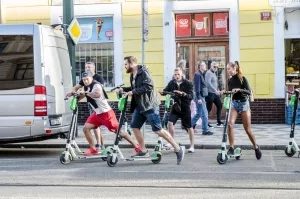

Rural reach and the rental paradox
We tend to assume e-scooters and micro-mobility are strictly urban tools. The logic holds up superficially. Sharing fleets and on-demand shuttles cluster in city centers. High density equals high user volume. That is where the business model survives. It is a simple equation of supply and demand. But this reality does not dictate the future shape of transport.
There is a significant gap in coverage beyond the downtown core. Suburbs. Semi-rural zones. Areas where public transit routes have been thinned out or cut entirely. Residents in these micro-mobility hubs often face a mobility desert. They are not served by the traditional metro or bus network. Here, the promise of micro-mobility shifts from convenience to necessity. It becomes a bridge. A way to connect the last mile when the last mile is actually several miles long.
We need projects that test this hypothesis outside the concrete jungle. Can a scooter or e-bike replace a car for someone living in a low-density area? It would simplify daily life in ways we haven’t fully mapped yet. It would reduce isolation. It would offer autonomy where public options are scarce.
The ownership dilemma: why rentals dominate
When it comes to e-bikes, the decision to buy feels natural. A bicycle is a known entity. We understand its mechanics, its maintenance, and its place in our lives. The investment is clear. The utility is proven.
E-scooters are different. The category is still muddy in the public consciousness. People hesitate. They do not yet know if the device fits their specific lifestyle. The questions pile up.
- Does it make sense for my commute?
- How safe is it on mixed traffic?
- Where do I store it?
This uncertainty fuels the rental market. It lowers the barrier to entry. You try it. You see if it works for you. You pay by the minute or the day. The risk is minimal. Buying is a commitment you are not ready to make.
“People don’t know where the use case ends until they have tried it.”
Sales are rising. You can find e-scooters at discounters for a few hundred euros. The hardware is accessible. The price point is no longer a blocker. But the behavioral blocker remains. The lack of clear mental models for usage and safety keeps rentals ahead of purchases. Until that clarity arrives, the rental model will continue to lead the charge, serving as both a product and a classroom.
The question is not whether people will eventually own these devices. It is whether the infrastructure and the social norms will be ready to support that ownership when it happens. Right now, we are still in the trial phase. Globally. Locally. In our own garages.

Can e-scooters actually replace car trips?
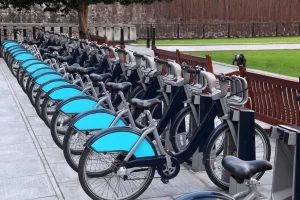
The real advantage of micromobility lies in its sheer flexibility. We are no longer tied to rigid parking schedules or specific docking stations. The dominant model now is “free-floating.” You grab an e-scooter or e-bike wherever it is closest to you. Drop it off when you arrive. The provider handles the charging. They manage the maintenance. You just ride.
But does this actually reduce traffic?
That is the question researchers at the DLR Institute of Transport Research have been trying to answer. The data suggests a significant opportunity. In Germany alone, nearly 30 million car trips happen daily. They are short. Less than two kilometers. Another 30 million are under four kilometers. These are the trips most likely to be replaced by micromobility.
The institute’s potential analysis indicates that e-scooters could replace roughly 20 percent of all car journeys under four kilometers.
This isn’t a theoretical maximum. It accounts for real-world barriers. It factors in bad weather. It considers those carrying heavy luggage. It excludes scenarios where passengers are involved. The barrier to entry is lower than you might think.
“Micromobility offers a flexible way from A to B, moving away from fixed stations toward a free-floating model where the provider manages logistics.”
The shift matters because it targets the shortest, most frequent car trips. These are the commutes that clog city centers without offering the utility of a larger vehicle. If micromobility captures even a fraction of this market, the impact on urban congestion could be substantial.
It is not about eliminating cars entirely. It is about removing them from routes where they are inefficient. The potential is there. The infrastructure is shifting. We are just beginning to see how much of that 20 percent actually materializes.
The Urban Space Debate and the Data Gap
Expanding our transport toolkit with micromobility forces a hard question: how do we carve up city streets? The answer isn’t simple. Should e-bikes and e-scooters share the sidewalk? The bike lane? Or the main road?
Cities are scrambling to answer this. We’re seeing a push for dedicated parking zones, mirroring what we already have for cars. But safety remains the sticking point. Do we mandate helmets? The debate is ongoing, and the rules vary wildly depending on where you live.
Then there’s the sustainability scorecard. It’s easy to assume electric means eco-friendly. But look closer. You have to factor in manufacturing, product lifespan, charging infrastructure, and maintenance. Is an e-scooter truly green if it lasts only a few months?
“We are at the beginning of micromobility research. Reliable, comparable data is missing.”
Right now, we lack the hard numbers to make definitive claims. We need better datasets before we can properly evaluate the ecological trade-offs. Until then, the picture remains blurry.
Beyond the Commute: Specialized Electric Vehicles
You won’t see hoverboards, monowheels, or electric skateboards dominating city centers. They’re niche. Private use. Or highly specific scenarios.
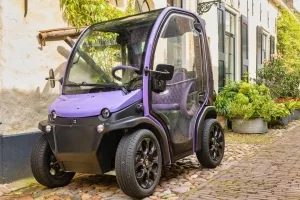
The real shift is happening in the B2B sector. Expect to see more electric micro-vehicles in commercial fleets. Think municipal maintenance trucks or the last-mile logistics for courier and express delivery services. These vehicles solve a different problem than leisure riding. They are tools for efficiency, not just fun.
Building a Resilient Mobility Ecosystem
Sustainability, demand, and efficiency don’t happen by accident. They require a robust portfolio of options. Micromobility is just one piece of the puzzle. It allows us to choose the best route from A to B based on the specific situation.
But we need to be patient. E-scooters, for instance, only hit German streets in 2019. That’s barely five years. Human behavior is stubborn. We rely on routines cemented over decades. Changing how we move takes time.
Instead of forcing rapid adoption, let’s let these technologies mature. Watch how they integrate. See which models survive the market. Our mobility habits won’t shift overnight, but the foundation is being laid now.