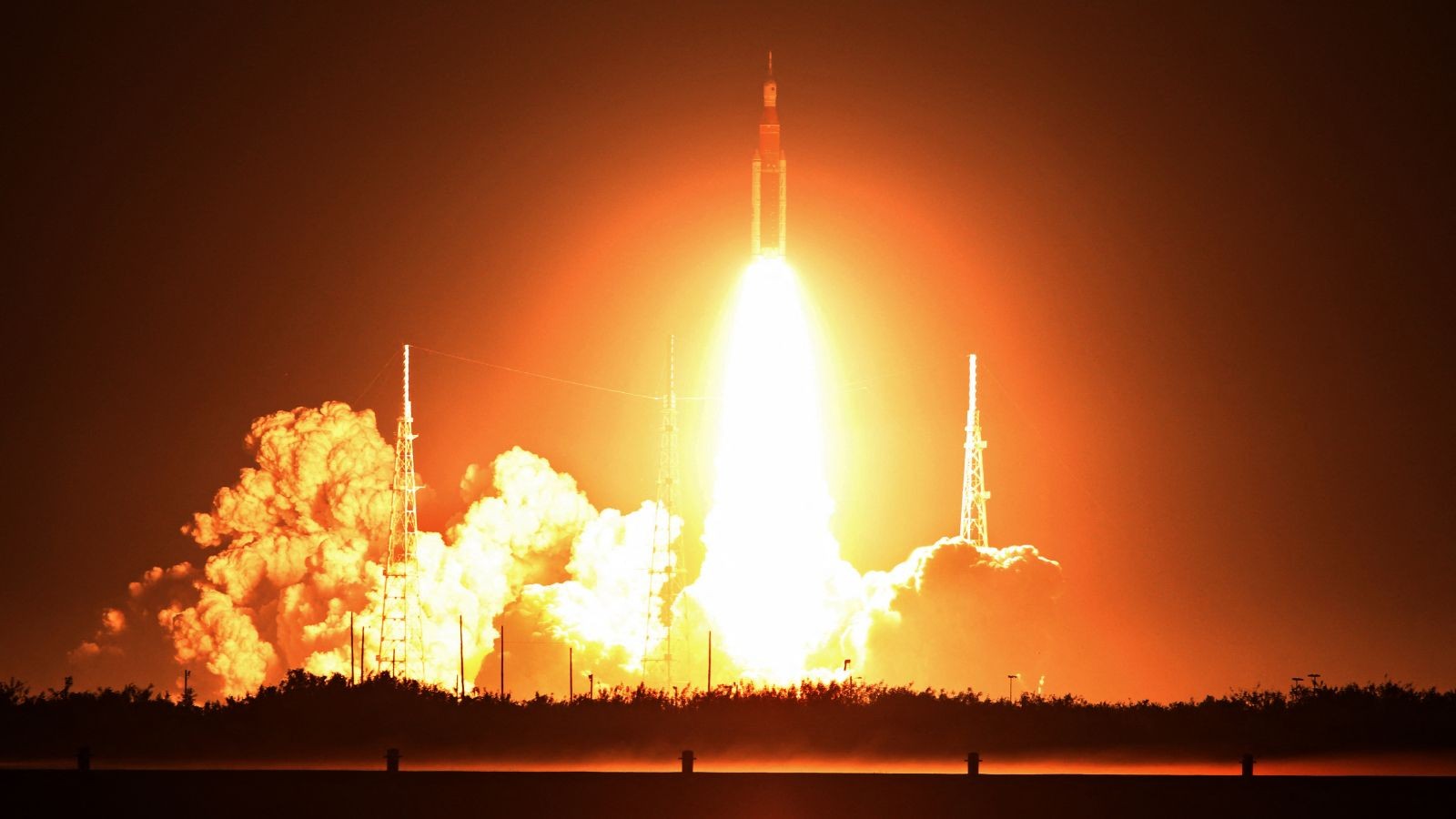
The successful completion of the Artemis II mission marks a historic milestone in human history. As the first crewed lunar fly-by in over half a century, it represents a massive technical triumph, pushing the boundaries of how far humans can travel from Earth. Beyond the engineering feats, the mission carried profound symbolic weight: featuring the first woman and the first person of color to orbit the Moon, it sent a message of inclusivity to a global audience.
However, as the world celebrates this scientific achievement, a more complex and contentious reality is emerging. The mission is not merely a voyage of discovery; it is a cornerstone of a broader strategic campaign to secure American dominance in space.
The Lunar Economy and the New “Space Race”
The Artemis program is a vital component of the United States’ goal to establish a permanent lunar base by 2030. This ambition is driven by more than scientific curiosity; it is fueled by geopolitical competition and economic interest.
The primary drivers behind this lunar push include:
– Strategic Supremacy: Asserting a sustained American presence to counter the growing influence of China, viewed by NASA as a primary geopolitical adversary.
– Resource Acquisition: The lunar south pole contains vital water ice, which is essential for sustaining life and producing rocket fuel for deeper space missions, such as those to Mars.
– Commercial Potential: Long-term visions include the mining of helium-3 and the extraction of resources from asteroids for profit on Earth.
This shift marks a return to a “manifest destiny” mindset, where space is viewed as the next frontier for territorial and economic expansion.
The Battle for Rules and Governance
As nations race toward the Moon, a critical question arises: Who decides the rules of the lunar frontier?
Current international space treaties, established during the Cold War, are largely silent on the specifics of resource appropriation. To fill this vacuum, the US has promoted the Artemis Accords. While these are non-binding principles rather than formal laws, they serve as a blueprint for how lunar activities might be governed.
The Accords have gained traction, with 61 countries signing on. However, they face significant criticism:
– Transparency vs. Consensus: While seen as more open than China’s competing International Lunar Research Station, critics argue the Accords bypass the multilateral, consensus-based processes typically used in international law.
– Shifting Momentum: The pace of new signatories has slowed, with only nine joining since the recent change in US administration, compared to 19 in the previous year.
The “Selectivity” Concern: Earthly Precedents
The central tension for international observers is whether a nation that operates selectively regarding international law on Earth can be trusted to uphold it in space.
Legal scholars and international observers have pointed to a pattern of US foreign policy that prioritizes national interest over established global norms. This is evidenced by:
– Geopolitical Volatility: Recent escalations in the Middle East and aggressive rhetoric regarding nuclear threats and civilian infrastructure.
– Territorial Ambitions: Statements regarding the annexation of territories or the control of resource-rich regions like Greenland, Canada, or Venezuela.
This pattern raises a fundamental concern: if the US views international agreements as optional when they conflict with national interests on Earth, will the same apply to the Moon?
“International law is applied with varying rigor depending on the identity of the accused or the victim.” — A sentiment echoed by leaders regarding the current “rules-based order.”
Conclusion
The success of Artemis II is a testament to human ingenuity, but it also signals the beginning of a high-stakes struggle for lunar resources. As the US seeks to lead this new era, the international community must determine whether space will be governed by shared, stable laws or by the shifting strategic interests of a single superpower.