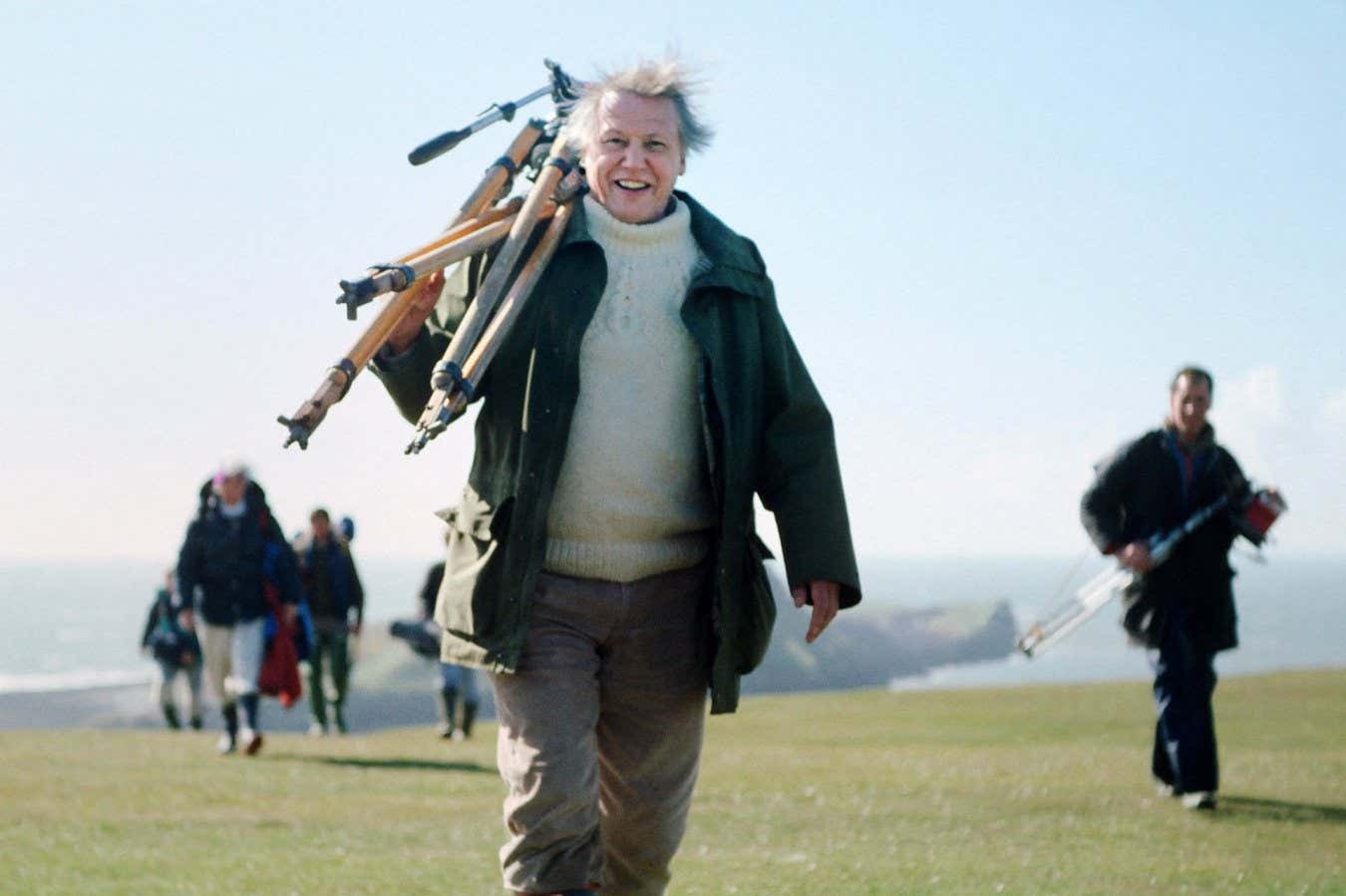
David Attenborough is set to turn 100 years old on May 8. For decades, he has stood as one of the United Kingdom’s most trusted and beloved figures, consistently topping polls for public approval. As he approaches this century mark, it is clear that while his legacy is secure, the media landscape that created him has vanished. There will never be another broadcaster quite like him—not because of a lack of talent, but because the ecosystem that allowed such a singular voice to dominate no longer exists.
The Architect of Nature Broadcasting
Attenborough’s career began in 1954 with Zoo Quest, a series that followed London Zoo staff on expeditions to capture exotic animals for British audiences. By modern standards, the concept was ethically complex and firmly rooted in the imperial attitudes of its time. However, Attenborough was also at the forefront of a technological revolution. When Zoo Quest aired, only a third of UK households owned a television. He helped define the template for nature documentaries, most notably with the groundbreaking 1979 series Life on Earth, which established the visual and narrative standards for the genre.
The End of the Monoculture
A common question arises with every new generation of viewers: who will replace David Attenborough? The answer is that no one can, because the conditions that made him unique are gone. Attenborough’s rise coincided with an era of limited choice. The BBC was a dominant broadcaster, and a cohesive culture was enforced by a lack of alternative viewing material. This monopoly allowed a single voice to become a national institution.
Today, that monopoly has shattered. The rise of social media has triggered what experts call a “Cambrian explosion” of science communicators. We have moved from a linear TV schedule to a fragmented digital landscape where creators adapt to specific niches and platforms.
The Double-Edged Sword of Choice
This shift offers significant advantages. Viewers are no longer bound by traditional broadcast times; they can find formats that suit their preferences, from TikTok shorts to long-form YouTube essays or podcasts. This diversity allows a wider range of voices to flourish, including those who may find Attenborough’s style too formal or traditional. It democratizes access to science and nature content, ensuring that engagement is driven by interest rather than obligation.
However, fragmentation comes with distinct downsides:
- Algorithmic Influence: TV editors no longer curate what we watch. Instead, algorithms prioritize content that generates quick dopamine hits, often favoring sensationalism over depth.
- Misinformation Risks: While many creators are rigorous about facts, the lack of centralized editorial oversight allows misinformation to spread unchecked.
- Loss of Shared Culture: When no one watches the same thing at the same time, society loses a common cultural touchstone. The shared experience of watching a landmark documentary series has been replaced by isolated viewing habits.
A Lasting Legacy
Despite these changes, Attenborough’s work remains highly relevant and widely accessible. His programs serve as a bridge between the old era of curated broadcasting and the new age of digital discovery. As we celebrate his centenary, his catalog offers not just entertainment, but a reminder of the power of shared storytelling in understanding our natural world.
“The niche that allowed him to evolve – a dominant broadcaster in the BBC and a cohesive culture enforced by a lack of choice in viewing material – no longer exists.”
David Attenborough’s century-long career marks the end of an era where a single voice could unify a nation’s view of nature. While the future of science communication is diverse and decentralized, his work remains a vital anchor, reminding us that while the medium changes, the importance of accurate, engaging storytelling remains constant.