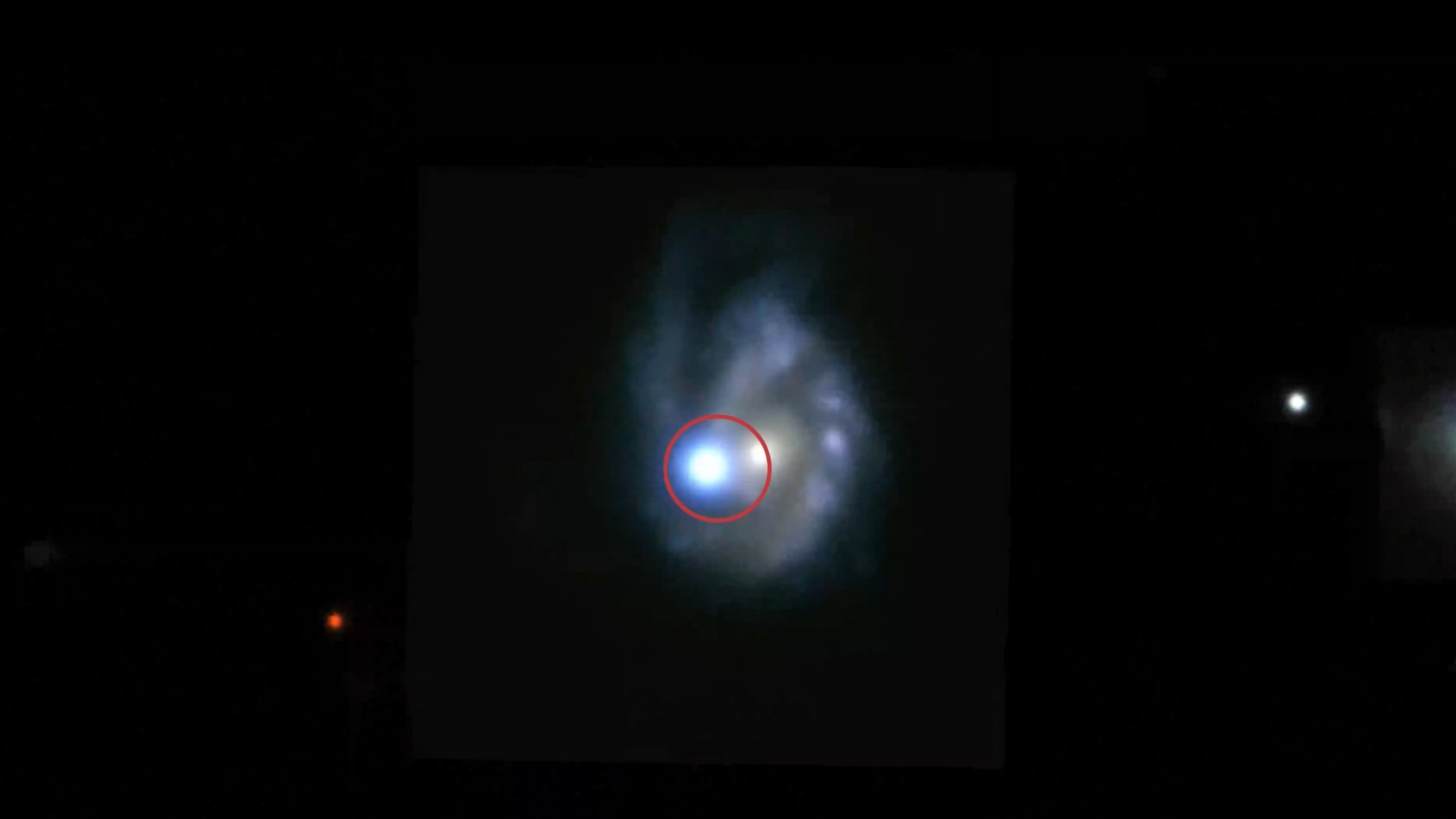
NASA’s Fermi telescope caught something bright. Very bright.
A supernova named SN 2017egp just got the spotlight it deserves, but not for the usual reasons. This one was supercharged. Really supercharged. The evidence points to a magnetic ghost haunting the explosion: a magnetar. A dead star with a magnetic field so strong it defies logic.
Here is the deal with core collapse.
When a massive star dies, its heart implodes. Matter gets crushed into a radius of about 12 miles. Think small city size. Now imagine 10 million tons of stuff squashed onto a single teaspoon. That density is real. But gravity does more than pack mass. It spins. The resulting neutron star rotates 700 times per second. Fast. And those spinning magnetic field lines get compressed too.
Result? Magnetars. The strongest magnets in the cosmos.
Fabio Acero from the University of Paris-Saclay has been waiting.
“For nearly 20 years,” Acero says, “we searched Fermi data… none were definitive until now.”
Two decades of hunting. Four hundred core-collapse events studied. Most produce black holes. Some just fade out. But SN 2017epg was different. It happened in galaxy NGC 3140. That’s 440 million light years away. The light traveled all that distance to hit our sensors. It’s actually one of the nearest we’ve ever seen up close.
Only SN 2017enp shows evidence for gamma rays… confirming earlier hints.
Guillem Martí-Devesa calls it a new window. Because this wasn’t just visible light. It was gamma rays. The energetic stuff.
Why so bright?
The theory is simple. A magnetar spins. It kicks out a wind of electrons and positrons. Antimatter. When matter meets antimatter, they annihilate. Boom. Gamma rays.
This cloud of particles hits the expanding shell of the supernova. The debris absorbs the gamma radiation. Converts it. Turns it into optical light.
That’s the engine. The magnetar powers the shine.
Acero notes the fit isn’t perfect forever.
“About three months after… the gamma rays can begin to leak,” he says. “But we see room for improvement.”
Later on the visible light fades irregularly. Weirdly. The team thinks old debris might be falling back onto the newborn magnetar. Dust from hundreds of years prior. Crashing into the newborn corpse. Messy.
So where do we go from here?
The Cherenkov Telescope Array is waking up. Located in the Canary Islands and Paranal, these eyes will look harder. In 50 hours they can spot similar blasts out to 500 million light years.
Judy Racusin from NASA’s Goddard Center thinks this matters. It’s not just another explosion. It’s a peek inside.
The magnetar engine explains the brightness. The irregular fading leaves questions. What else is hiding in that debris field? We’ll see what the next array finds. Or maybe we won’t.
The universe usually keeps its secrets close.