The alphabet is a cruel place for wildlife. Most letters are associated with lions, lemurs, and lions, but “Q” often gets the short end of the stick.
Not today.
We dive deep into the obscure, extinct, and downright weird creatures that make up this corner of the unusual biological catalog. These are not just trivia game fillers. They are predators. They are quirks of evolution, proof that nature doesn’t care about symmetry or convenience.
From humid rainforests to the frigid depths of the Indian Ocean, these animals have created ecological niches largely incomprehensible to most biologists. Some are giants in the sky. Some are small enough to hide in the palm of your hand, but powerful enough to compete against much larger foes.
Start with a butterfly that looks like it was designed by a surrealist painter.
Queen Alexandra Birdwing
If you think butterflies are weak creatures that die if you look at them the wrong way, this species will correct your thinking.
Queen Alexandra Birdwing is more than just a butterfly. He is the heavyweight champion of the insect world. This creature, which lives only in the remote rainforests of Papua New Guinea, holds the title for the largest butterfly on Earth by wingspan.
Males have a wingspan of 28 centimeters (about 11 inches). That is bigger than some birds.
The wings are a striking mix of yellow, black, and brown. Males have a distinctive golden sheen that catches the light in the dense canopy. Females have a larger body, wider wings and a softer brown color, probably an adaptation to hide from predators when spawning.
This is not a common sight. The Queen Alexandra’s Birdwing is critically endangered. Their habitat has shrunk dramatically due to logging and agricultural expansion. They are highly specialized and rely on specific host plants to provide food for their larvae. Remove the plant, and the butterfly vanishes.
This is a stark reminder of how fragile these ecosystems are. The birdwing is a symbol of the rainforest’s health. When you see it, the forest is still breathing. If you don’t, something is wrong.
Scientists study these butterflies to understand how tropical species adapt to high humidity and low light. Its body size is an advantage on cold mornings, when it warms up faster than smaller insects. But it is a disadvantage in storms. Strong winds can tear off its massive wings.
Females lay only a small number of eggs in their lifetime. Each egg is a gamble. The caterpillar must find a suitable vine, eat enough leaves and avoid ants and wasps. The odds are stacked against them.
Yet, they persist.
This is not just a pretty insect. It is a survivor in a world that wants them gone. Protecting the Queen Alexandra’s birdwing means protecting the thousands of other species that share its habitat. It is an ecological anchor.
Next, leave the rainforest and head for the sky. さしな、たたの空しない。 A high wind is blowing in the African savannah.
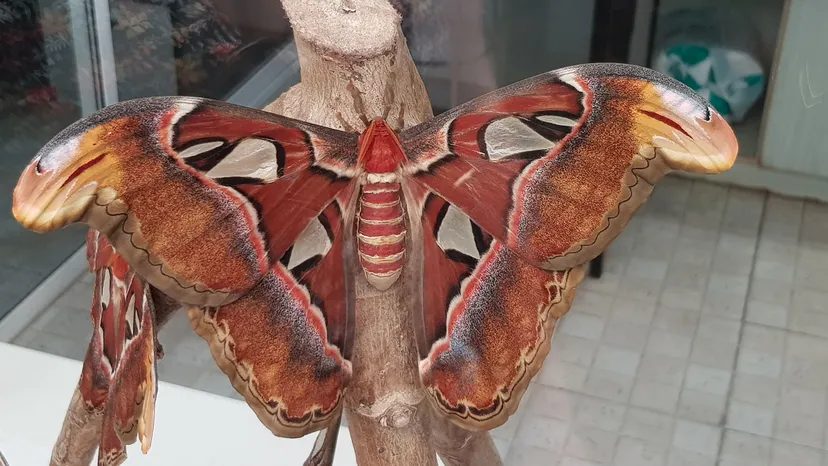

It’s not just big. It’s huge. The Queen Alexandra’s birdwing has a wingspan of 11 inches (33 centimeters) and holds the title of the world’s largest butterfly. You wouldn’t see this flying around in a suburban garden. It’s a spectacle. The color is impressive. The flight is subtle. It is one of the most beautiful things in nature.
But beauty doesn’t protect you. This butterfly is in trouble.
Where giant butterflies live
This insect is only found in one specific place. The tropical rainforest of Papua New Guinea. that’s it. No other region on the planet has a wild population. This limited range is a major problem. When you have nowhere to go, even the slightest change in circumstances can have serious consequences.
The biggest threat is the destruction of habitats. When forests are cleared for agriculture or logging, butterflies lose their homes. The larvae depend on specific host plants, and those plants disappear with the trees. Without these plants, the life cycle is interrupted. The population declines. This is a direct link between deforestation and the risk of extinction.
Why scale matters (and why it’s fragile)
Being the biggest butterfly has its downsides. Larger insects typically have slower reproductive cycles. They need more resources to grow. They are more visible to predators. And they can’t travel too far. Queen Alexandra’s Birdwing is a specialist. It is not common like some common species and can adapt to urban fringes and rough terrain.
Environmentalists are watching closely. The International Union for Conservation of Nature lists it as an endangered species. This is not a suggestion. It is a warning. If Papua New Guinea’s rainforests continue to shrink, this butterfly may disappear. It is a slow-moving tragedy.
How to help (or why not)
You can’t buy an outside viewing ticket and expect a guarantee. The population is scattered and vulnerable. The pressure will only increase if the tourism industry is not strictly controlled. The best way to help is to directly support organizations working in Papua New Guinea to protect the remaining forest areas.
“If the forest disappears, so will the butterflies. There is no plan B.”
The science is clear. Habitat loss is a driving factor. The solution is protection. But politics and economics often get in the way. It is a frustrating stalemate. You see great creatures that survive in the face of inevitable change.
Overall picture
This butterfly is an indicator. It says something about the health of the rainforest. If it thrives, the ecosystem can remain intact. If it is struggling, the whole system is under stress. It’s the canary in the coal mine. A colorful, slow-moving canary.
We lose species like this every day. The bird with Queen Alexandra’s bird’s wings was lucky in a way. Most people don’t even know they exist. It’s famous. It gets people’s attention. This attention is the only thing that stands between it and oblivion.
2. Quokka
Quokka’s deceptive smile
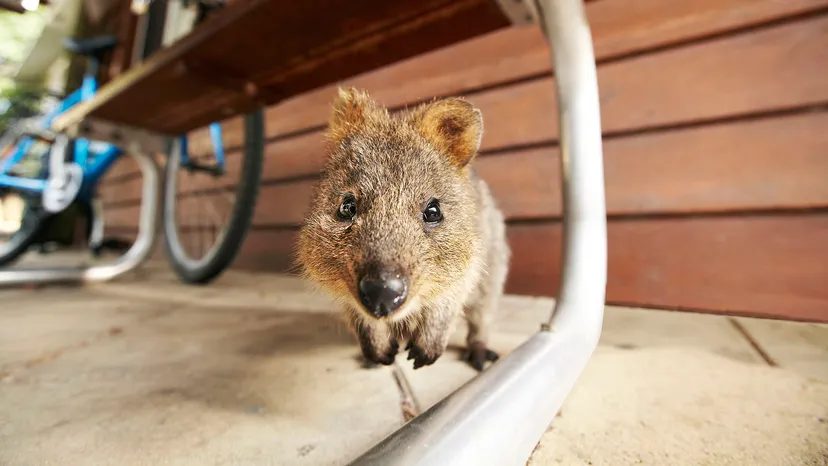
If you’ve been scrolling through Instagram lately, chances are you’ve come across a quokka. These small pouched marsupials are native to several islands off the coast of Western Australia. Rottnest Island is the most famous haunt. They always seem to be smiling, making them selfie fodder for internet fame and tourists alike. But here’s the reality. A “smile” is simply the structure of their face. This is not an invitation.
Quokkas are a wild animal. They are nocturnal in nature, sleeping during the day in dense bushes and emerging at dusk to forage for leaves, bark and grass. Feeding them disrupts the animal’s natural diet and can cause health problems for the animal. Local laws strictly prohibit human interaction that involves touching or feeding these creatures. Respect the distance. The photo opportunity is not as valuable as the well-being of the animal.
Quetzal’s Neon Drama
Why quetzals are important to birdwatchers and biologists
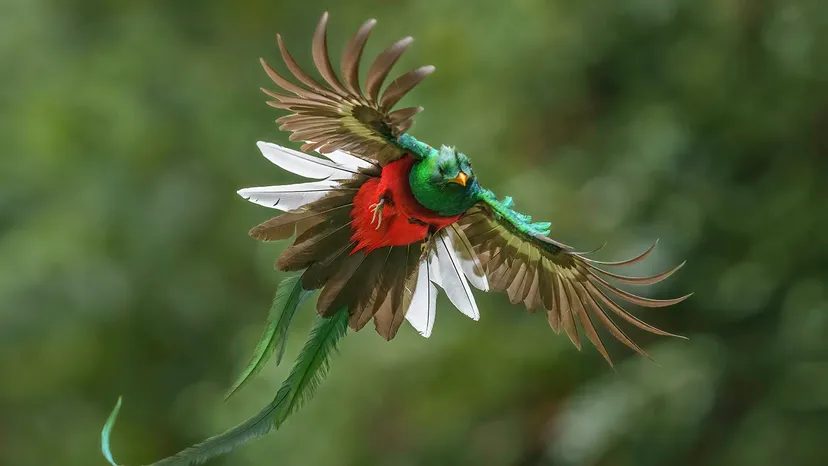
Now let’s move from the bushs of Australia to the cloud forests of Central and South America. Enter the resplendent Quetzal. If the quokka is the king of cuteness, the quetzal is the king of spectacle. Native to mountainous regions from Mexico to Panama, these birds are more than just pretty to look at. They are indicators of forest health.
Male quetzals are masters of evolutionary excess. The feathers are iridescent green, turning blue depending on the light. But the real highlight is the tail. During the breeding season, the male’s two central tail feathers can grow up to 3 feet long. These are not intended for flying. They are for show, a heavy, cumbersome burden of signaling genetic fitness to potential mates.
How habitat loss threatens cultural icon
Why worry about birds with impractical tail feathers? Because quetzals are very sensitive to changes in their environment. They depend on certain high altitude forests and their main food source is wild avocados. When these forests are cleared or cleared for agriculture, the quetzals have nowhere to go.
This is not just an ecological loss. The Quetzal has deep cultural significance to the indigenous peoples of the region, including the Maya and Aztec civilizations. In their cosmologies, birds were associated with rain, wind and life itself. Losing this bird is like cutting a thread from a centuries-old cultural tapestry.
Which Forests Still Host Healthy Quetzal Populations?
Quetzals are hard to find in the wild. They are shy and elusive and require intact canopy cover. However, conservation efforts can help stabilize populations in protected areas. Key locations include:
- Costa Rica: Areas such as Monteverde and Talamanca mountains offer the best viewing opportunities.
- Guatemala: The cloud forests near Antigua and the highlands around Atitlan are known hotspots.
- Mexico: Certain protected areas in Oaxaca and Chiapas protect the northern range of the species.
Visitors wishing to observe birds in these areas must follow strict guidelines. Flash photography is prohibited. No loud noises. There are no deviations from the marked trails. The purpose is to observe, not to intrude.
The science behind iridescent feathers
The mysterious queen snake
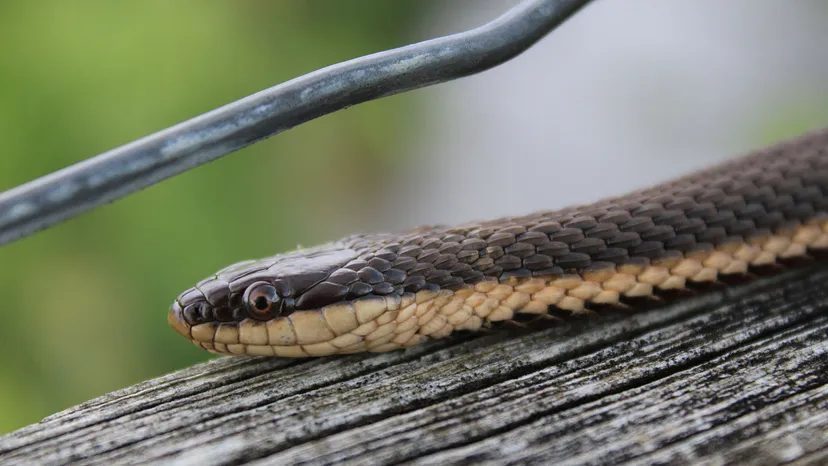
You might think that a snake named “Queen” would be gorgeous, like a gorgeous quetzal with colorful feathers. This is the opposite. It is very subtle. It is very quiet. They live in the moist, cool soil of eastern North America, far from the tropical highlands where quetzals dominate.
The queen snake (Regina septemvittata ) is not a poisonous snake. There is no poisonous sting. This is a slender, smooth-bodied, non-venomous colubrid snake that usually only appears when the water level drops or after a heavy rain. What is its main dish? crayfish. More specifically, soft-shell crayfish that have just molted. This peculiarity of the diet makes this species very vulnerable.
Why the loss of habitats also matters for reptiles
We often talk about deforestation in the form of fallen trees. But for queen snakes, habitat loss is like pouring concrete into a riverbed. These snakes live in certain riparian areas, that is, areas near rivers and streams. When developers pave over these banks or when water quality deteriorates due to pollution, crayfish population collapse. There are no crayfish or queens.
The quetzal resemblance is more than just beauty. Both species act as biological indicators. The quetzal signals the health of the cloud forest. The queen snake symbolizes the health of freshwater ecosystems. If you can’t find it, the system is already broken.
Myth hole
Although the Mayans and Aztecs worshiped the Quetzal and its feathers were used as currency and in sacred rituals, the queen snake lacked the baggage of mythology. It does not appear in ancient texts. It is not respected in folklore. It is easy to overlook due to the lack of cultural protection. When people see a snake, they think of a threat. They did not look at specialized ecological technician.
But the role of the queen snake is equally important. Maintains the balance of aquatic food webs by regulating the abundance of molluscs and crustaceans. Its survival is directly related to the health of the bank. Protecting water means protecting water itself.
“The disappearance of species like the queen snake is often invisible until the water itself begins to change.”
Scientists are now mapping these riparian corridors in more detail. The purpose is not just to count snakes. This is to understand how much expansion humans can tolerate before aquatic insect populations and the predators that depend on them collapse. Quetzal’s story is written in feathers and mythology. The story of the queen snake is written in sediments and rivers. Both disappear. The question is whether we listen to both sides.
Snake King: Canary in the Brook
Not toxic. Not particularly aggressive. But this North American reptile is a reflection of the environment it calls home. The queen snake (Regina septemvittata ) is a specialized predator that hunts almost exclusively crayfish. You won’t see them lounging in stagnant ponds or muddy swamps. They need clean, fast-flowing streams and rivers. Because their survival depends on these specific conditions, they act as living indicators of water mass. If you see them, the water is probably healthy. If you don’t, you could be running into contamination problems without realizing it.
Mistakes of identity are common. Due to their elongated body and patterned scales, many people confuse them with other harmless species. It’s really a harmless confusion. Snakes would rather sneak away than attack. It silently observes the river bed, moving so gracefully that it belies its ecological significance.
Queensland Grouper: Giant of the deep sea
5. Queensland Grouper
From freshwater indicators to the depths of the Great Barrier Reef, we encountered Queensland Grouper (Epinephelus lanceolatus ). It’s more than just a fish. Heavyweight champion of the sea. Adults can reach a length of 2.7 meters and a weight of over 400 kg. They are one of the largest bony fish in the world and are revered by divers and fishermen.
Unlike the wily kingsnake, the Queensland grouper is gorgeous. Its size alone is enough to cause a primal response. But it’s not just about mass. These fish are top predators and play an important role in maintaining the balance of coral reef ecosystems. They control populations of other fish populations and prevent certain species from dominating the reef’s delicate food web.
Why coral reef size matters
The sheer size of the Queensland grouper challenges our understanding of fish ecology. Most fish stop growing at some point. If these giant animals survive the early years when they are vulnerable to larger predators, they will continue to grow throughout their lives. This longevity affects their reproduction and social structure. They often form harems where the dominant male dominates a group of females. Disruption of this hierarchy by eliminating larger males can reduce the reproductive potential of local populations.
Conservation situation and human-caused effects
Despite its impressive status, the Queensland grouper still faces significant threats. Overfishing kills a large part of the population. They mature slowly, so it takes several years for a juvenile to reach sexual maturity. The fish that are caught are often replaced by smaller, younger fish that cannot reproduce effectively. This has a negative impact on the health of coral reefs.
Australia and other parts of the Indo-Pacific have tightened rules to protect the giants. Size limits and fishing quotas are enforced, but enforcement is difficult in remote waters. The fight to save the Queensland Grouper is a fight for the health of the entire coral reef system. This is a reminder that even the most powerful creatures are vulnerable to human intervention.
What lies beneath the surface?
When you dive into the blue, you’re not just swimming with the fishes. You navigate complex social hierarchies. A large grouper is more than just muscle mass. It’s a keystone. Removing it changes the underlying structure. grouper’s
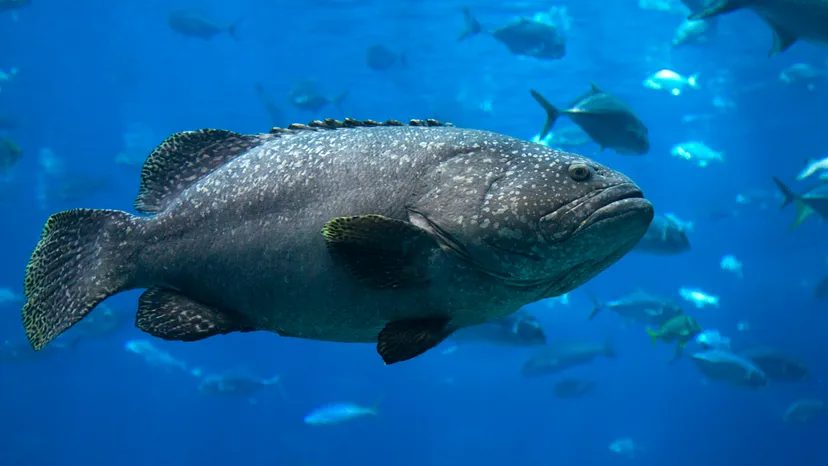
But the Queensland wrasse is a beast that lurks in the warm waters of the Indian and Pacific Oceans. Adults easily reach a length of 8 meters. This corresponds to 2.4 meters of muscle and teeth. I’ll wait. がれなれしまがが走します。 Their jaws are powerful enough to crush crustaceans and catch small fish in one violent movement. 手見伏せたする捕食者です。 Perfect development speedとpower。
However, size is not a shield. That’s the goal.
This gigantic fish is endangered due to overfishing. People want it. Restaurants serve it. 市場は is looking for it。 As a result, people are unable to stay on hooks and nets to pull them out of the water. Sarcasm is painful. Creatures created to survive in a chaotic ocean become extinct due to human appetite.
6. Quail
Smaller does not necessarily mean safer.
ウズラ、especially ウズラににウズラに生息するウズラは、are facing another threat. These birds are small. Difficult to find. However, they are on the decline. This is due to habitat loss. 湿地は干上がった。 森林が伐採します。 The land they needed for nesting was gone.
Unlike the grouse, which is hunted for food, many quail are threatened by indirect human activity. 达業が方法します。 Urbanization is spreading. These 鳥が隠れる经なな隅は、コンクリートアアックショックいめをしない。 The number of 鳥のis less and less. More vulnerable.
アェックの種も アプレックにたますますますますますます. It’s hard for a small bird to stay away.
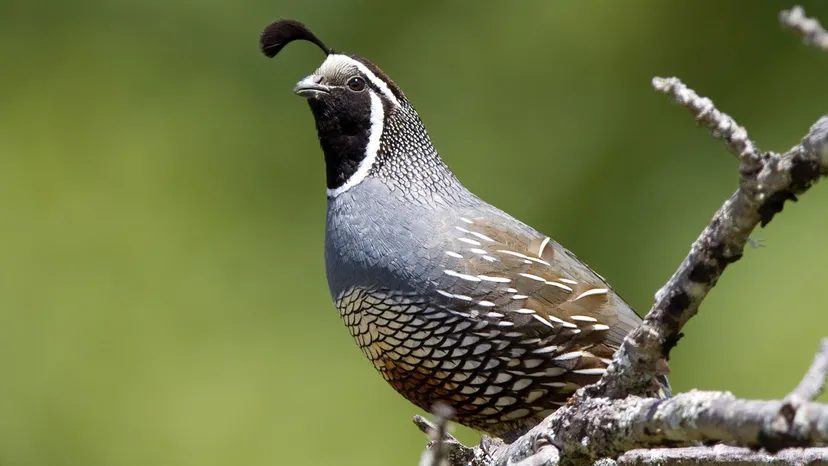
You know quail, right? they are everywhere. It’s a small, swift-footed ground bird that lets you know with a distinctive call that you might be outside and need to watch your step. Some have badges. Some are hunted. They are a reliable workhorse in the bird world.
But what about the next two items on this list? They have nothing to do with what’s common. They tell about what was lost and what barely survived the end of the world.
The ghost zebra that never left
The quagga is not an entirely different species. It is a subspecies of the common zebra. Their history stretches back to South Africa, where they roamed the grasslands until the 19th century.
Then there is overhunting. It didn’t take long. The quagga is extinct.
This sounds definitive. If you die, you die. But something strange is happening here.
Researchers have discovered that the quagga has a unique phenotype. Most zebras have stripes from head to tail. The quagga is different. The rear end is brown or monochrome. There are no stripes. Only the zebra’s head and middle part fading into a horse’s rear.
So scientists began a breeding program. There was no quagga DNA in their freezer. Museum skins are also included. They performed selective breeding in plains zebras to restore expression of this specific gene. The goal? To recreate the unique striped pattern and plain fur.
The quagga shows that extinction is not necessarily an irreversible state when we look at genetic markers.
It does not bring back an animal that died in 1883. It’s almost like a resurrection by selective pressure. The result looks like a quagga. Act like a zebra. But is this a quagga? Philosophers debate this question forever.
Queensland Lungfish: A living fossil with a backup plan
If the quagga is a lesson for us all, then the Queensland lungfish is a lesson for survival.
This is an ancient fish that lives only in small rivers in Queensland, Australia. It is a living fossil.
Most fish breathe through their gills. They need a constant flow of oxygenated water through their gills to survive. If the water temperature is too high or the oxygen is too low, they will drown.
Queensland lungfish have lungs.
Air can be sucked from the surface. This means they can survive in water where trout and bass die. Although severe droughts cause river water levels to drop and temperatures to rise, lungfish do not panic. It stays put. Breathe the air. It waits.
This is more than just a cool party trick. This is a survival mechanism that connects modern fish with their ancestors. Lungfish provide clues about how vertebrates move from water to land. This is a biological time capsule.
But it is also fragile. Its range is restricted to certain river systems in Queensland. climate change. Drought. Water extraction. These are real threats. It’s not overhunting like the quagga, it’s habitat loss.
Lungfish survive because they have a backup breathing plan. But this habitat is does not have a backup plan.
why
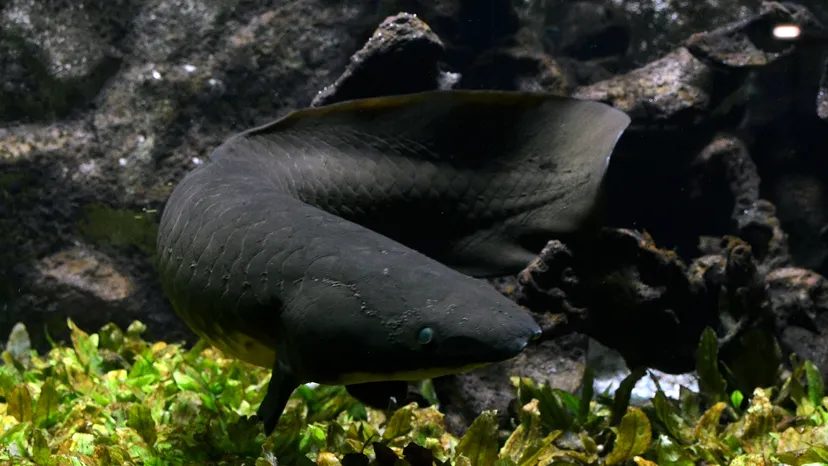
It’s like a dinosaur that has given up on evolution. The Queensland lungfish have been swimming in Australian waters for over 100 million years, and their plan hasn’t changed much. While other species struggle to adapt to a changing climate, this creature holds its ground. It really is a living fossil.
What makes it so durable is the bio cheat code. Most fish species suffocate when the oxygen concentration in their habitat decreases. Not this one. Queensland lungfish can swallow air directly from the surface. Its lungs work just like the lungs of mammals. This adaptation allows them to survive in stagnant, low-oxygen pools that would kill common trout and salmon. It breathes water and air. This dual ability is because it thrives where other abilities fail.
However, survival in the wild depends more and more on luck. Conservation measures are the only way to prevent the extinction of this ancient lineage. Habitat fragmentation and water abstraction pose direct threats. The protection of these rivers is about more than saving fish. This aims to preserve a unique window into prehistoric biology.
Why lungfish cannot survive without human intervention
You may wonder why you should worry about a fish that has already beaten the odds once. The answer lies in how much the world has changed since the last successful adaptation. The environment in which it evolved no longer exists in its original form.
- Habitat loss : Dams and weirs cut off migration routes necessary for breeding.
- Water Quality : Agricultural runoff degrades the clear, oxygenated water quality they desire.
- Climate Change : Rising temperatures are stress their already complex respiratory systems.
How conservationists are saving prehistoric species
Efforts to save the Queensland lungfish are about more than just enclosures around rivers. This includes active management of water flows and strict protection of breeding grounds.
- Breeding program : Breeding in captivity ensures the preservation of genetic diversity.
- Habitat Restoration : Remove barriers to allow fish access to upstream spawning grounds.
- Public Education : Teach local people why this single species is important to the entire ecosystem.
“Lungfish reminds you that life always finds a way, but sometimes you need a little help to stay that way.”
Where is this ancient relic located?
These fish are endemic to eastern Australia. It is only found in certain river systems in Queensland. Its range is getting smaller. To find them, you need to explore the Brisbane, Mary and Burnett rivers.
The reason to look for them now is simple. They are rare. Each individual represents a lineage that survived ice ages, continental drift and mass extinctions. Losing them means losing a chapter in Earth’s history that we cannot rewrite.
9. Quoll
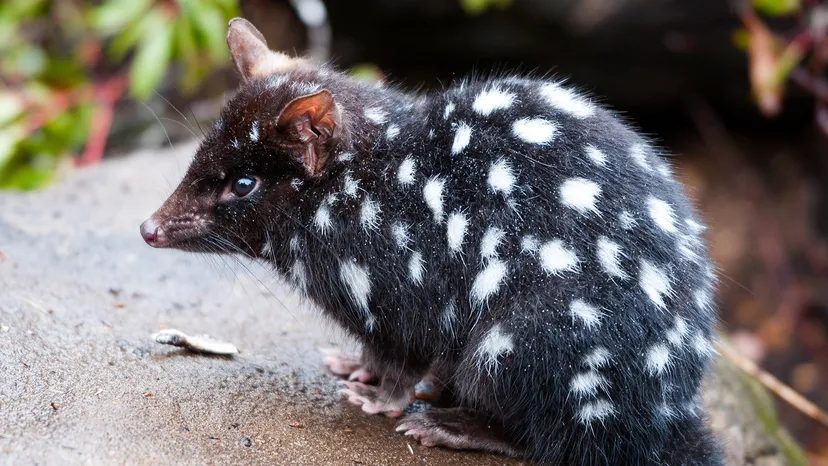
The quoll: Australia’s elusive predator under siege
Quolls are more than just another marsupial. It is a carnivore with a powerful bite that matches its nocturnal habits. Native to the rugged terrains of Australia and the jungles of New Guinea, these spotted hunters operate under the cover of darkness. What is their menu? insects, small mammals and birds. Managing these populations maintains a delicate ecological balance that many overlook until it’s gone.
But the quoll’s reign as a top-tier pest controller is threatened by extinction-level threats. Habitat destruction fragments habitats, leaving them fragmented and vulnerable. To make matters worse, their territory has been invaded by invasive predators such as red foxes and feral cats. These newcomers outcompete the quoll for food and hunt them down. Conservationists are racing against time to save this unique marsupial, but the window is closing fast.
Why is quoll conservation important?
Without quolls, the ecosystem would suffer. Their absence causes prey species populations to explode, leading to overgrazing and depletion of natural resources. It’s not just about saving cute animals. This is to protect the functional integrity of the habitat in Australia and New Guinea.
Efforts to protect the quoll are focused on establishing predator-free sanctuaries and restoring native vegetation. These are more than just feel-good moves. These are necessary interventions to ensure that the quoll continues to play a role in the food web.
Threat of invasive species
Red foxes and feral cats are ruthless. They adapt quickly to new environments and have no natural enemies. For the quoll, it’s a death sentence. The quoll’s reproductive rate cannot keep up with predation pressure.
Conservationists are exploring different strategies. These include baiting programs to control fox numbers and community science projects to track quoll populations. Each effort adds an extra layer of protection, but the scale of the threat demands a sustained, large-scale response.
Habitat restoration is a lifeline
Protecting the quoll means protecting its home. Habitat restoration involves replanting native plants and removing invasive plants that weaken the land. This creates a healthier environment for both the quoll and its prey.
This is a slow process. The results are not visible immediately. But the long-term benefits are clear. A strong habitat provides shelter and food, giving the quoll a fighting chance to fight off invading predators.
The role of Community Science
Citizen scientists play an important role. They provide valuable information by reporting quoll sightings and participating in monitoring programs. This information helps researchers understand population trends and identify critical habitat.
It’s not just collecting data. It’s about fostering connections between people and local nature. Conservation efforts gain momentum with the participation of local communities.
The future of possums
The future of the quoll is in danger. Success depends on continued funding, research and public awareness. If we don’t act, we risk losing a unique piece of biodiversity.
The stakes are high. The quoll is a symbol of perseverance in the face of great difficulties. Its survival is a testament to what humans can achieve when they step back and allow nature to heal itself.
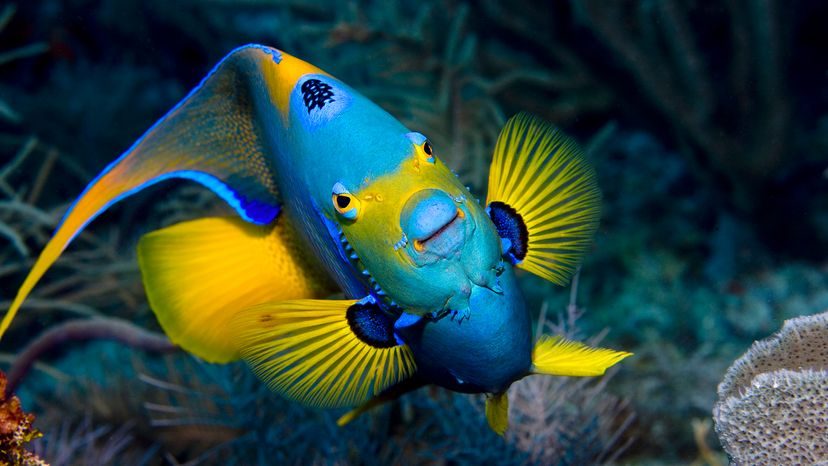
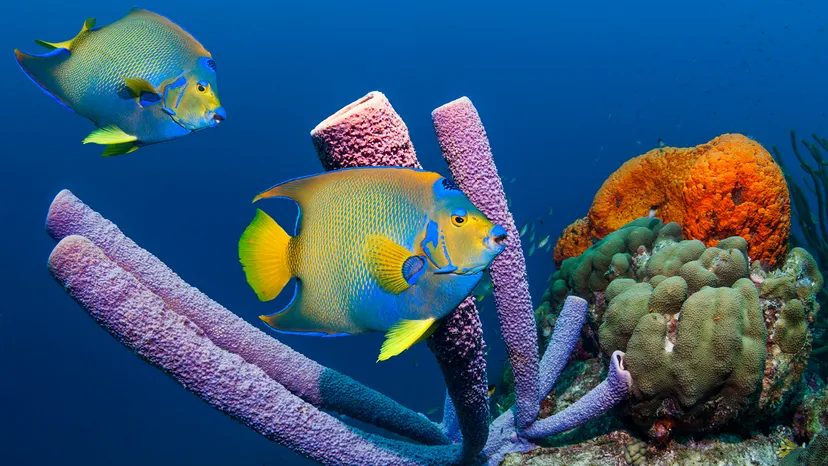
Don’t miss the angelfish. You’ll see them racing through the turquoise waters of the Western Atlantic and Caribbean, flashing electric blues and golds against the dull browns and greens of coral reefs. Places like Belize and the Florida Keys attract divers just for a glimpse. Aquarium enthusiasts have tried to keep these in long-term care, but have not succeeded. Because they are fragile, demanding and very territorial.
But beauty is distracting.
These fish are not only beautiful to look at; They eat sponges. This is important. In many parts of the Caribbean, coral reefs are suffocated by sponges. Mushrooms grow very quickly. They smother coral polyps and blocks sunlight and space. Together with their relatives, angelfish act as natural grass cutters. Without these, the structural integrity of coral reefs can collapse under the weight of overgrown sponges. It’s not just decoration. They are essential maintenance crew members.
### Operation of filter feeder and bottom feeder
Angelfish process sponges, while other reef species process debris and plankton. This is where the quillback rockfish, or Caulolatilus affinis comes into play.
Wait. Stop.
The quillback isn’t a reef fish in the traditional sense. It’s a rockfish found along the Pacific coast of North America from Baja California to British Columbia. It does not live in the Caribbean. It doesn’t wear bright blue. It is a dull olive-brown creature with spines that look like quills.
Why here? This is because the article you are reading is part 10 of 15, and the previous part probably covers colorful tropical species. Part 11 focuses on species that are less spectacular but equally important to ecological balance. Or maybe the source material is mixed biome science. Let’s look at the quillback properly.
The quillback is a bottom-dweller. They hide in crevices and kelp forests. It eats small crustaceans, worms, and fish eggs. It’s not a sponge-eater. It’s not a coral-maintainer. It is a mid-level predator in its niche.
However, the following things are important when comparing ecosystems:
** Functional diversity. **
| Features | Queen Angelfish (Holacanthus ciliaris ) | Quillback Rockfish (Caulolatilus affinis ) |
|---|---|---|
| Location | Western Atlantic/Caribbean | Pacific Coast (Baja–BC) |
| diet | Sponges, small invertebrates | Photo Sponges, small invertebrates, crustaceans, worms, fish eggs |
| Habitats | Coral reef, shallow water | Rock walls, kelp forests, deeper water |
| Visibility | High (popular with divers) | Low (obscure, often caught as bycatch) |
| Ecological Effects | Controls sponge overgrowth | Control small invertebrate populations |
Quillback is often overlooked. It’s not pretty. It doesn’t sell t-shirts. But it is part of the Pacific’s complex food web. Overfishing has impacted quillback
11. Quillback: More Than Just a Lookalike
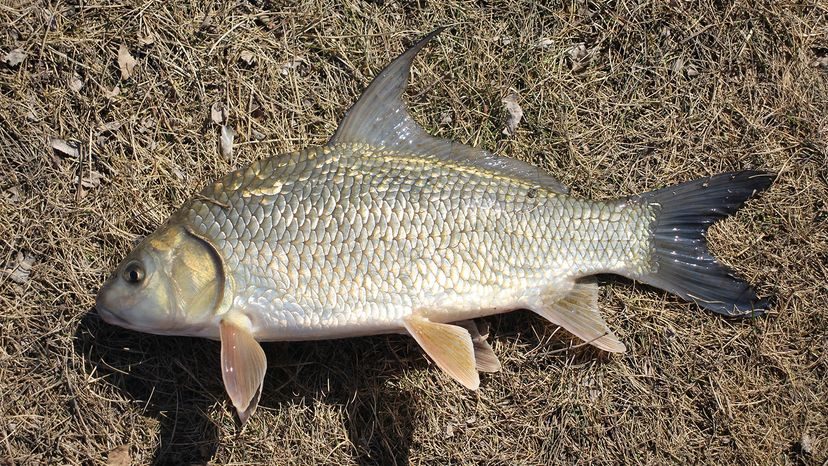
The quillback is easy to confuse with carp. Both are silvery and swim in similar freshwater habitats in North America. But they are not the same. This distinction is important.
The name featherback fish comes from its long, slender dorsal fin, which rises like a feather. It’s not just decoration. This is a structural feature that stands out in murky water. Carp stir up the sediment as they feed, while quillbacks precisely target algae and debris. They purify the water. they maintain balance.
“Quillbacks aren’t just pretty scales. They are ecosystem engineers.”
Without them algal blooms happen. Garbage accumulates. The clarity of the water decreases. The fish do the hard work quietly under the surface of the water.
12. Queen Triggerfish
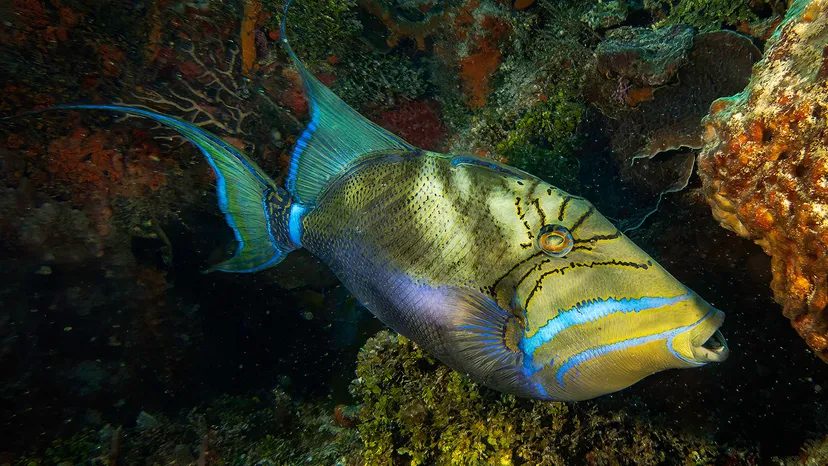
The Atlantic Ocean is inhabited by creatures that seem to come straight from an imaginary map. Let’s take Queen Triggerfish as an example. It’s not just pretty. Armed. The dorsal fin is a warning, but the real threat is the jaw. These fish have the ability to crush sea urchins and hard-shelled prey. Divers and photographers chase them for their bright colors, but what you really need is the mechanics of this predator.
Then dive into the Australian wetlands. There lives a quacking frog. Its name comes from its unmistakable sound. It sounds like a duck quacking. You can hear them breeding in temporary pools in forests and wetlands. The habitat is decreasing. Climate change and the destruction of these special wetlands make these areas vulnerable. This is in stark contrast to the vast ocean. One thrives in the deep and in the rock. The other struggles in the dry mud.
14. Queen Parrotfish
If the triggerfish is a wrangler, the queen parrotfish is a beak landscaper. It is one of the largest parrotfish species in the Caribbean and western Atlantic Ocean. Adults are amazing. As they grow, they change from a chaotic mix of green and brown to a bright electric blue body and pink face.
Their teeth are fused into a parrot-like beak. They use it to scrape algae from coral reefs. They don’t just eat algae. They grind under the coral. This process produces the white sand that makes Caribbean beaches so iconic. A single queen parrotfish can produce hundreds of kilograms of sand per year. Without these, coral reefs would deteriorate faster and beaches would disappear. They are essential to the health of coral reefs as they act as both cleaners and builders.
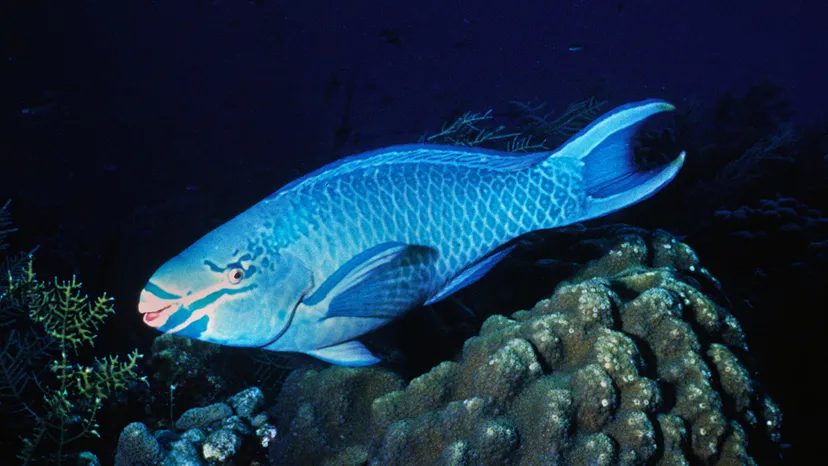
Parrotfish Queen: The unsung hero of coral reefs
Look at the coral reefs of the Caribbean and you will see the colors. Bright blues, electric greens and sparkling oranges. But beneath this visual spectacle, silent mechanical processes prevent the ecosystem from collapsing. This is about a tropical fish with a beak-like mouth and an amazing ability to rewrite its own biology. Queen parrotfish are not only beautiful; This is a functional necessity.
These fish feed on algae and dead coral. They scrape the reef clean. Without these, the algae would suffocate the living corals. They eat the dead stuff to make room for new food. This is a recycling system that uses teeth.
But that’s not all. Queen parrotfish change sex. As they grow, they change from female to male. This hermaphroditic characteristic means that reproduction never stops. When there are fewer males, the largest females transform. Population adaptation. The reef survives.
Why this matters for our oceans
Queen parrotfish feed on algae and dead coral and play an important role in the health of coral reefs. Queen parrotfish live in the Caribbean and are known for their bright blue and green colors. They have a special ability to change sex when they grow up.
This is not just a trivial matter. This is a blueprint for resilience. Coral reefs are under siege. Bleaching events are common. Pollution is increasing. In such a sensitive environment, biodiversity is not a luxury. This is a defense mechanism. The parrotfish queen represents one layer of this defense. It eats the weeds. It clears the space. It ensures for the next generation.
The color of the fish is often mistaken for decoration. In fact, it is a camouflage against the complex background of the coral reef. Predators see chaos. Fish feel safe. And while it feeds, it produces sand. Yes. Parrotfish excrete sand. One parrotfish queen produces hundreds of pounds of sand each year. This sand creates beaches and protects coastal areas from storms.
Mechanism of sex change
Most people see sex as something to be fixed. In the case of the Queen parrotfish, it is fluid. This process is called protogyny. This fish starts life as a female. The largest female changes when the group dynamic changes or when the dominant male dies. Her ovaries dissolve. Her testes form. She becomes male.
This is not a slow, ambiguous transition. It happens relatively quickly. Hormonal changes cause structural changes. The behavior of the fish also changes. Males protect their territory. Females lay eggs in groups. This change ensures that mating opportunities do not run out. This is evolutionary hack. One species does the work of two.
Protection and the future
Protecting the queen parrotfish does not mean saving the beautiful fish. This is to preserve the structure of the coral reef. Overfishing has wiped out many of these fish species from the Caribbean. Where they disappeared, algae appeared in their place. Coral reefs are dead. Sand formation stops. Coastal protection has weakened.
Scientists monitor these fish to assess the health of coral reefs. A thriving parrotfish population indicates that the ecosystem is in balance. A drop indicates a problem. The data is clear. We need to stop treating these fish as commodities. We need to treat them as infrastructure.
Coral reefs are machines. The parrotfish is a gear. If the gear is damaged,
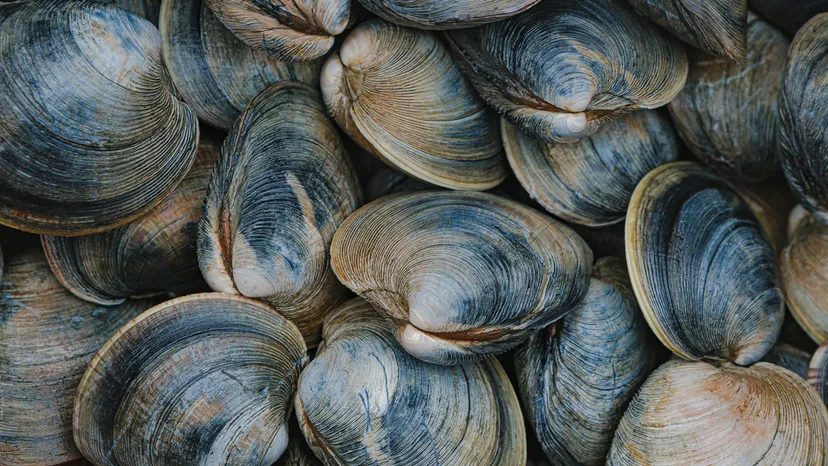
The clam’s hard shell hides a story of tenacity that rivals that of any dinosaur. Found on the east coast of North America, this large edible mollusc is more than just a dinner plate. This is a biological abnormality. Some are said to have lived more than five centuries. Five hundred years. This makes them one of the longest living animals on Earth. Its longevity is more important than its role as a popular seafood option. They anchor marine ecosystems, filter water and provide habitat. Their survival is a silent, slow miracle on the sea floor.
Quokka frog digs a hole
Its size decreases dramatically when moving from the ocean to the Australian wetlands. Quokka frogs live here. It’s small. Tunnel a hole. Grows in moist, swampy environments. The name derives from its physical resemblance to the marsupial quokka, particularly its round and compact body shape. But don’t be fooled by the cute name. Like many amphibians, this creature is the canary in the coal mine. Very sensitive to environmental changes. Changes in temperature. Humidity changes. The frog noticed first. Their fragility highlights the delicate balance of Australia’s wetlands.
Find out the hacker
Then came Quiscalus. grackles. These birds are everywhere, but we often wish they were nowhere to be found. But they have shown adaptability. These starlings are native to America and are actively expanding their range. They thrive in urban centers, farmlands and open forests. Their intelligence is often underestimated. they solve problems. They navigate complex social hierarchies with ease. They survive because they refuse to be stereotyped.
Why do we classify these species so strictly?
The round shell tells the time. Quokka frogs teach us sensitivity. grackle teaches us flexibility. Everyone has a unique role in their niche. If you remove one of them, the network will vibrate.
“The quahog’s longevity is a record that has remained in its rings, and the myna’s success is its ability to adapt to human expansion.”
Consider the contrast. The seeds tolerate silence and hardness. The second is through vulnerability and observation. The third is noise and smoothness. These are more than just checklist items. They are health indicators. If the quahogs die, the quality of the water deteriorates. Without quokka frogs, wetland ecosystems would be thrown out of balance. Without grackles, urban pest control faces new challenges.
The science here is simple. Biodiversity is not a luxury. This is infrastructure. We often seek ambitious initiatives in the field of conservation. A rare tiger. An endangered species of whale. But the real work is done with the common species. What we ignore. what we eat. We hate them. They hold the line.
This brings us back to the question of value. Is a 500-year-old shellfish more valuable than a bird singing in a parking lot? The answer depends on what you measure. The functioning of ecosystems has nothing to do with human preferences. We focus on functionality. The quahog filters. The frog indicates. grackle adapted.
How do you draw the line between nuisance and necessity? That
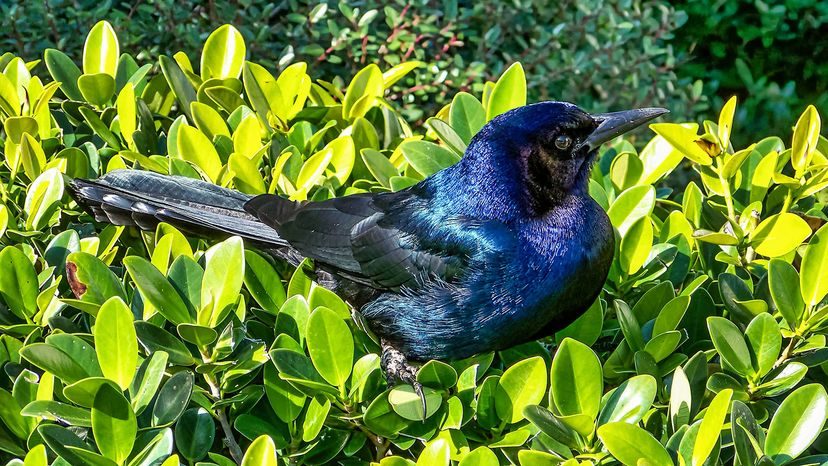
Please look up. You might see a shadow fly across a parking lot or stop at a traffic light. It’s a grackle. They belong to the genus Quiscalus. The name sounds very technical. It shouldn’t. This means they are highly adaptable.
These birds live in North and South America. They thrive in cities. They thrive in the suburbs. They thrive in places where people have built dense infrastructure. Their feathers are colorful. This is not just for show. This is a signal.
Their intelligence is their real weapon. Grackles solves the problem. They adapt quickly. This makes for interesting viewing. This also makes them hard to ignore.
Anatomy of Urban Survivor
Grackles is not shy. They don’t hide from people. They see people as part of the ecosystem. That’s why it’s so common in urban environments.
Their loud calls are an important part of their survival strategy. These calls are complex. they convey information. They warn of danger. They establish territories. They help coordinate the flock.
This vocal range is associated with problem solving. Grackles understands how to open containers. They can avoid a safe nesting place. They can navigate on busy streets. they learn from each other.
Why Grackle Intelligence Matters
Understanding grackles can help you better understand urban wildlife. they are not pests. They are very intelligent birds. They have adapted to human presence.
Their ability to survive in cities is a testament to their adaptability. they avoid food. They can hide from predators. They can thrive in a world designed for humans.
This begs the question of how we feel about “pests”. Are they annoying? Yes. Are they smart? Absolutely.
How to respectfully observe Brother Grackles
If you want to see grackles, do it from afar. They feel uncomfortable in direct interaction. Observe the behavior of the group. Notice how they communicate.
The iridescent plumage is best seen in direct sunlight. The color changes. They are not just black. they are blue. they are purple. they are green.
The future of Grackle populations
As cities expand, grackle population can also increase. They are well prepared for city life. Their adaptability gives them an advantage.
However, their success cannot be guaranteed. Changes in the urban environment can affect their food sources. Their breeding habits may change.
we need to study them. We need to understand their role in the ecosystem. They are part of our common environment.
“Grackleshs are highly adaptable and often seen in urban environments.”
This statement is more than just a fact. This is an observation. It’s a reminder that wildlife is everywhere. We’re just waiting to avoid it.