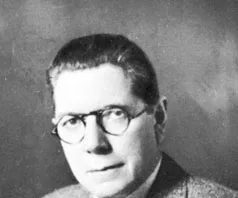
He was born in Cheetham Hill, near Manchester, on December 18, 1856. He died in Cambridge on August 30, 1940. In between those two dates, he changed how we understand the atom.
Sir J. J. Thomson is best known for finding the electron. Before that, atoms were thought to be solid, indivisible blocks. He proved them wrong. It started with cathode rays. These were mysterious beams traveling through vacuum tubes. Everyone knew they existed. No one knew what they were. Some thought they were waves. Thomson showed they were particles.
The Discovery of the Electron
He didn’t just guess. He measured. He pushed the rays with electric fields. He twisted them with magnetic fields. The way they moved told him everything. He calculated their mass. It was tiny. Nearly 2,000 times lighter than the lightest atom known at the time, hydrogen.
He called them corpuscles. We call them electrons now. The name stuck because the name worked. It described the thing without assuming it was the whole story.
This discovery was a crack in the foundation of classical physics. If atoms contained these lighter particles, the atom wasn’t the smallest unit of matter. It had parts. It had structure. It was revolutionary.
A Teacher of Nobels
Thomson wasn’t just a researcher. He was a builder. He taught at Cambridge’s Cavendish Laboratory from 1884 to 1918. He turned it into a world-class hub. Why did it become so famous? Because of him. He created an environment where science could breathe.
He also served as master of Trinity College from 1918 until he died. But his real legacy might be the people he taught. Seven of his assistants won the Nobel Prize. That’s not luck. That’s mentorship. He knew how to spot talent. He knew how to let them run.
Beyond the Electron
He didn’t stop there. In 1903, he suggested light might be discontinuous. Quanta. Packets of energy. This foreshadowed Albert Einstein’s photon theory. Einstein gets the credit, but Thomson saw the shape of the idea first. It shows how his mind worked ahead of the curve.
He later discovered isotopes. Different versions of the same element. He invented mass spectrometry to find them. This tool is still used today. It identifies substances by their mass. It’s in chemistry labs everywhere. It traces back to his work on gases.
For this research into the electrical conductivity of gases, he won the Nobel Prize in 1906. The prize recognized the method, not just the result. He showed how to measure the invisible.
Why He Matters Now
We still use his methods. The mass spectrometer is a direct descendant of his experiments. The concept of the electron is foundational to electronics. Every screen, every chip, every computer relies on the movement of these particles. He didn’t just add a fact to the book. He rewrote the grammar.
He died in Cambridge. But the work continues. It’s in the labs. It’s in the devices. It’s in the way we think about matter. It’s not just history