Honeybees aren’t pets. They aren’t domesticated in the way dogs or cattle are. Whether they live in a hollowed-out tree trunk in the Amazon or a wooden box on a rooftop in Chicago, they are biologically identical. Beekeeping is simply the management of these colonies. Humans keep them for honey, wax, pollen, or the essential service of pollinating crops. It’s a practice that spans every climate zone, from the frozen edges of the Arctic to the sweltering Equator.
The relationship between humans and bees is ancient but messy for a long time. Early observers knew bees made sweet honey. They knew the sting hurt. They watched colonies split and swarm to create new homes. But they didn’t understand the mechanics. That changed slowly. By the 1600s, beekeepers realized smoke calmed the insects and developed mesh veils to protect their faces. These were crude tools, but they marked the shift from accidental harvest to intentional management.
The real revolution happened between the 17th and 19th centuries. This era laid the groundwork for modern beekeeping practices by solving mysteries that baffled naturalists. Scientists identified the queen bee not as a male ruler, as some once thought, but as the mother of the entire colony. They uncovered her unusual mating flights and the phenomenon of parthenogenesis—where workers can lay unfertilized eggs that become drones. Most importantly, they discovered that if a queen vanishes, the colony will rear a new one from existing larvae.
This knowledge allowed beekeepers to intervene. Instead of waiting for a colony to swarm naturally and leave half the bees behind, they could divide colonies artificially. This doubled their stock without losing bees to the wild. But division was only half the battle. Harvesting was destructive until two inventions changed everything.
The first was the wax-comb foundation. This thin sheet of embossed wax gave bees a template. Instead of building chaotic, irregular combs that stuck together, bees built straight, uniform structures. The second breakthrough was extraction. Previously, beekeepers had to crush the comb to get the honey, killing the brood and destroying the bees’ work. Centrifugal extractors spun the frames, flinging honey out while leaving the comb intact. Bees could refill the empty combs. This efficiency made large-scale honey production viable.
Modern management adds even more layers. We now identify specific diseases and treat them with targeted drugs. We understand that pollen is the protein source bees need to raise healthy larvae, so we supplement it when natural sources are scarce. We even artificially inseminate queens to control genetics, improving honey yields and temperament. These steps have turned beekeeping from a folk tradition into a precise agricultural science.
Honeybees and Their Colonies
The hive is a complex society. The queen’s role is singular. She is the reproductive heart. If she fails, the colony struggles. Workers do all the labor. They forage, build, clean, and feed. Drones exist for one purpose: mating. They are expendable. This structure allows the colony to survive threats that would wipe out solitary insects.
Understanding this structure is key to effective management. Beekeepers must read the colony’s health by looking at brood patterns, honey stores, and queen activity. A strong colony produces more honey. It resists pests better. It poll

The Hive as a Single Organism
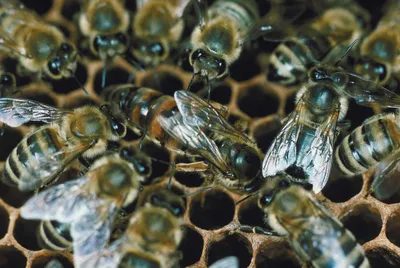
Honeybees sit squarely within the Hymenoptera order, representing specific species within the Apis genus. While individual bees are insects, their true nature reveals itself only in the colony. A hive is not just a group; it is a complex cluster that functions almost like one single, super-organism.
The structure is rigid and specialized. At the center is the queen. She is a fertilized female whose sole biological imperative is reproduction. She can lay more than a thousand eggs in a single day. Without her, the colony collapses.
Surrounding her are the workers. These are sexually undeveloped females. Their numbers fluctuate wildly. A colony might house just a few, or it might swell to 60,000 strong. They do the heavy lifting. They forage. They build. They defend.
Then there are the drones. These are the male bees. Their existence is seasonal and limited. A hive may contain none of them, or up to 1,000. Their primary role is mating with a queen from another hive. Once that act is complete, their utility ends.
Most female bees in this order possess a venomous sting. It is a defense mechanism. A key trait of the Apis species is how they manage their resources. They are noted for storing massive amounts of honey within their nests. This surplus allows the colony to survive winters and sustain the intense labor of the workers.
How does such a fragile insect dominate ecosystems? Through sheer collective organization. The hive operates on chemical signals and instinct, not individual choice.
“It usually consists of the queen bee… from a few to 60,000 sexually undeveloped females… and from none to 1,000 male bees.”
The sting serves as the last line of defense. But the real power lies in the numbers. A single bee is easily swatted. A colony is an immovable force.
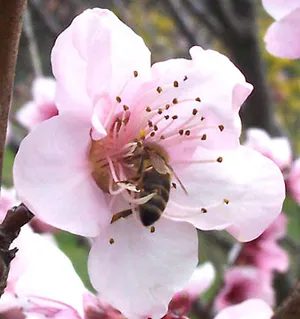

Bees are essentially flying factories, transforming raw materials into structured resources. They start with nectar, a sugary solution drawn from flower nectaries, or sometimes from leaf and stem glands. The water content in fresh nectar is high—ranging from 50 to 80 percent. Through evaporation and enzymatic activity, bees reduce this moisture to 16 or 18 percent, creating stable honey. They also harvest honeydew, a sticky exudate left by plant-sucking insects, storing it as a secondary food source. Honey serves as their primary carbohydrate fuel.
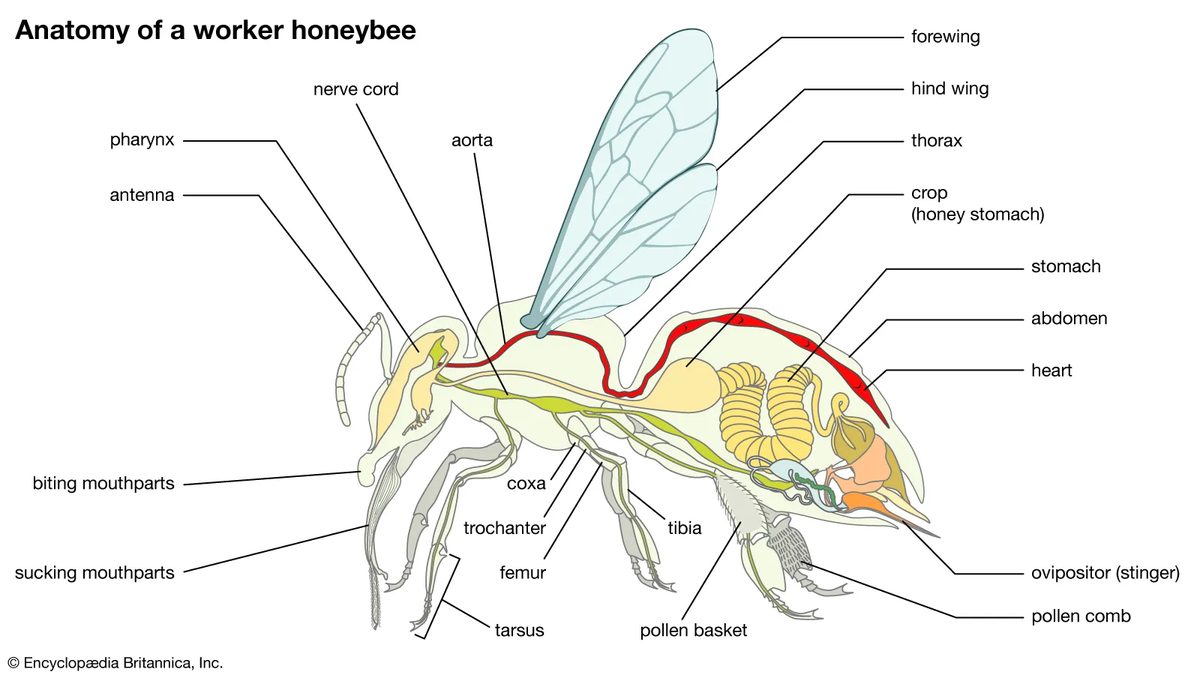
Pollen is the other critical ingredient. Collected from flower anthers, this dust-like male element provides the essential proteins required to rear young bees. The act of gathering nectar and pollen inadvertently pollinates the flora, a mutualistic relationship that sustains both the ecosystem and the hive. Bees also gather propolis, a resinous substance from tree buds. They use it to seal cracks and encase foreign intruders they cannot eject. Water is collected too, for cooling the hive during heatwaves and diluting honey for consumption. In a prime location, a strong colony can haul roughly 1,000 pounds of these materials into the hive over a year.
The Architecture of the Hive
Bees produce beeswax in tiny flakes on their abdomen’s underside. Workers mold this wax into honeycomb: thin-walled, back-to-back hexagonal cells. The colony allocates these cells based on immediate needs. Some store honey; others hold pollen. The broodnest, the central area where eggs hatch and larvae develop, is surrounded by these stores. Typically, honey is stacked in the upper combs, while pollen lines the cells surrounding the broodnest below.
Thermoregulation is a non-negotiable survival skill. Bees maintain the broodnest at a steady 93 °F (34 °C), regardless of the outside temperature. They can withstand daily highs of 120 °F (49 °C) if water is available to facilitate evaporative cooling. Conversely, when temperatures drop below 57 °F (14 °C), flying ceases. The bees form a tight cluster to conserve heat, huddling through cold snaps. They can survive weeks at -50 °F (-46 °C) if the cluster holds.
Summer brings a surge in activity. Blooming flowers stimulate the queen to lay more eggs. The colony expands. Honey accumulates. The sheer number of emerging young bees creates overcrowding. This density often triggers the colony’s primary method of propagation: swarming.
Swarming Behavior
When the hive becomes too crowded for the queen to lay enough eggs, worker bees initiate swarming. They select a dozen or so tiny larvae—those destined to be workers—and feed them royal jelly, a mayonnaise-like substance secreted from the heads of other workers. This diet triggers the development of a new queen. The cell housing the larva is extended downward and enlarged.
Shortly before the virgin queens emerge, the old queen leaves with half the colony. This event, known as a swarm, usually happens midday in warm weather. Thousands of bees, often between 5,000 and 25,000, swirl out of the hive. They fly for a few minutes before alighting, typically on a tree branch, but sometimes on roofs, cars, or fire hydrants. They form a tight cluster around the queen. Scout bees leave to locate a new homesite.
Once scouts find a suitable location, the cluster disperses. The swarm takes flight again, moving in a swirling mass to the new nest. Swarming is not a loss for the colony; it is reproduction. The parent colony keeps the original queen. The swarm takes the old queen to start a new one.
The Queen’s Role
Back in the parent hive, chaos ensues briefly. The first virgin queen to emerge tries to kill her rivals. If multiple queens emerge simultaneously, they fight to the death. The survivor waits about a week before taking her mating flight. To ensure genetic diversity, she often mates with multiple drones in the air, a behavior called polyandry. She may make these flights over two or three consecutive days. Afterward, she begins laying eggs.
She stores enough sperm in her spermatheca to fertilize eggs for the rest of her life. She rarely leaves the hive again unless she swarms. Drones die immediately after mating. The queen can live up to five years, though beekeepers often replace her every one or two years for productivity. If she fails or dies, workers may rear a “supersedure” queen. This new queen mates and starts laying without the colony swarming. The old queen simply disappears.
Workers and Drones
Worker bees are the engine of the hive. During the active season, they live about six weeks. Those emerging in the fall can survive for months, clustering together through winter. They perform all tasks except egg-laying: foraging, nursing, cleaning, guarding, and building.
Drones exist solely for mating. They are reared only when the colony is populous and resources are abundant. They live for a few weeks but are ejected from the hive in autumn or during food shortages to perish. Their only function is to mate with queens from other colonies.
The queen lays unfertilized drone eggs in larger drone cells. If she cannot mate or runs out of sperm, she may lay unfertilized eggs in worker cells. These develop into drones through parthenogenesis. Occasionally, a queenless colony may produce “laying workers,” who lay their own unfertilized eggs. These workers often lay multiple eggs per cell, leading to disorganized comb structure. Requeening such a colony is difficult, as the laying workers resist new queens.
Managing the Colony
Effective beekeeping involves understanding these natural cycles. Beekeepers monitor population density, food stores, and queen health. They intervene when necessary, but they also respect the colony’s instinct to swarm. Superseding is managed by replacing queens proactively. Winter preparation ensures the cluster has enough honey and insulation.
The interaction between biology and environment dictates colony success. Weather, flora availability, and genetic factors all play roles. Understanding these dynamics helps maintain strong, productive hives. The hive is not just a home; it is a complex social organism, constantly adapting to its surroundings.

Winter Prep and Early Spring Survival
The beekeeper’s year actually kicks off in early fall, not spring. That’s when the real work begins. The goal is simple: ensure every colony has a queen who is actually laying eggs and enough food to last until spring. If a queen isn’t producing adequate brood, she gets replaced. Each hive needs at least 50 pounds (22 kg) of honey and several frames packed with pollen. Some keepers also feed fumagillin to keep nosema disease from wrecking the adult bee population.
Location matters, too. Hives need sun and shelter from cold winds. In northern or mountainous regions, wrapping colonies in insulation is common practice. A few beekeepers take the drastic route: they kill the existing bees in fall, harvest the honey, store the empty gear, and restock with a new package of bees and a young queen in spring. But if the fall prep is solid, winter is quiet.
Early spring is when things get risky. Strong colonies can burn through their food supply days before flowers bloom. One exam can reveal a starving colony. A little 50-50 sugar syrup or a frame of honey from a stronger hive can save them. Fumagillin might be repeated, and some keepers offer pollen supplements. Never feed raw honey unless you know its source. Honey from colonies with American foulbrood is a Trojan horse. It introduces the disease into your healthy hives, causing serious losses.
Managing Swarm Prevention and Population Growth
As spring advances, the cluster grows. The population climbs from the 10,000 to 20,000 bees that survived winter to a peak of 50,000 or 60,000. This needs to happen right at the start of the major nectar flow. To make room, the keeper adds supers—boxes of combs.
Swarming is the colony’s way of reproducing, and it’s usually a nuisance for the beekeeper. You can prevent it by manipulating the comb arrangement. If the queen has room to expand her egg-laying area upward, she’s less likely to swarm. Place empty combs or brood combs ready to emerge at the top of the cluster. Put combs with eggs or young brood lower down. This gives the queen the space she needs and keeps the colony focused on work, not reproduction.
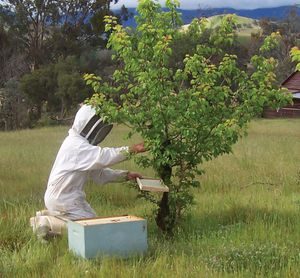
If a swarm does happen, it’s less dangerous than it looks. Swarming bees have full stomachs of honey, so they rarely sting. Capturing them is straightforward. Place a hive or upturned box nearby. Shake or smoke the bees to force the queen and the majority into the box. The rest will follow. Once inside, move the swarm to a permanent location.
Legal Requirements and Equipment
Local regulations usually dictate how bees must be kept. Movable-comb hives are the standard. If you capture a swarm in a temporary box, you generally have a few days to transfer the bees into a proper hive. This ensures the new honey and comb aren’t lost during the move.
Standard beekeeping gear is non-negotiable. You need a smoker to calm the bees. A veil protects your face. Gloves are essential for novices or anyone sensitive to stings. A blunt steel hive tool helps separate frames and hive parts for inspection. An uncapping knife opens honey cells. An extractor uses centrifugal force to remove honey from the combs.
Understanding Bee Stings and Allergies
The worker bee sting is barbed. When it stings, the sting is torn from the bee’s body. It’s attached to a venom-filled poison sac and muscles that continue to pump venom into the flesh for minutes. This increases the amount of toxin injected. To minimize damage, scrape the sting out immediately. Don’t grasp and pull it. Pulling squeezes more venom into the wound.
Bee stings hurt. Everyone knows this. Pain is immediate and intense, lasting a minute or two. The site reddens, potentially spreading an inch or more. Swelling might not appear until the next day. Most people build a tolerance to the swelling after a few stings, but the pain remains.
Allergic reactions are different. They usually affect people with other allergic tendencies. Symptoms appear within an hour. Difficulty breathing, heart irregularities, shock, splotched skin, and speech difficulties are signs of a severe reaction. If this happens, seek medical help immediately.
Honey Production and Marketing
Honey is sold in various forms. Liquid honey is the most common. Comb honey is sold with the wax cells intact. Creamed honey is processed to create a smooth, spreadable texture. Sometimes the honey is labeled by its floral source. This indicates the primary type of flower from which the bees collected nectar.
Getting the honey out of the comb
If you are after clear, liquid honey, the game changes. You stop fighting the swarm instinct and start stacking supers directly above the brood nest. The moment one box is mostly full, you pull it up and slide a new one underneath. Keep going until you have a tower of frames or the nectar stops flowing. Each box can hold 30 to 50 pounds of the gold stuff.
Once the bees have beaten down the water content and sealed the cells, it is time to harvest. You take the combs out, slash the wax caps with a knife, and spin the honey out in an extractor. The liquid doesn’t sit around. You heat it to about 140 °F. This thinness helps it flow and kills off yeasts that would otherwise turn your batch into vinegar. Then you strain out the wax bits and pollen, cool it down fast, and bottle it.
The tight squeeze of comb honey
Comb honey is a different beast. You cannot afford a single mistake here. The colony has to be strong, but you must keep the bees crowded into the smallest space they will tolerate without panicking and swarming. If they swarm, you lose the crop.
You place frames with extra-thin wax foundation right above the brood nest. Timing is everything. You add them only when the bees will fill them without chewing them up. They have to seal those combs quickly. If you leave them too long, the quality drops. You pull the finished sections as fast as they are ready and replace them with empty frames. When the nectar flow ends, you give the bees their own combs to store winter food.
Creamed honey explained
Honey wants to be solid. It wants to granulate. If you want that smooth, spreadable texture, you can fight it by heating the jar in 150 °F water. Or, you can lean into the crystal.
Take liquid honey and some granulated honey. Blend them together. Homogenize the mix. Keep it cool. This forces the sugar to crystallize into extremely fine crystals. The result is creamed honey. It looks like soft-serve. It spreads like butter. The process doesn’t hurt the quality; it just changes the mouthfeel.
Why floral types matter
You might see labels like clover, wildflower, or orange blossom. These names come from the flowers the bees visited. You cannot tell bees what to eat. You can only watch and learn which plants are booming in your area.
Different flowers make different honey. Some are dark and thick. Some are pale and runny. Some taste like nothing. Others taste like the field they came from. Most commercial honey is blended. Beekeepers mix batches to hit a standard grade so the jar on the shelf tastes the same in July as it does in January.
The value of beeswax
Beeswax is the leftover. Or it used to be. Now it is a by-product that pays its own way. When you uncapping frames or tossing out old combs, you salvage the wax.
First, drain the honey. Then, cook the debris in water heated to just over 145 °F. The wax melts and floats to the top. Let it cool. The cake hardens. You scrape it off and refine it. You can use it to make new foundation sheets. Or you can sell it. Candles. Cosmetics. Art supplies. In some places, bees are kept mostly for the wax. It is stable. You can ship it across the world without it spoiling.
Buying a queen
Sometimes you don’t buy honey. You buy the beekeeper’s best worker. Queens are raised for sale. You need them to requeen old hives or to lead new packages of 8,000 to 10,000 bees into a colony.
The process is precise. You cage the existing queen. Then you drop in 30 to 60 queen cell bases. These contain one-day-old worker larvae. The bees raise these larvae into queens. Most beekeepers let nature handle the mating. The drones fly out. The virgin queen mates in the air. Artificial insemination exists, but it is rare. It takes a specialist.
When the bees are ready to ship, they are shaken from the combs through a funnel into wire cages. They land in their new home, boxed and ready to go.
The invisible crop
And then there is the work nobody sees. Pollination. The bees don’t just make honey. They move pollen from flower to flower. This fertilizes crops. Apples. Almonds. Berries. Without the bees, the grocery store shelves look very different. The honey is the reward. The pollination is the reason the food exists.
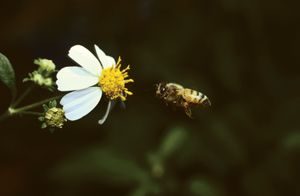

We often think of bees as factories for honey. That’s the product you buy at the grocery store. But if you look at the actual ledger, honey is almost an afterthought. The real money—the massive, hidden economic engine—is in the pollination.
Consider this: a single beehive generates anywhere from twenty to forty times more value by fertilizing crops than it does by producing wax and sugar. Ninety crops grown across the United States rely on this insect labor. Honeybees do the heavy lifting. Without them, the food system doesn’t just get quieter; it gets empty.
The value extends beyond the farm gate. No one has ever calculated the economic worth of bees pollinating ornamental plants. They don’t show up on a balance sheet. Nor do they capture the value of pollinating forest and range plants that produce seeds for birds and wildlife. It’s an ecosystem service, not a commodity. Yet it’s foundational.
The Logistics of Pollination
How does a beekeeper manage this? They don’t just set up shop and hope for the best. It’s strategic. When a grower needs pollination, the beekeeper positions colonies directly inside or right next to the target field.
Roughly one million colonies are deployed annually for this purpose. The majority go to three specific crops: alfalfa seed, almonds, and apples. The density matters. In alfalfa fields, you need power. Two or more colonies per acre, grouped tightly every 0.1 mile. It’s a grid of labor.
For almond orchards, the recommendation is two colonies per acre. Apple orchards require less intensity—about one colony per acre. Some growers spread the hives out in small clusters within the orchard to maximize coverage. Others prefer them lined up along the perimeter. Both strategies work. They’re just different risk management techniques.
It’s not just the big three. Growers of blueberries, cantaloupes, cherries, clovers, cucumbers, cranberries, plums, prunes, vetch, watermelon, and cutflower seed all rent out bees. It’s a standard part of the agricultural calendar.
The Invisible Enemy: Disease and Pests
Bees are not immune. They get sick. They get eaten. They face a rotating cast of pathogens and predators.
The enemies are obvious: toads, lizards, birds, mice, skunks, and bears. These are the things that break into the hive and take what they want. But the insidious threats are microscopic. They live in the brood. They live in the adult bees. They live in the comb.
Foulbrood: The Brood Destroyers
American foulbrood is the heavyweight champion of bee diseases. Caused by Bacillus larvae, a spore-forming bacterium, it’s devastating. It’s global. It hits workers, drones, and queens alike.
The spores are tough. Heat and chemicals don’t kill them easily. If you dig into a comb heavily infected with American foulbrood, the mass is sticky and ropelike. It’s a distinctive texture. Visually, the comb looks mottled. You see healthy capped brood mixed with diseased or empty cells. It’s a patchwork of death and life.
The disease spreads fast. Transfer equipment from a sick hive to a healthy one, and you’re done. Let the bees feed on contaminated honey, and the cycle continues. Beekeepers use antibiotics like sulfathiazole and Terramycin to control it. But many states and countries have stricter rules. They mandate burning the infected colonies. Fire inspectors enforce these laws. It’s brutal, but necessary.
European foulbrood is similar but different. Caused by Streptococcus pluton, sometimes aided by Bacillus alvie and Acromobacter eurydice, it looks like American foulbrood on the surface. But it’s less lethal. Colonies often recover on their own. Terramycin helps, but destruction isn’t usually required.
Sacbrood is viral. It looks like foulbrood but rarely causes major damage. It can appear and vanish on its own. If it sticks around, the beekeeper simply replaces the queen. It’s a reset button.
Chalk brood is fungal, caused by Ascosphaera apis. The larvae turn into white, chalky mummies. Stonebrood, caused by Aspergillus flavus, affects both brood and adults. It’s another fungal threat, but usually manageable.
The Adult Bee Killers
Nosema disease is the most serious threat to adult bees. Caused by the microsporidian Nosema apis, it’s widespread. It slashes honey production. It weakens colonies to the point of collapse.
The symptoms are internal. You can’t see Nosema from the outside. The spores are ingested, germinate in the ventriculus—the bee’s main stomach—and swell it. The infected stomach becomes soft, grayish-white, and enlarged. Control is difficult. Fumagillin, a drug fed to the colony, offers some relief. But it’s not a cure.
Acarine disease is caused by the mite Acarapis woodi. These mites burrow into the bee’s tracheae—the breathing tubes in the thorax or midsection. The result is paralysis. The bees can’t fly. Their wings are disjointed. Their abdomens are distended. There’s no good control for this mite. The only U.S. federal law specifically about bees was passed to stop the importation of adult bees carrying this mite. It’s a border wall against a microscopic invader.
Then there are the Asian mites. Varroa destructor and Tropilaelaps clareae. They originated in Asia. They are now in Europe and North America. V. destructor is particularly vicious. It can wipe out entire colonies. It’s a silent tsunami.
Other diseases exist. Minor ones. They rarely cause serious problems. But in a species under constant siege, even the minor threats add up. The beekeeper’s job isn’t just to harvest honey. It’s to keep the hive alive.
The Silent Invaders: Moths, Mites, and Mammals
The greater wax moth, Galleria mellonella, doesn’t bother the bees. Not really. It targets the structure. In its larval stage, it eats comb, leaving behind a mess of silk and frass. Weak colonies suffer first. The bees might still be there, but their home is being dismantled from the inside out. Even stored honeycombs aren’t safe. When ready to pupate, the larvae tunnel into the soft wood of hive frames, causing structural damage that outlasts the infestation.
The fix isn’t chemical. It’s biological strength. Keep colonies strong, and the bees will outpace the moths. For stored combs, the strategy is physical: fumigate, refrigerate, or stack them to force a strong air draft through the gaps. Airflow kills the larvae’s comfort zone.
Then there is the lesser wax moth, Achroia grisella, and the Mediterranean flour moth, Anagasta kuehniella. The former damages stored combs similarly to its larger cousin. The latter feeds on pollen within the combs. Control methods remain identical to those for the greater wax moth. Strength and airflow are the only reliable defenses.
The bee louse, Braula caeca, is a tiny, wingless fly. It clings to bees, feeding on nectar or honey directly from their mouthparts. Its larvae burrow into the honeycomb cappings, ruining the seal. It’s a nuisance, but not a colony-ender.
Ants invade. They disrupt. They kill. Termites eat hive parts left on soil. Dragonflies, robberflies, praying mantises, ambush bugs, and various wasps act as natural enemies in the field. These are the daily friction points of beekeeping.
The Big Predators
Winter changes the threat profile. Mice seek warmth. They enter clustered hives, chewing frames and combs to build nests. They despoil stored combs, too. Skunks are different. They come at night, devouring bees at the entrance. Fences, traps, and poison are the standard countermeasures.
Bears are the heavy artillery. They eat bees and brood, destroying the hive and its contents in the process. In bear country, electric fences and traps are non-negotiable for colony survival.
But sometimes, bees are their own worst enemy.
If honey is left exposed during a bloom gap, in mild weather, the bees from different colonies will fight over it. This robbing behavior can escalate into moblike action. One colony falls. The honey is stolen. Then another. The process repeats until only darkness or foul weather stops the frenzy. It is a chain reaction of destruction.
Colony Collapse Disorder
The most mysterious threat to modern honeybees is colony collapse disorder (CCD). It is characterized by sudden colony death. No healthy adult bees remain inside the hive. The cause is unknown, but the mechanism is clear: adult bees leave to find pollen and never return. Their navigation fails.
Honey and pollen are usually still in the hive. Evidence of recent brood rearing is often visible. Sometimes, the queen and a handful of survivors remain in the brood nest. Unlike typical die-offs, CCD features delayed robbing by healthy neighboring colonies. Pest invasion by wax moths and small hive beetles is slower than normal. The disorder appears to affect only the European honeybee, Apis mellifera.
CCD was first reported in autumn 2006 by a commercial beekeeper in Pennsylvania. He estimated colony losses at 80 to 90 percent. The losses spread. In the spring and summer of 2007, beekeepers in 35 U.S. states reported losses ranging from 30 to 90 percent. The contagion was geographic, not just biological. Canada, Portugal, Italy, Spain, Greece, Germany, Poland, France, and Switzerland reported substantial losses.
The syndrome continued in following years, though the annual percentage of lost colonies appeared to decline. The economic stakes, however, remained static. Annually, in the United States alone, an estimated $15 billion of crops are pollinated by honeybees.
Studies of adult honeybee carcasses from affected colonies reveal a mix of pathogens and parasites. Viruses. Nosema species. The phorid fly Apocephalus borealis. Scientists have not reached a definitive conclusion on whether a single pathogen is the root cause. Many suspect a combination of factors: a weakened immune system brought on by colony stress, and the presence of pathogens, which are a constant threat and can be numerous in honeybee colonies.
Pesticides, particularly neonicotinoids (insecticides based on derivatives of nicotine), are suspected of causing or contributing to CCD. They are toxic to honeybees. The question remains whether they are the trigger or the accelerant. The answer is still missing.