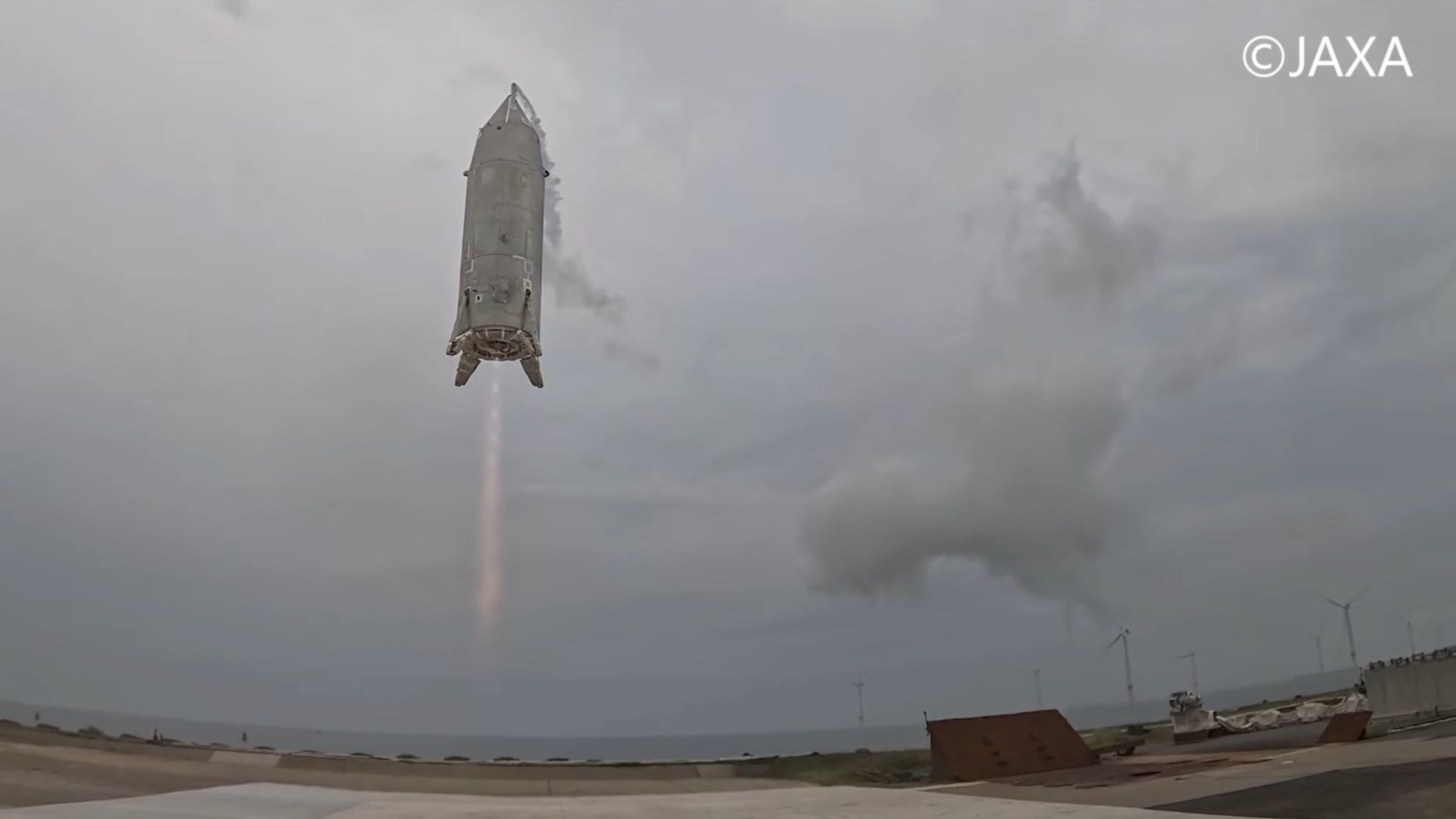
The RV-X just landed. Softly, on a concrete pad, in Noshiro. It’s a prototype, not yet an orbital beast, but the move signals something big. Japan isn’t waiting anymore. The test flight happened July 11, orchestrated by JAXA with help from Mitsubishi Heavy Industries. For about 40 seconds, the world watched a 24-foot-tall metal cylinder prove it can fly and come back.
How the RV-X Hop Works and Why It Matters
Here are the concrete numbers behind the reusable rocket landing :
– Altitude: 33 feet (10 meters).
– Horizontal distance: 50 feet (15 meters).
– Duration: 40 seconds.
– Power: A single engine.
It didn’t go far. It barely cleared a two-story building. That is intentional. This wasn’t about distance. It was about checking the sensors. Did the thrusters fire on command? Did the landing gear hold? The answer to every operational question was yes.
Why start with a hop? Because vertical takeoff and vertical landing (VTVL) is tricky business. Only a few players in history have mastered the mechanics of catching a falling rocket. SpaceX owns that market currently, with the Falcon 9, Falcon Heavy, and Starship. Blue Origin has New Glenn on the horizon. China just demonstrated its Long March 10b capabilities. Now Japan wants a seat at the table.
Reusable rockets require consideration of operational feasibility. We established operational procedures that will contribute to repeated operation.
This isn’t just engineering. It is logistics. Moving the vehicle. Maintaining it. Setting up the pad again quickly. JAXA is treating the ground operations with as much weight as the propulsion system.
RV-X vs CALLISTO: The Path Forward
The RV-X is a stepping stone. Think of it as a practice dummy before the main event. Its primary role is paving the way for the CALLISTO project. CALLISTO stands for Collaborative Launcher with Active Re-usable Systems and Technological Innovations.
This is where things get international. Japan doesn’t work in a vacuum. This project teams JAXA up with France’s space agency CNES and Germany’s DLR. The goal is specific. A single-stage vehicle. Capable of launch, landing, and reuse without stage separation. The H3 rocket Japan launched in 2023 is their current best effort. But the H3 isn’t reusable. It sheds its first stage. That stage burns money every time it launches.
The H3 is efficient compared to its H-2A grandfather, sure. Two launches so far have been less than perfect though. Even when they succeed, the cost per flight stays high. Reusability drops that number drastically. It’s the economic reality of modern spaceflight. You want to fly? You need to land. You need to fix. You need to fly again.
The RV-X resembles the Starhopper from a few years ago. Remember SpaceX’s “water tower”? The steel monstrosity in Texas that jumped in 2019? It went up 65 feet and down again. No fancy fins. Just a box with engines. It worked. Now we are seeing that same logic applied in East Asia. The geometry of a controlled hover is universal. Gravity does not care which flag is painted on the rocket.
When Will We See Higher Altitude Flights?
So where is RV-X next? Higher, obviously.
The team isn’t satisfied with 33 feet. The plan involves pushing to 330 feet high —a tenfold increase. This next flight includes lateral crossover. That means the rocket has to move sideways, hover over the landing zone, and settle down. It is a harder test. Much harder. The control systems must be sharper.
There are no set dates yet for this next jump, but the pipeline is clear. Test one passed. Data was harvested. Now they refine the algorithms. Maybe next spring. Maybe next fall.
JAXA is building operational procedures now, in real-time, using physical hardware. This avoids the trap of perfect simulation that never survives contact with reality. It reminds people that reusable technology isn’t just code. It’s wear and tear on physical parts. It is the rust, the heat, the fatigue.
Japan is joining a select club. The entry fee is expensive and technical, but the long game is about lowering costs for satellite deployment and eventual lunar logistics. If RV-X keeps hopping higher, the future of the H3 replacement looks increasingly vertical.
You think it’s small scale right now? That is by design. Get the small things right first. Or the big things fail loudly.
What do you think Japan’s first orbital reuser will look like?