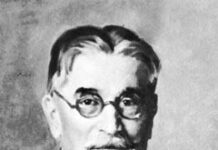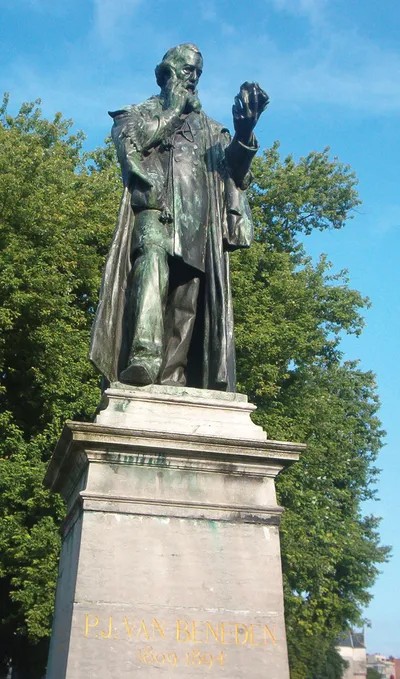
Pierre-Joseph van Beneden was a man who preferred the gut over the gallery. Born in Mechelen, Belgium, in 1809, and dying in Louvain in 1894, he didn’t just study parasites. He solved them.
Before van Beneden, the world of parasitology was a mess of confusion. Scientists had seen tapeworms. They had seen larval cysts floating in fish flesh. But they didn’t connect the dots. Some thinkers even believed those larval cysts were just strange, diseased tissues growing inside the host animal. It was wrong. It was stubborn. And it was van Beneden’s job to fix it.
The Breakthrough in Fish Digestive Tracts
Van Beneden’s obsession started in 1845. He spent roughly fifteen years dissecting, observing, and cross-referencing. He didn’t rely on theory. He relied on the digestive tracts of countless fish.
His conclusion was simple, but nobody had proven it before. The organisms known as cysticerci were not malformed tissue. They were the larvae of intestinal worms. Specifically, they were the juvenile stage of what scientists then called taeniae. In modern terms, we know these as adult tapeworms.
He proved the link. He showed that what we thought were two different biological entities were actually the same creature at different life stages. This wasn’t just academic trivia. Understanding the tapeworm life cycle changed how we view parasitic infection. It meant you couldn’t just treat the adult worm; you had to understand how the larvae entered the host.
From Pharmacist’s Apprentice to Academy President
How did a kid from Mechelen end up leading Belgian science?
He started young. An apprenticeship with pharmacist Louis Stoffels gave him practical skills. Then, he studied medicine at the University of Louvain. By 1835, he was appointed professor of zoology at the Catholic University of Louvain. He stayed there. He didn’t jump around for better offers or prestige. He stayed to work.
His reputation grew. In 1842, he was elected to the Belgian Academy of Sciences. Decades later, in 1881, he became its president. But the science came first. The titles were just noise.
Beyond the Worm: Whales and Osteology
Van Beneden didn’t stop at worms. He had a broader interest in the animal kingdom’s hidden connections. His work expanded to include a wide range of parasites found in diverse animals. This culminated in his 1875 book, Les Commensaux et les parasites dans le règne animal (“Commensals and Parasites in the Animal Kingdom”).
Then came the whales.
Around 1859, he turned his attention to fossil and living cetaceans. This required a different kind of anatomy. Bones. Lots of them. He collaborated with Belgian anatomist Paul Gervais on this massive undertaking. The result was Ostéographie des Cétacés, vivants et fossiles (1868–80), a detailed study of whale osteology.
It was a dual legacy. He mapped the invisible life cycles